
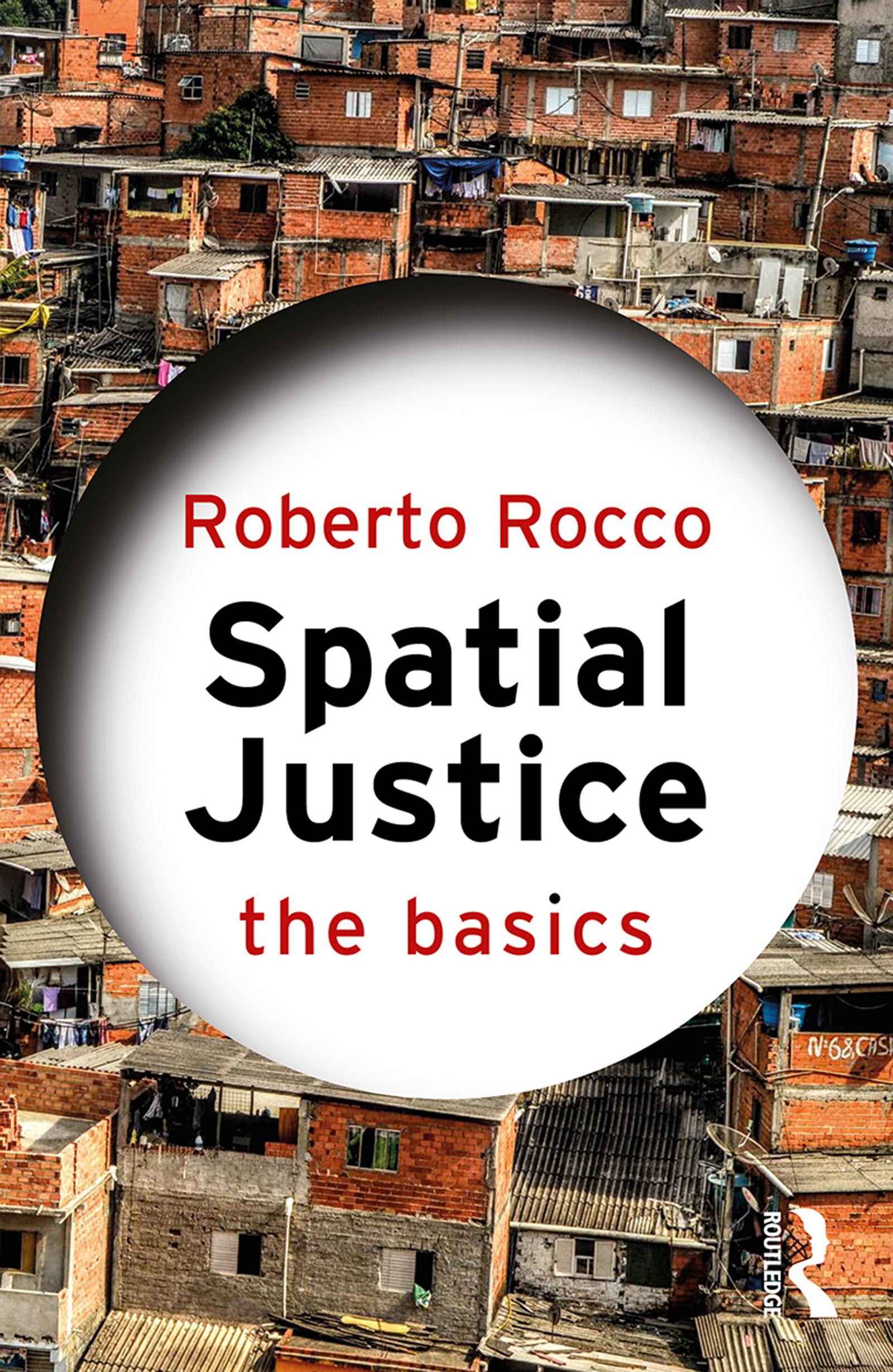
Spatial Justice: The Basics offers a concise and accessible introduction to spatial justice as both a theoretical framework and a practical agenda for urban transformation. It examines how urban space is produced, contested, and governed, and how it is implicated in broader dynamics of inequality, recognition, and participation. Drawing on key thinkers such as Henri Lefebvre, Nancy Fraser, Iris Marion Young, Edward Soja, and Susan Fainstein, the book articulates spatial justice through its distributive, procedural, and recognitional dimensions, while also tracing its intellectual genealogy across critical theory, planning thought, and Southern urbanism.
The book centres spatial planning as a normative, political, and ethical practice capable of fostering solidarity, democratising decision-making, and addressing structural injustices. Real-world examples from Indonesia, Colombia, Brazil, the US, and more illustrate how spatial justice is negotiated in practice, while discussions of neoliberal governance, democratic backsliding, and epistemic justice ground the analysis in urgent global challenges.
Designed for upper-level undergraduates, postgraduates, and early-career professionals in planning, geography, architecture, and related fields, the book includes a detailed glossary of key terms, visual diagrams, and analytical tables to support critical engagement and classroom use.
Betal nemt med kort, Klarna, Apple Pay eller Google Pay. Ikke tilfreds? Du har altid 14 dages fortrydelsesret. Læs mere i vores vilkår. Har du spørgsmål, så send os en mail på hello@memmo.org.
Memmo gør det nemmere at studere – uanset hvor du er i verden. Hos os samler du dine kursusbøger og smarte studieværktøjer ét sted: resuméer, quizzer, podcasts og flashcards. Og så er der Ted, din studieven, der svarer på alt, du undrer dig over. Over 50 000 studerende studerer allerede her – bygget til at hjælpe dig med at lære hurtigere og stresse mindre.