
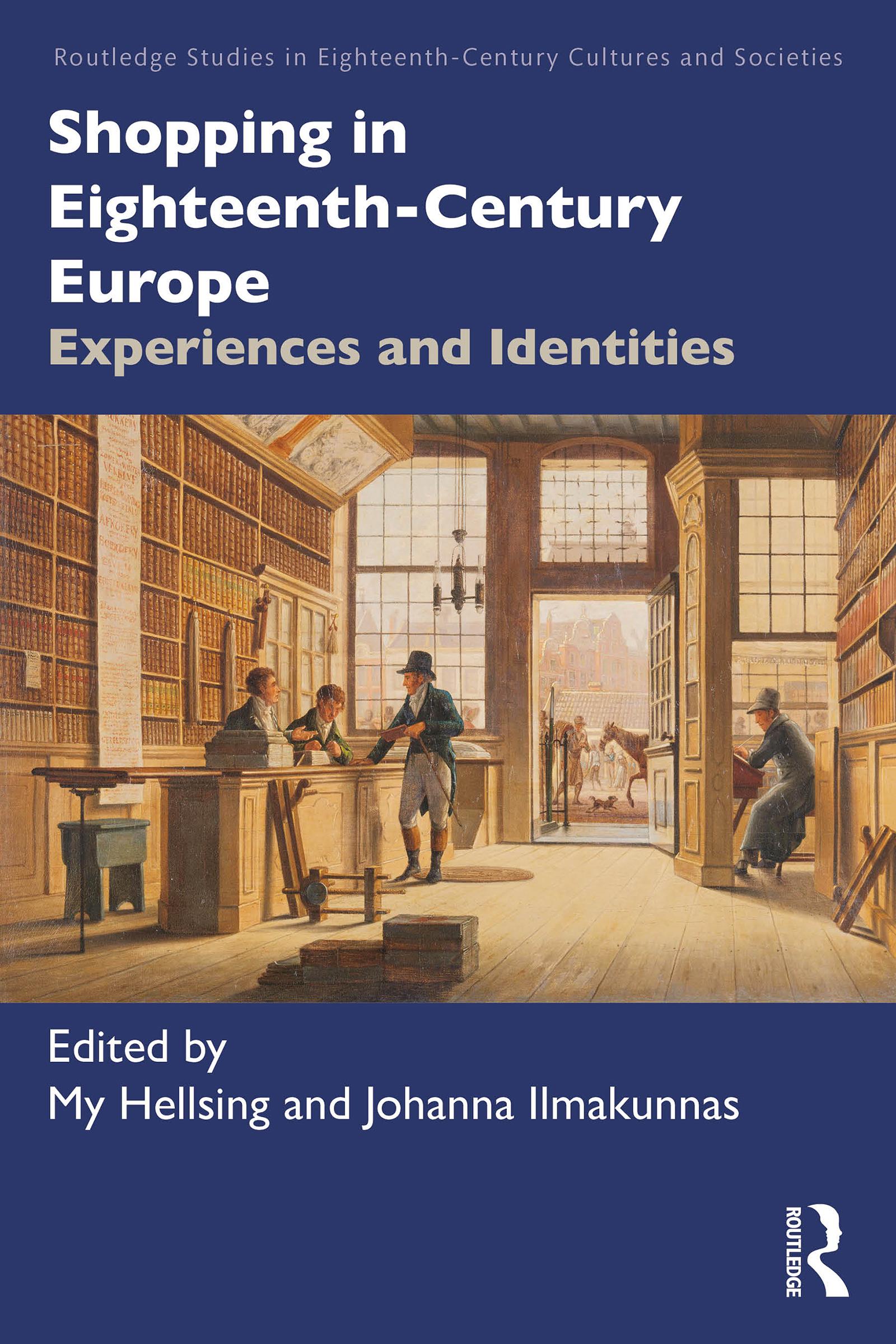
This volume explores the practices of shopping in Europe during the long eighteenth century, a period during which consumption choices expanded to encompass much larger groups than before. Shopping functioned as an act of social distinction, where retail practices not only reflected and reinforced social aspirations and identities but also were a means of creating relationships through shared information and exchanges.
Bringing together ten diverse case studies, the collection provides in-depth insights into the transformation of shopping practices across Western and Northern Europe. The production of made-to-order goods gave way to a range of ready-made objects that could be viewed, browsed and touched in shops, booths, workshops and markets. Together, the chapters highlight a crucial historical nuance: the concept of ‘shopping’ as understood in England—with its associations of pleasure and socialising—did not exist in other major European languages during this period. From actors in Stockholm to aristocrats in Paris, this study rigorously contextualises the practice of consumption, leaving readers with an enriched understanding of how shopping shaped identities and social relationships throughout eighteenth-century Europe.
This collection is an essential resource for scholars, students and non-specialists interested in the material culture, economy, everyday life and social dynamics of Europe during the long eighteenth century.
Betal nemt med kort, Klarna, Apple Pay eller Google Pay. Ikke tilfreds? Du har altid 14 dages fortrydelsesret. Læs mere i vores vilkår. Har du spørgsmål, så send os en mail på hello@memmo.org.
Memmo gør det nemmere at studere – uanset hvor du er i verden. Hos os samler du dine kursusbøger og smarte studieværktøjer ét sted: resuméer, quizzer, podcasts og flashcards. Og så er der Ted, din studieven, der svarer på alt, du undrer dig over. Over 50 000 studerende studerer allerede her – bygget til at hjælpe dig med at lære hurtigere og stresse mindre.