
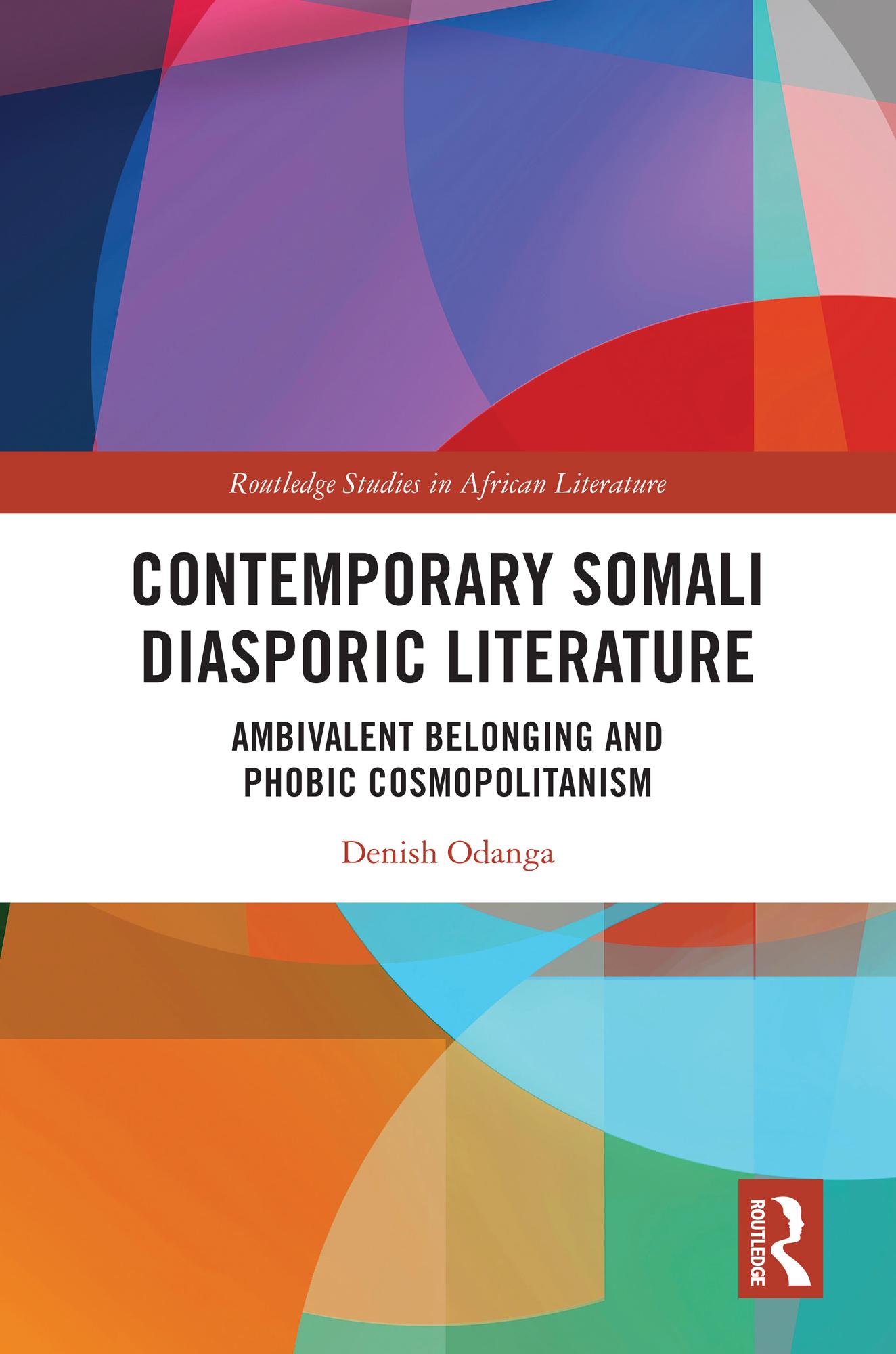
This book considers how the literature of the Somali diaspora deploys themes of ambivalent belonging in cosmopolitan spaces.
The book starts by building a picture of cosmopolitanism thinking from the European Enlightenment through to key postcolonial thinkers like Anthony Appiah, Achille Mbembe, and Arjun Appadurai. However, the book shows that far from a picture of diverse groups coming together in mutual respect, in fact cosmopolitanism is affected by mutual phobias between migrants and their host cultures. These phobias stem from (ethno)racism, Islamophobia, classicism, clannism, xenophobia, and mutual superiority and inferiority complexes. In building this analysis, the book considers key texts from Ayaan Hirsi, Yasmeen Maxamuud, Jonny Steinberg, Nuruddin Farah, and Santur Ghedi, with settings that range from North America, Canada, Norway, Holland, Germany, South Africa, Saudi Arabia to East Africa.
Considering literature on the Somali diaspora within the context of major cosmopolitan theories and postcolonial inflexions, this book is an important contribution to contemporary sociopolitical conversations, and will be of interest to researchers across literary and cultural studies.
Betal nemt med kort, Klarna, Apple Pay eller Google Pay. Ikke tilfreds? Du har altid 14 dages fortrydelsesret. Læs mere i vores vilkår. Har du spørgsmål, så send os en mail på hello@memmo.org.
Memmo gør det nemmere at studere – uanset hvor du er i verden. Hos os samler du dine kursusbøger og smarte studieværktøjer ét sted: resuméer, quizzer, podcasts og flashcards. Og så er der Ted, din studieven, der svarer på alt, du undrer dig over. Over 50 000 studerende studerer allerede her – bygget til at hjælpe dig med at lære hurtigere og stresse mindre.