
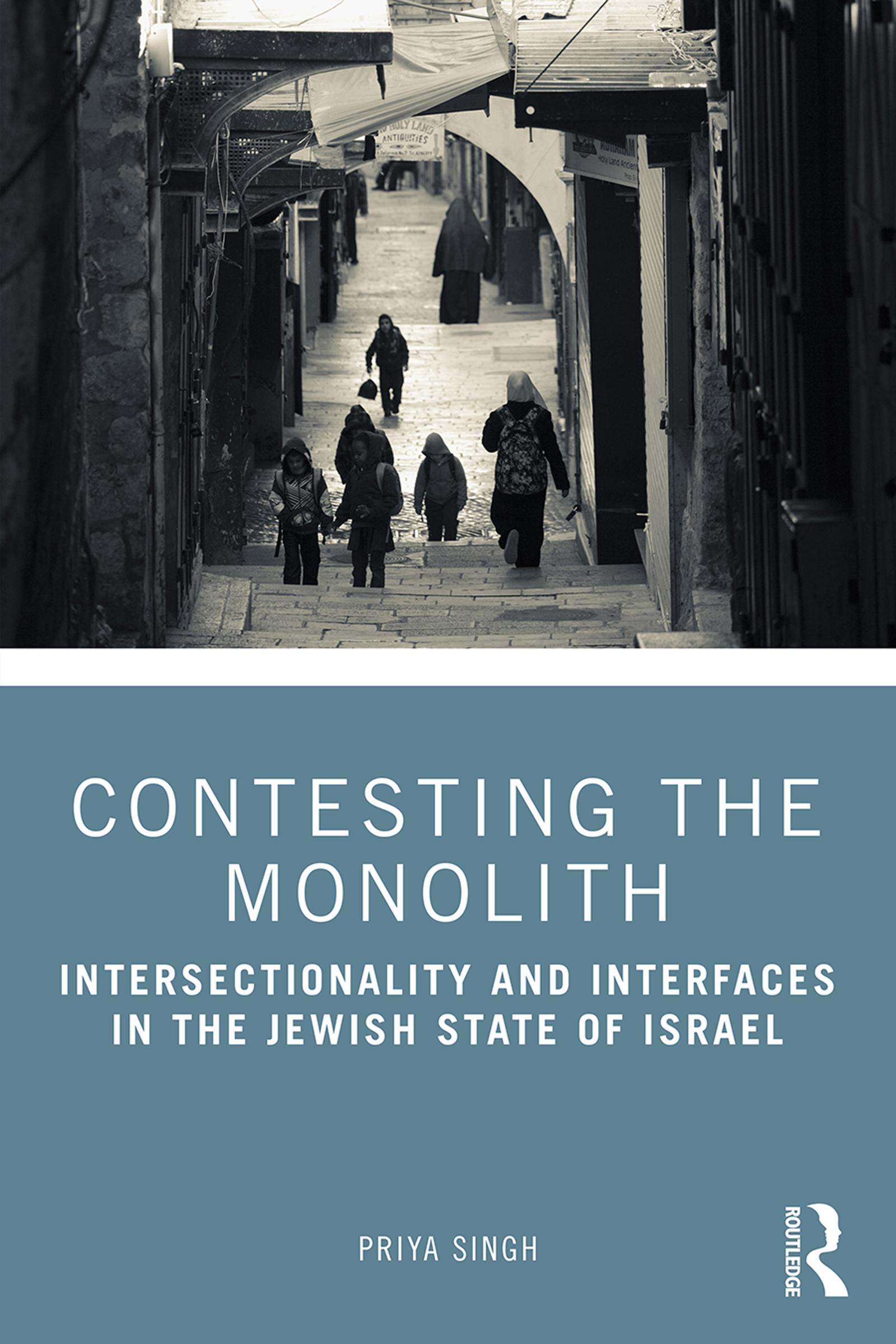
The book challenges the notion that Israel is a homogeneous state, whether in theory or in practice. It offers a detailed and critical intersectional analysis of nationalism, ethnicity, gender and marginality in Israeli society, revealing how these forces converge to produce multiple as well as fused identities within a complex social fabric. Examining the ruptures and fault lines that shape a multi-layered society, the study contends that Israel’s exceptionality lies not in its self-proclaimed “Jewish and democratic” character, but in its resort to exceptional legal and coercive measures to mask internal diversity. By obscuring this heterogeneous reality, the state cultivates an illusion of a monolithic and uniform Israeli identity. The analysis presents a society far more fragmented and stratified than official narratives suggest, offering readers an understanding of how intersecting structures of identity and power operate in the Israeli context, and how social and political institutions respond to and regulate internal difference. This book will be of interest to academic researchers, postgraduate and doctoral students and policymakers engaged with questions of nationalism, marginality, identity and Middle Eastern politics, particularly within the disciplines of political science, sociology, Middle Eastern studies and gender studies.
Betal nemt med kort, Klarna, Apple Pay eller Google Pay. Ikke tilfreds? Du har altid 14 dages fortrydelsesret. Læs mere i vores vilkår. Har du spørgsmål, så send os en mail på hello@memmo.org.
Memmo gør det nemmere at studere – uanset hvor du er i verden. Hos os samler du dine kursusbøger og smarte studieværktøjer ét sted: resuméer, quizzer, podcasts og flashcards. Og så er der Ted, din studieven, der svarer på alt, du undrer dig over. Over 50 000 studerende studerer allerede her – bygget til at hjælpe dig med at lære hurtigere og stresse mindre.