
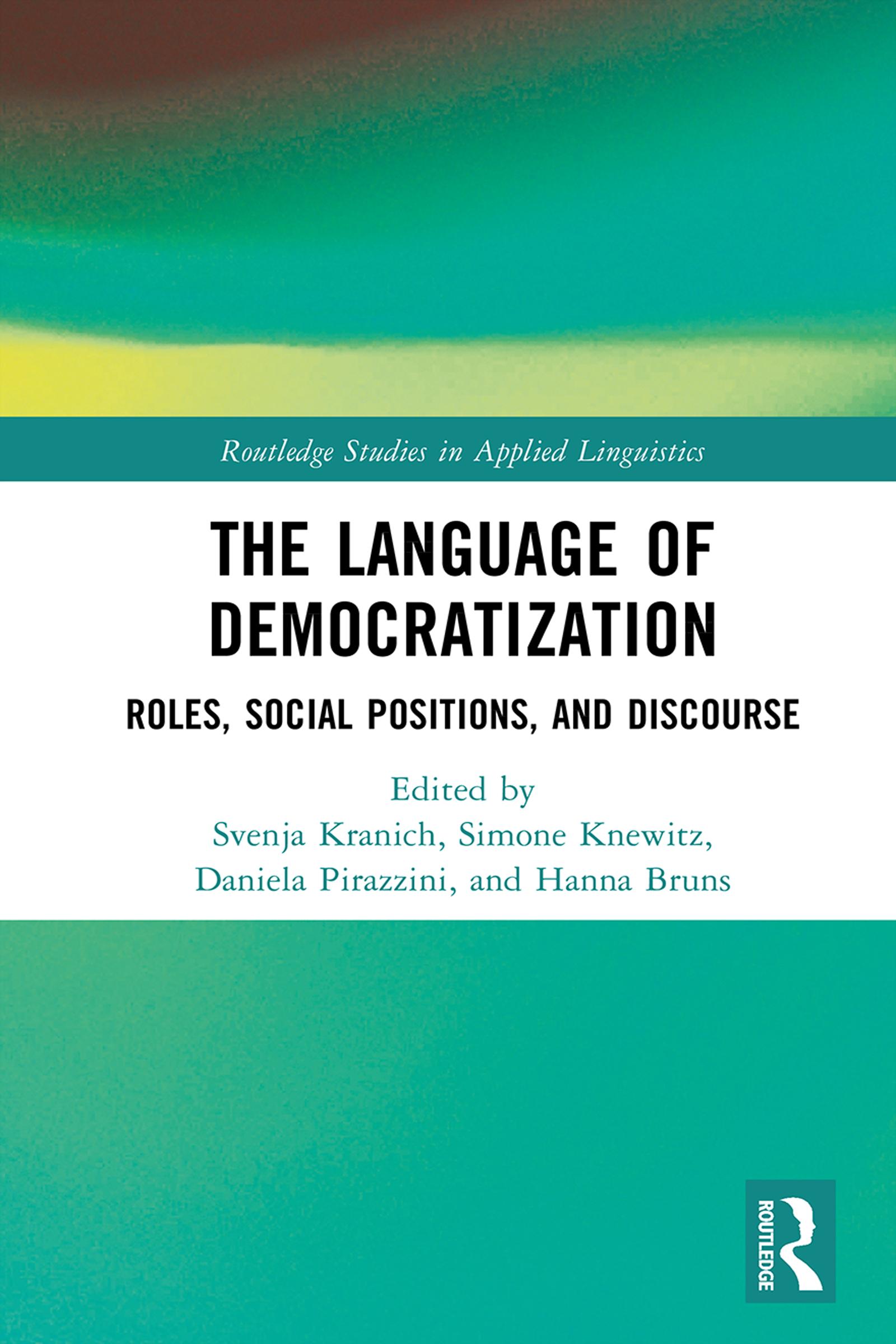
Since the 1960s, liberal values such as nondiscrimination, equal participation of all in social, political, and cultural spheres, and individual freedom have driven processes of democratization in Western societies – a trend that has recently been countered by the resurgence of illiberal forces, right-wing populism, and authoritarianism.
This volume examines processes of democratization and de-democratization from an interdisciplinary perspective, showing how they unfold in language, cultural discourses, and communicative practices. In particular, the collection highlights research on changing roles and social positions: who has access to which social roles, how these roles are performed, and how individual actors are positioned or position themselves within social power structures has undergone profound changes in recent decades, not least in the context of new media environments that challenge established power structures and forms of discourse. Bringing together contributions from linguistics, cultural studies, and related disciplines, the volume seeks to expand our understanding of (de-)democratization beyond the theoretical frameworks of the social sciences.
This book will be of interest to students and scholars in fields such as applied linguistics, discourse analysis, cultural studies, education, political science, and sociology.
Betal nemt med kort, Klarna, Apple Pay eller Google Pay. Ikke tilfreds? Du har altid 14 dages fortrydelsesret. Læs mere i vores vilkår. Har du spørgsmål, så send os en mail på hello@memmo.org.
Memmo gør det nemmere at studere – uanset hvor du er i verden. Hos os samler du dine kursusbøger og smarte studieværktøjer ét sted: resuméer, quizzer, podcasts og flashcards. Og så er der Ted, din studieven, der svarer på alt, du undrer dig over. Over 50 000 studerende studerer allerede her – bygget til at hjælpe dig med at lære hurtigere og stresse mindre.