
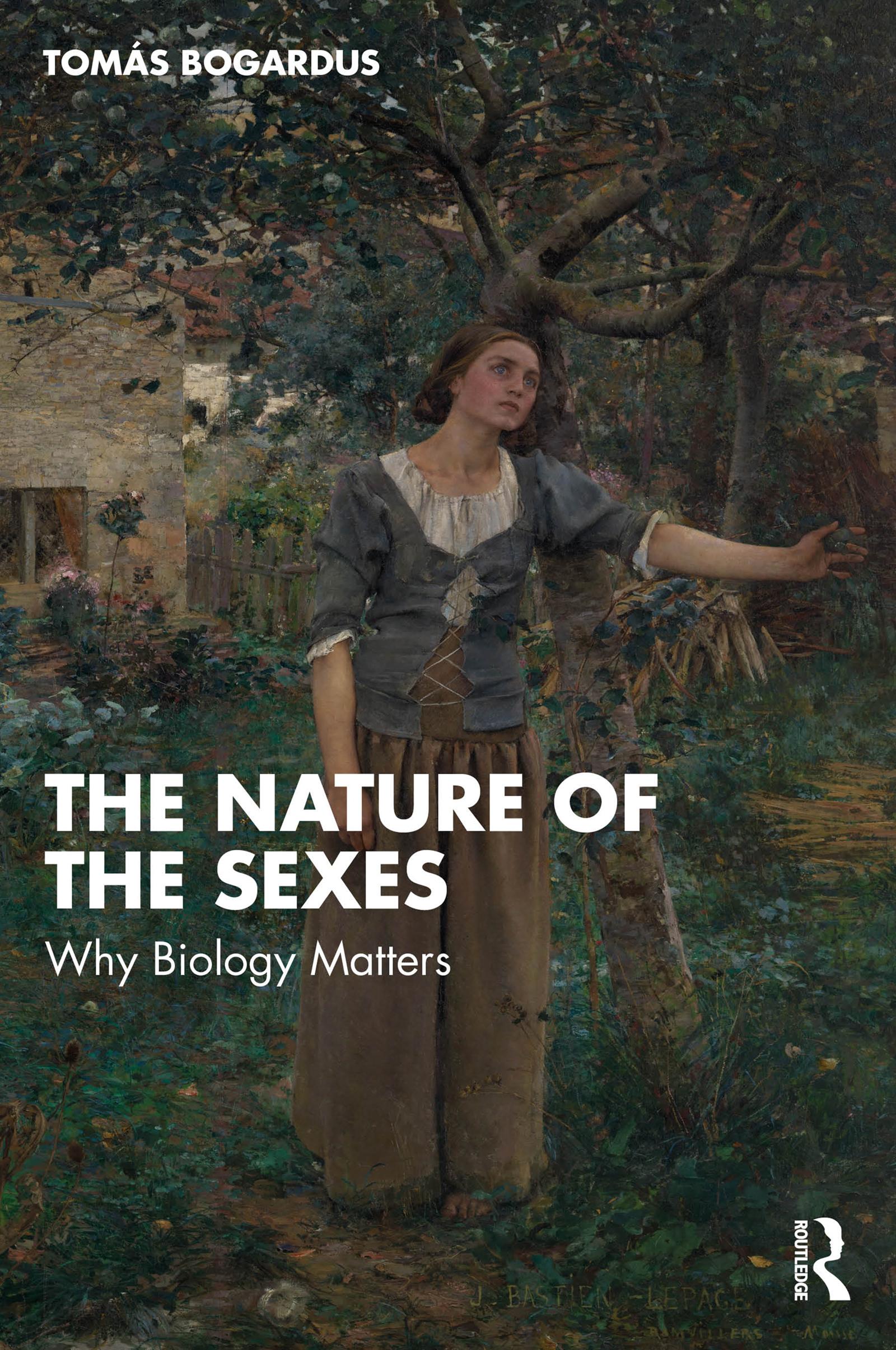
How complex is sex? According to this book, not nearly as complex as we’re often told these days.
Author Tomás Bogardus first critically evaluates varieties of a complex view of sex—supported by Anne Fausto-Sterling, Sarah Richardson, and others—in which sex is a constellation of traits related to chromosomes, hormones, gonads, and phenotypes. Bogardus then considers several gamete-based accounts of sex, to which he is more sympathetic, including those from Alex Byrne, Laura Franklin-Hall, and Paul Griffiths. Shortcomings of these views are described, and an improved account is proposed: the sexes are activated higher-order functions. In short, to be male is to have the function of producing sperm, and to be female is to have the function of producing eggs. Bogardus develops this view, all while untangling the various meanings and definitions of 'gender' and 'gender identity', and while examining whether all of them are ultimately defined in terms of the sexes.
The author then defends his methodology of deferring to biologists when figuring out the nature of the sexes and concludes with practical questions about whether we should revise the meanings of our sex terms for the sake of social justice. He asks whether pronouns like ‘he’ and ‘she’ track biological sex, and whether they should continue to do so.
The Nature of the Sexes: Why Biology Matters expands current philosophical debate on sex and gender, and is essential reading for curious students and academics alike.
Betal nemt med kort, Klarna, Apple Pay eller Google Pay. Ikke tilfreds? Du har altid 14 dages fortrydelsesret. Læs mere i vores vilkår. Har du spørgsmål, så send os en mail på hello@memmo.org.
Memmo gør det nemmere at studere – uanset hvor du er i verden. Hos os samler du dine kursusbøger og smarte studieværktøjer ét sted: resuméer, quizzer, podcasts og flashcards. Og så er der Ted, din studieven, der svarer på alt, du undrer dig over. Over 50 000 studerende studerer allerede her – bygget til at hjælpe dig med at lære hurtigere og stresse mindre.