
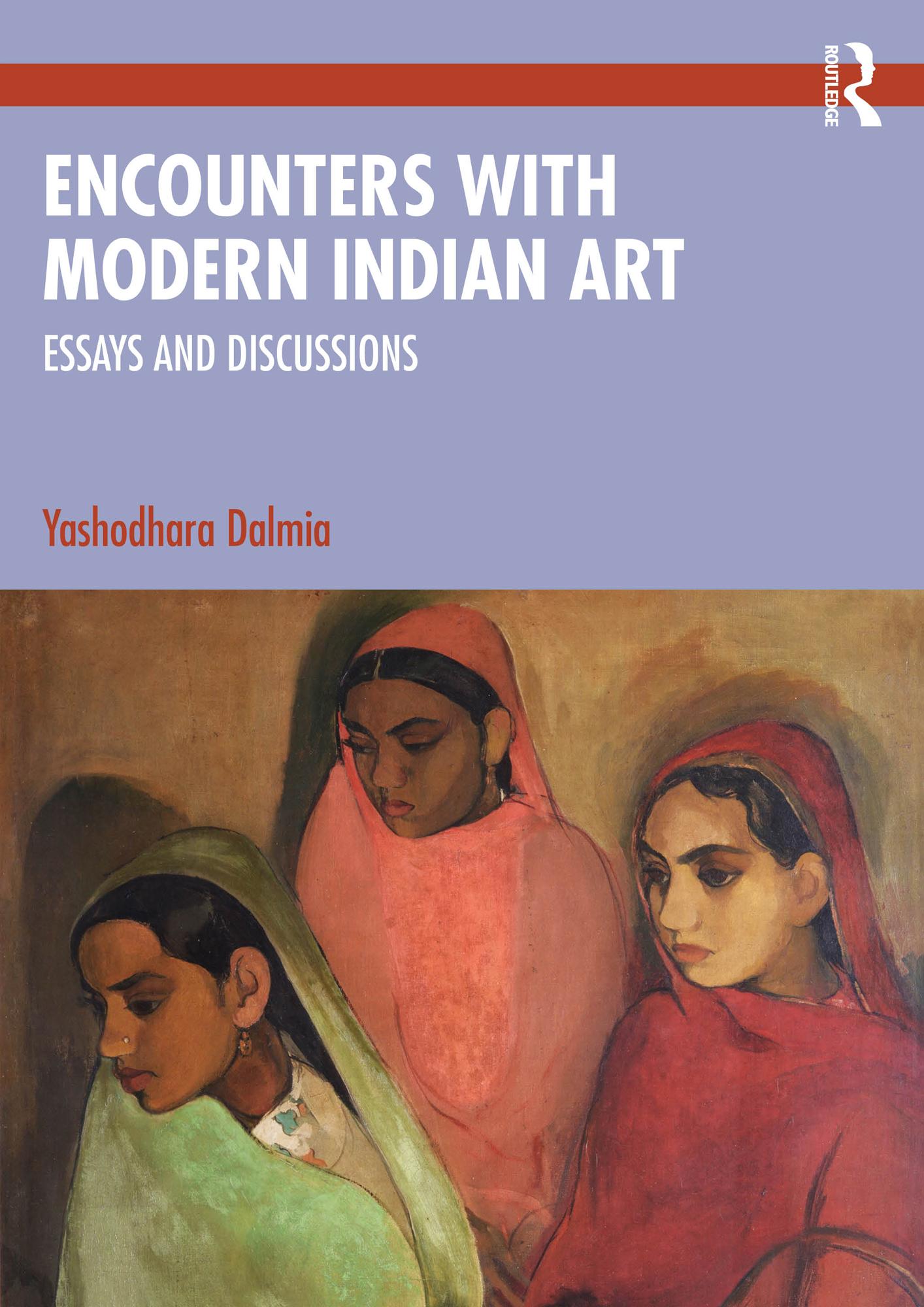
This book explores modern art in India, tracing its evolution from the setting-up of the Progressive Artists Group in the 1940s to the contemporary movements today. It discusses some of the fundamental issues around Indian art, such as the extent of its rootedness in the country, the amalgamation of Western art methods and Indian aesthetics in the art and its increasing infusion with popular modes.
In a series of essays, the book looks at works from the late Mughal period, when artists began to move towards modernism, to the visionary approaches of artists like Rabindranath Tagore, Nandalal Bose, Ramkinkar Baij and Benodebehari Mukherjee in Santiniketan. It also explores innovative works of the Indo-Hungarian artist Amrita Sher-Gil and contributions of progressive artists such as Francis Newton Souza, Sayed Haider Raza and M.F. Husain to the new and experimental forms being practised in the present, highlighting the transformative role of modern Indian art through the twentieth century as the works of each successive generation reflect the socio-cultural contexts.
With rich illustrations, the book will be of interest to students and educators of art, art history, intellectual and cultural history, as well as to connoisseurs of art.
Betal nemt med kort, Klarna, Apple Pay eller Google Pay. Ikke tilfreds? Du har altid 14 dages fortrydelsesret. Læs mere i vores vilkår. Har du spørgsmål, så send os en mail på hello@memmo.org.
Memmo gør det nemmere at studere – uanset hvor du er i verden. Hos os samler du dine kursusbøger og smarte studieværktøjer ét sted: resuméer, quizzer, podcasts og flashcards. Og så er der Ted, din studieven, der svarer på alt, du undrer dig over. Over 50 000 studerende studerer allerede her – bygget til at hjælpe dig med at lære hurtigere og stresse mindre.