
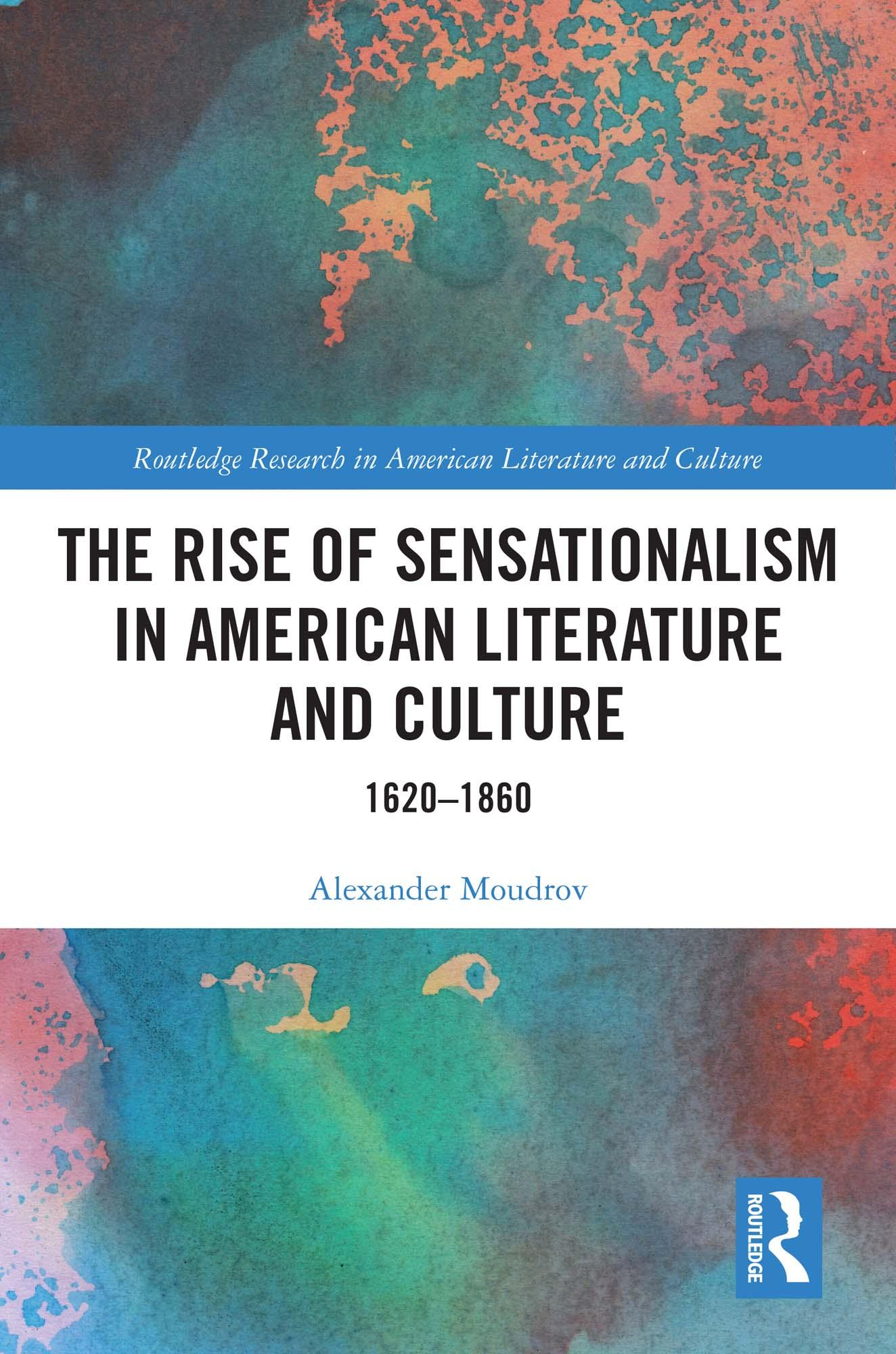
The Rise of Sensationalism in American Literature and Culture: 1620‑1860 argues that the rise of the American tradition of sensationalism can be better understood in the transatlantic context. Early American writers were unquestionably influenced by various forms of European sensationalism. At the same time, they often felt compelled to distance themselves from their European counterparts whom they accused of promoting voyeuristic indulgence in the scandalous and demoralizing their readers. American writers typically claimed that they turned to the scandalous only to promote legitimate religious, political, and social causes. In this respect, their approach reflected the Puritan tradition of didactic sensationalism in which provocative themes (religious dissent, crime, and sex scandals) were routinely exploited in ostensibly well‑intentioned publications (sermons, crime reports, and journalism). What is remarkable about the antebellum period is that it saw a dramatic transformation of American sensationalist literature as popular writers started to incorporate elements of European sensationalism while trying to preserve the didactic conventions of their predecessors.
Betal nemt med kort, Klarna, Apple Pay eller Google Pay. Ikke tilfreds? Du har altid 14 dages fortrydelsesret. Læs mere i vores vilkår. Har du spørgsmål, så send os en mail på hello@memmo.org.
Memmo gør det nemmere at studere – uanset hvor du er i verden. Hos os samler du dine kursusbøger og smarte studieværktøjer ét sted: resuméer, quizzer, podcasts og flashcards. Og så er der Ted, din studieven, der svarer på alt, du undrer dig over. Over 50 000 studerende studerer allerede her – bygget til at hjælpe dig med at lære hurtigere og stresse mindre.