
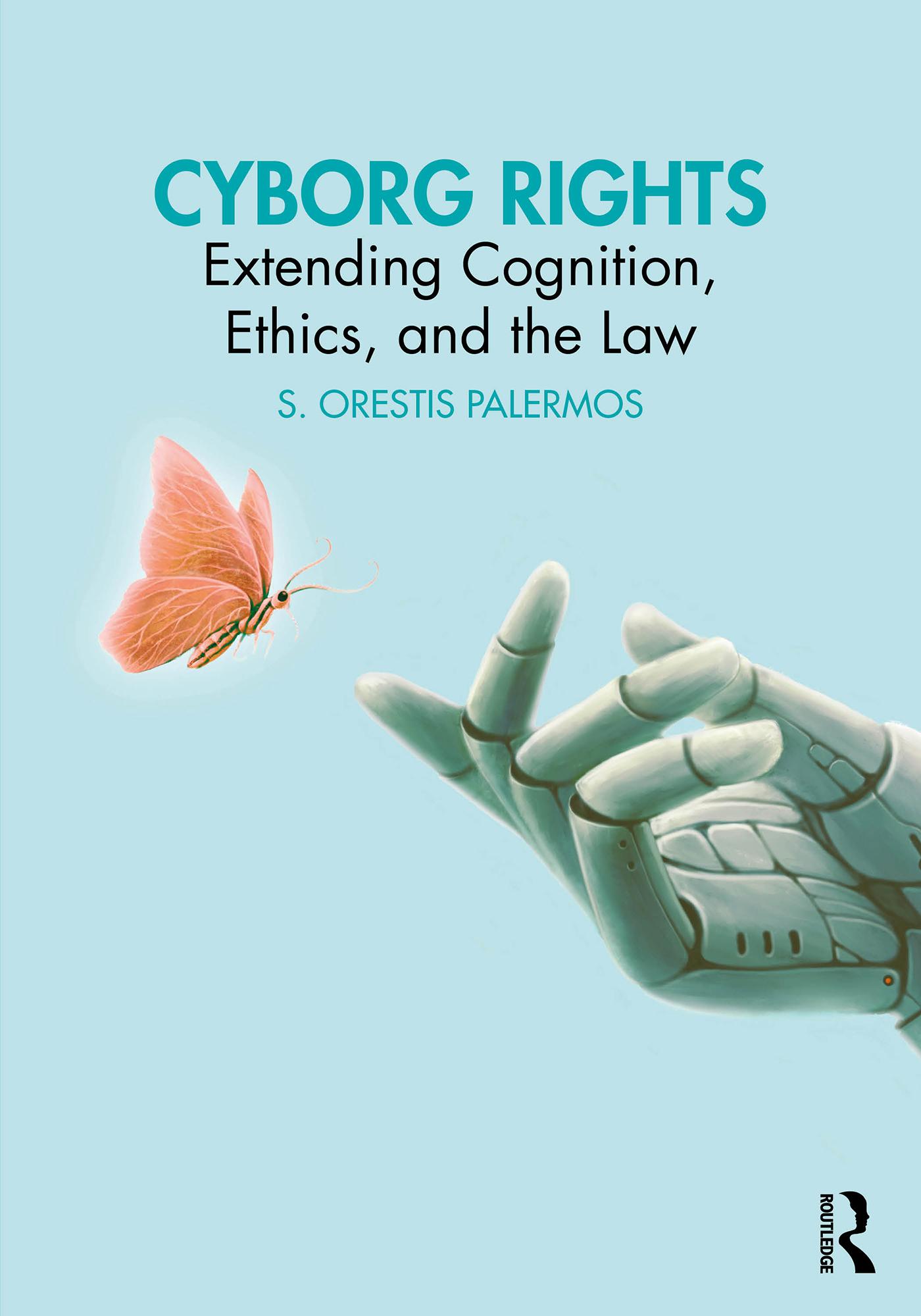
This book explores the ethical, legal, and rights-related ramifications of the Hypothesis of Extended Cognition and the Extended Mind Thesis. Focusing on technologies designed to extend our cognitive and mental capacities, it highlights serious threats associated with their development and deployment—and examines potential strategies for addressing them.
The discussion begins with an accessible introduction to the Hypothesis of Extended Cognition and the Extended Mind Thesis, responding to pressing objections and arguing that humans likely already are—or will soon become—cyborgs. Far from science fiction, the rapid advancement of extension technologies—such as invasive brain–computer interfaces—brings this scenario, and its disruptive consequences across ethics, rights, and the law, ever closer to reality. To underscore the stakes, the book focuses on key concerns relating to mental privacy, mental integrity, and extended forms of assault. It also outlines the values and factors we must consider as we transition into a world where the boundaries of the mind are increasingly fluid. Crucially, it argues that both legal and technological safeguards can be developed to mitigate the most troubling effects of cognitive and mental extension.
Cyborg Rights is the first book to offer a systematic analysis of this emerging topic, situated at the intersection of the philosophy of mind and cognitive science, ethics, and philosophy of law.
Betal nemt med kort, Klarna, Apple Pay eller Google Pay. Ikke tilfreds? Du har altid 14 dages fortrydelsesret. Læs mere i vores vilkår. Har du spørgsmål, så send os en mail på hello@memmo.org.
Memmo gør det nemmere at studere – uanset hvor du er i verden. Hos os samler du dine kursusbøger og smarte studieværktøjer ét sted: resuméer, quizzer, podcasts og flashcards. Og så er der Ted, din studieven, der svarer på alt, du undrer dig over. Over 50 000 studerende studerer allerede her – bygget til at hjælpe dig med at lære hurtigere og stresse mindre.