
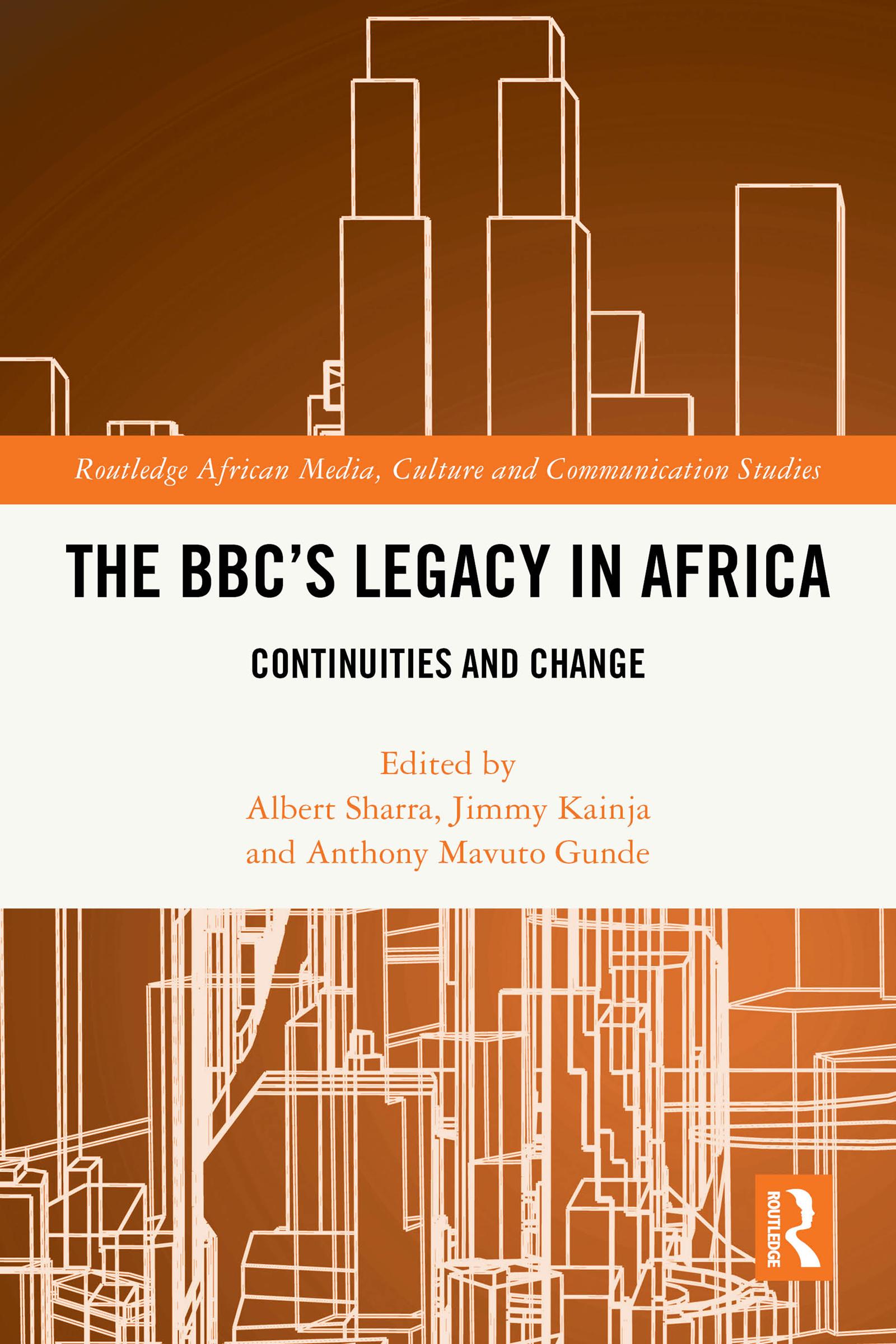
This book critically examines the historical and ongoing influence of the British Broadcasting Corporation (BBC) on African broadcasting, tracing its colonial roots through to its post-colonial legacy.
The book details how in the 1930s the BBC established radio transmitter sites in East and Central Africa, thereby positioning itself as a model for broadcasting in British colonies and beyond. Grounded in a decolonial perspective, the book then explores the evolution of African radio structures, funding models, editorial policies and programming strategies. In the post-colonial era, the BBC continued to train, equip and support African broadcasters while maintaining a strong presence through African-focused programming. Some nations fully embraced the BBC model, while others developed hybrid broadcasting systems integrating British, local and transnational influences. Beyond historical analysis, the book interrogates the BBC’s enduring influence on African media, examining how contemporary local broadcasters negotiate, adapt or resist its legacy. A nuanced exploration of these dynamics provides critical insights into the intersection of colonial-era institutions and contemporary African media landscapes.
This book is an essential resource for scholars and researchers in media and communication studies, African studies and decolonial studies, offering a comprehensive understanding of the BBC’s role in shaping African broadcasting.
Betal nemt med kort, Klarna, Apple Pay eller Google Pay. Ikke tilfreds? Du har altid 14 dages fortrydelsesret. Læs mere i vores vilkår. Har du spørgsmål, så send os en mail på hello@memmo.org.
Memmo gør det nemmere at studere – uanset hvor du er i verden. Hos os samler du dine kursusbøger og smarte studieværktøjer ét sted: resuméer, quizzer, podcasts og flashcards. Og så er der Ted, din studieven, der svarer på alt, du undrer dig over. Over 50 000 studerende studerer allerede her – bygget til at hjælpe dig med at lære hurtigere og stresse mindre.