
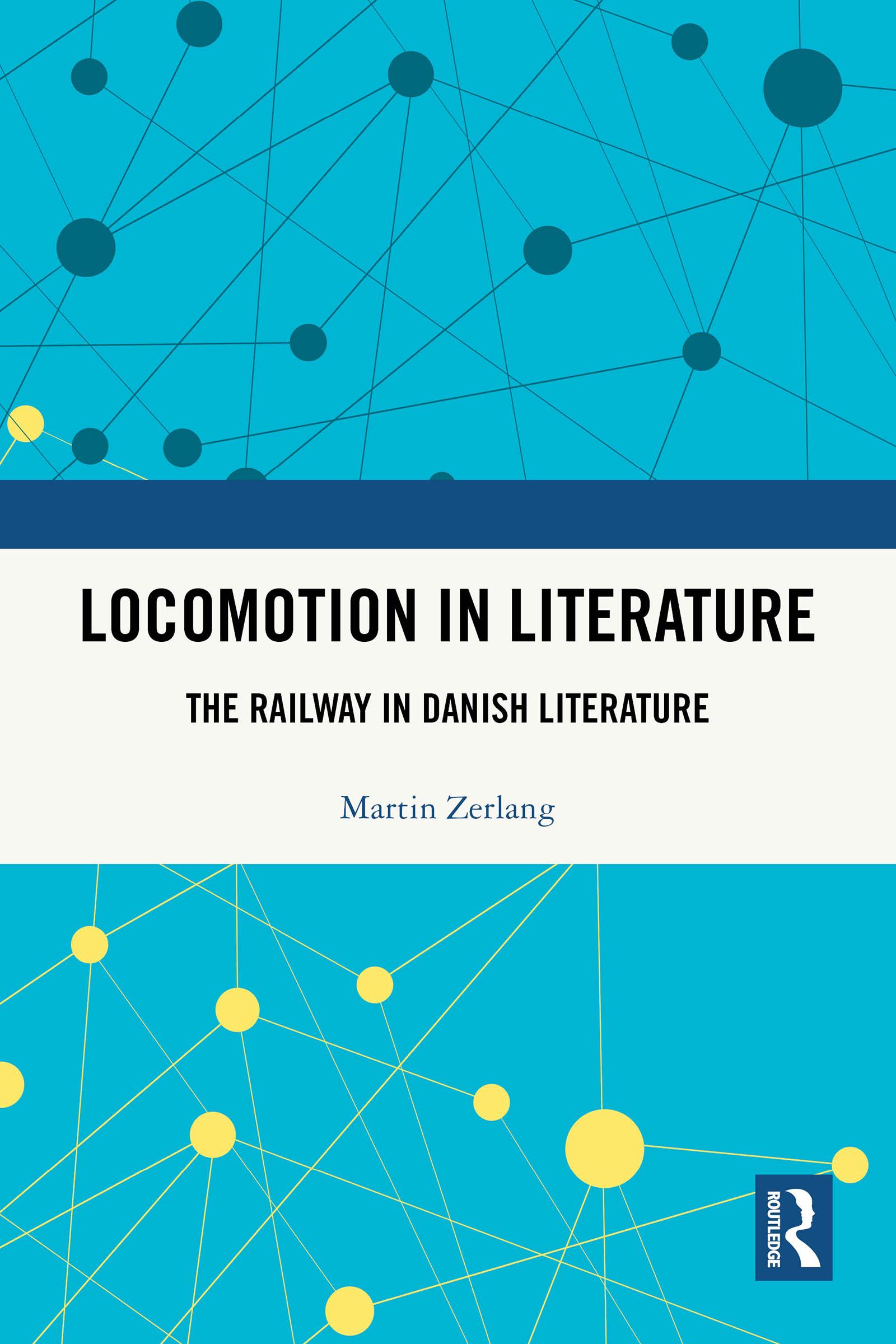
The invention of the locomotive changed landscapes, cityscapes, social relations, sensibilities prophesied by Hans Christian Andersen it also made huge impact on literature: on genres, themes, style. This book is about this commotion, this literary locomotion as it has been represented in Danish literature.
The book explores the movements between text and context, and the interplay between literature and social history. Through the prism of the railway, the book provides an overview of Danish literary history, from writers such as Søren Kierkegaard, Georg Brandes, Henrik Pontoppidan, Johannes V. Jensen, Tove Ditlevsen, Peter Høeg. The locomotive of history is a well-known metaphor, but a historical reading of these writers also show the impact of history on this metaphor, from something extraordinary to something more ordinary. Hans Christian Andersen wrote about meeting God face-to-face on the railway. The experience of the modern commuter is closer to what Georges Perec calls the infraordinary. As reflected in the work of Peter Høeg, however, the railway also figures in the intense contemporary debates on decolonizing. The book draws on theoretical insights expressed in concepts such as chronotope, character and literary speed.
This book will be of interest to students and scholars in literature studies, history, transport and mobility studies, human geography and urban studies.
Betal nemt med kort, Klarna, Apple Pay eller Google Pay. Ikke tilfreds? Du har altid 14 dages fortrydelsesret. Læs mere i vores vilkår. Har du spørgsmål, så send os en mail på hello@memmo.org.
Memmo gør det nemmere at studere – uanset hvor du er i verden. Hos os samler du dine kursusbøger og smarte studieværktøjer ét sted: resuméer, quizzer, podcasts og flashcards. Og så er der Ted, din studieven, der svarer på alt, du undrer dig over. Over 50 000 studerende studerer allerede her – bygget til at hjælpe dig med at lære hurtigere og stresse mindre.