
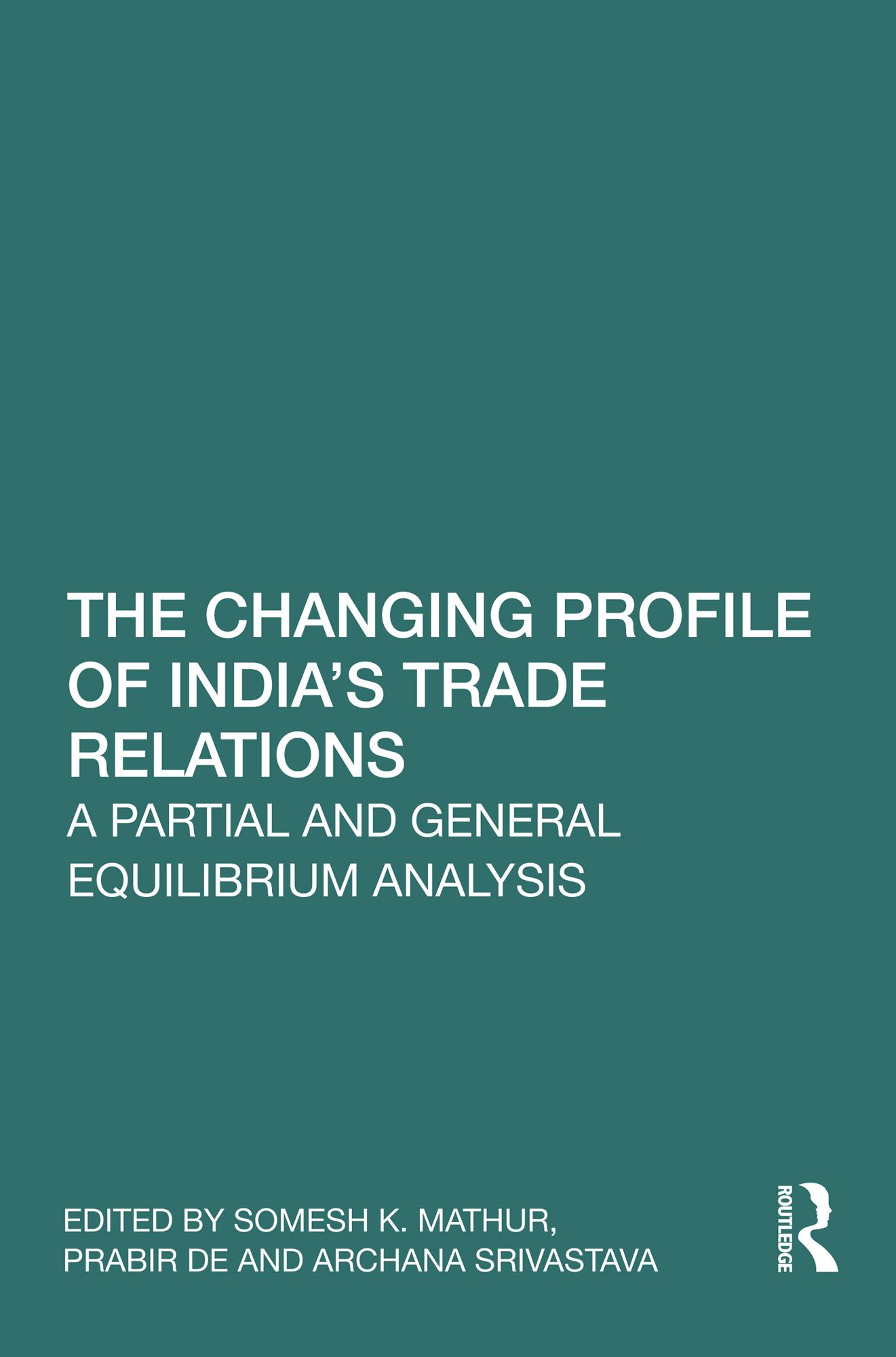
This book unravels the complex spectrum of trade policy in India with the help of partial and general equilibrium models. It evaluates India’s recent trade deals with the UAE, Australia, European Free Trade Area (EFTA), and Mauritius, among others.
Using applied general equilibrium methods to analyse recent debates about the conduct of India’s trade policy, this book aims to present how the barriers to trade have been affecting trade flows. It further presents a set of large-scale computable general equilibrium simulations of the effects of changes in trade barriers. It also explores India's need to deal strategically with China and provide different economic solutions, despite the conflicts along their international borders. Moreover, it focuses on how India, through its trade orientation, needs to manage its natural resources and deal with land scarcity.
The volume will be of interest to scholars and researchers of international trade and finance, business economics, and econometrics. It will also be of interest to foreign trade experts, researchers, policy makers and government officials, among others.
Betal nemt med kort, Klarna, Apple Pay eller Google Pay. Ikke tilfreds? Du har altid 14 dages fortrydelsesret. Læs mere i vores vilkår. Har du spørgsmål, så send os en mail på hello@memmo.org.
Memmo gør det nemmere at studere – uanset hvor du er i verden. Hos os samler du dine kursusbøger og smarte studieværktøjer ét sted: resuméer, quizzer, podcasts og flashcards. Og så er der Ted, din studieven, der svarer på alt, du undrer dig over. Over 50 000 studerende studerer allerede her – bygget til at hjælpe dig med at lære hurtigere og stresse mindre.