
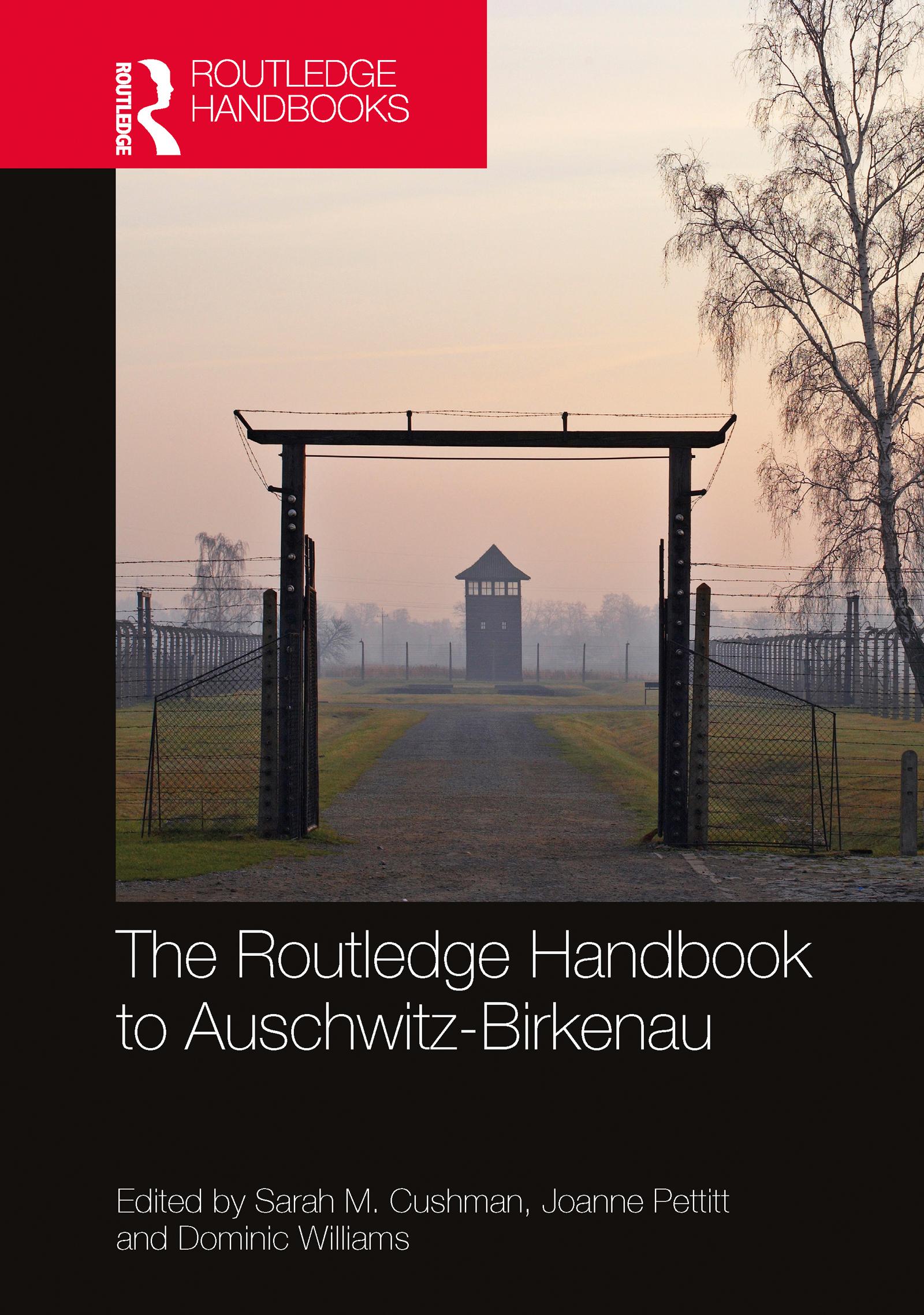
This handbook examines Auschwitz-Birkenau as both a site and a symbol of Nazi genocide. Scholars from a range of disciplinary perspectives consider Auschwitz’s history by engaging with Holocaust historiography and its place in Holocaust memory and representation, illustrating their mutual influence.
The chapters bring new insights to topics that other studies of Auschwitz have explored before, such as the Sonderkommando, the Czech family camp, and literary representations of Auschwitz. Other chapters cover recent developments and more neglected areas, such as the experience and memory of Romani prisoners, the fate of Soviet prisoners of war, and Auschwitz’s presence on social media. The handbook also responds to a number of recent trends and new paradigms in Holocaust Studies, including contributions from the fields of Environmental Studies, Spatial Studies, and Gender Studies.
As a crucial overview of the topic of Auschwitz-Birkenau and an introduction to its most recent and fruitful scholarly approaches, this handbook will be a valuable resource for undergraduates from second year and up, as well as for graduate students and researchers seeking a survey of the field.
Betal nemt med kort, Klarna, Apple Pay eller Google Pay. Ikke tilfreds? Du har altid 14 dages fortrydelsesret. Læs mere i vores vilkår. Har du spørgsmål, så send os en mail på hello@memmo.org.
Memmo gør det nemmere at studere – uanset hvor du er i verden. Hos os samler du dine kursusbøger og smarte studieværktøjer ét sted: resuméer, quizzer, podcasts og flashcards. Og så er der Ted, din studieven, der svarer på alt, du undrer dig over. Over 50 000 studerende studerer allerede her – bygget til at hjælpe dig med at lære hurtigere og stresse mindre.