
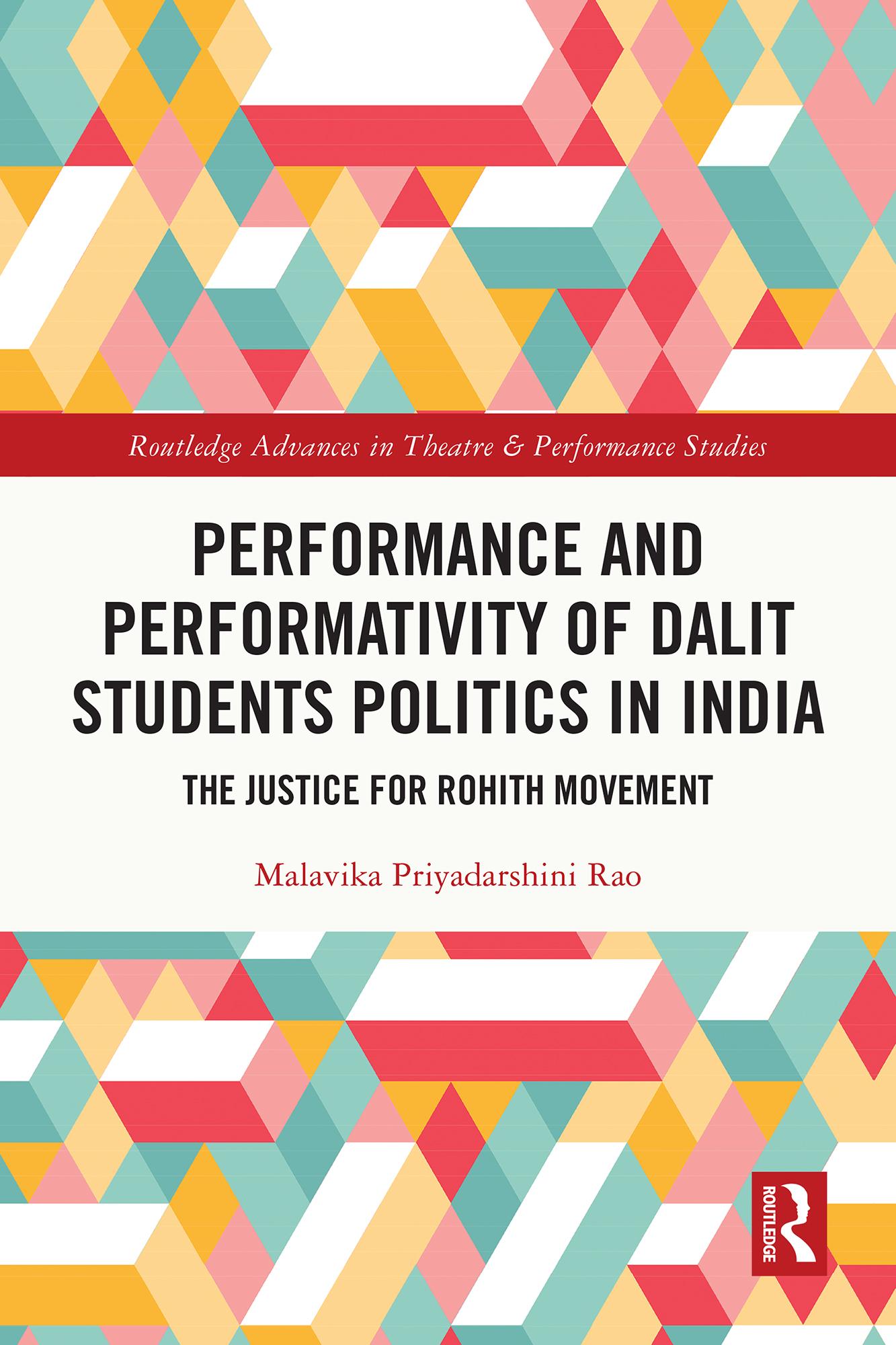
This book examines the significance of body, space, sound/voice/music and objects of resistance in everyday performance of Dalit student protests, focusing on the protests which erupted after Rohith Vemula, a Dalit PhD student, died,by suicide in Hyderabad Central University on 17 January 2016 in Hyderabad, India.
Rohith’s death sparked national and international outrage and led to the shutdown of the University for over a month and gave rise to the ‘Justice for Rohith movement’, which continued for over a year. Rohith’s death became a symbolic representation of other Dalit deaths due to systemic caste violence; the symbolism of his death expanded to include other marginalised groups who have faced systemic violence historically. The author highlights five distinct aesthetics prominent in Dalit student activist performance practices: (1) folk performance traditions; (2) counter-interpretation and representation of Hindu mythology and Hinduism; (3) inspiration from Ambedkar and Buddhist iconography; (4) Christian church hymns; and (5) the text of Rohith’s last letter.
In each chapter, the book explores how protesters draw on aesthetics and strategies from other political movements. This book will be of great interest to students and scholars in theatre and performance studies.
Betal nemt med kort, Klarna, Apple Pay eller Google Pay. Ikke tilfreds? Du har altid 14 dages fortrydelsesret. Læs mere i vores vilkår. Har du spørgsmål, så send os en mail på hello@memmo.org.
Memmo gør det nemmere at studere – uanset hvor du er i verden. Hos os samler du dine kursusbøger og smarte studieværktøjer ét sted: resuméer, quizzer, podcasts og flashcards. Og så er der Ted, din studieven, der svarer på alt, du undrer dig over. Over 50 000 studerende studerer allerede her – bygget til at hjælpe dig med at lære hurtigere og stresse mindre.