
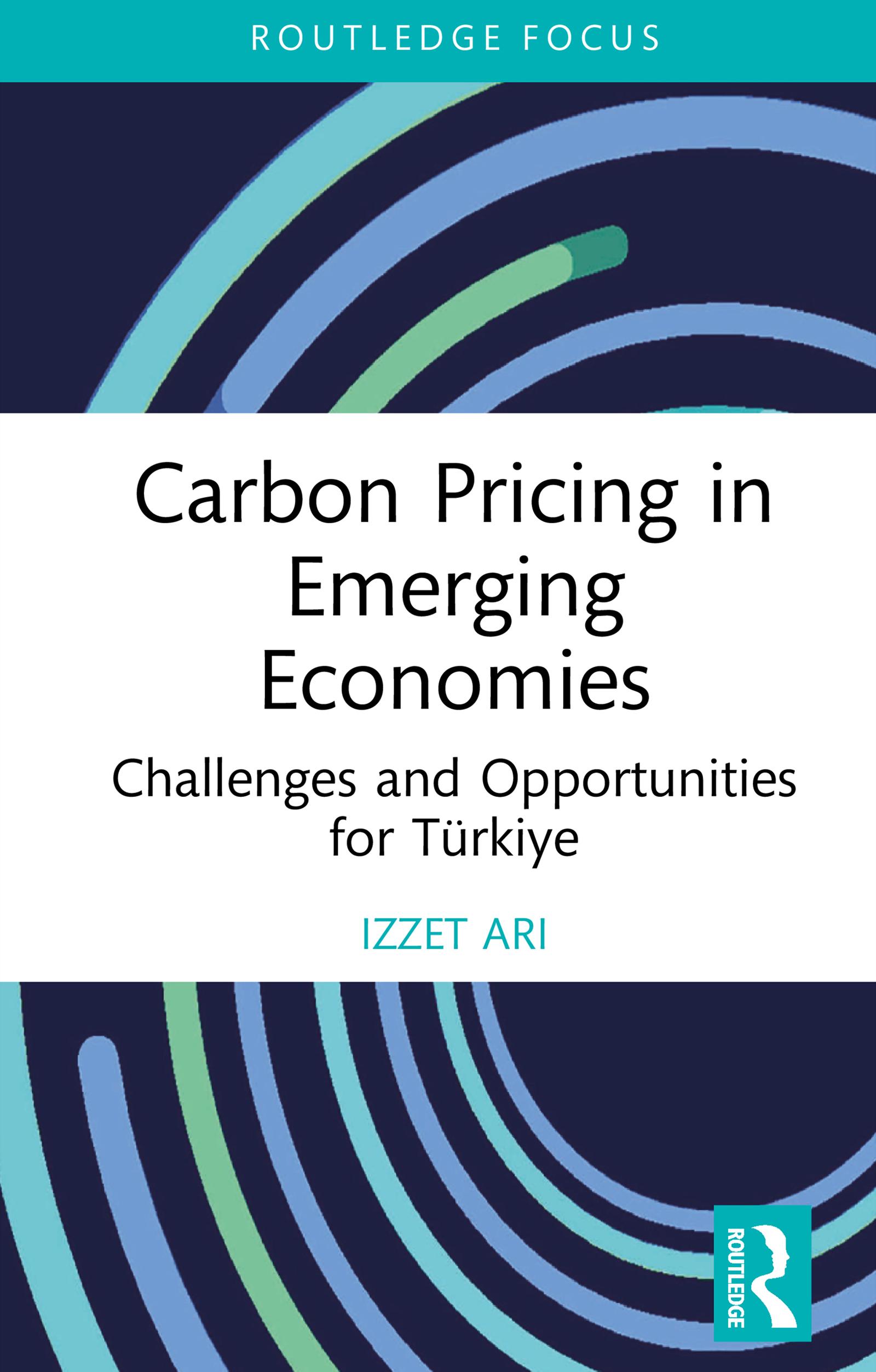
Carbon pricing is one of the key policy instruments available to help countries reach the goals of the Paris Agreement and the United Nations Framework Convention on Climate Change (UNFCCC).
This book explores the challenges and opportunities facing emerging economies in the implementation of carbon pricing with a particular focus on the case of Türkiye. After introducing the principles and practicalities of carbon pricing mechanisms, the book explores the economic feasibility of Türkiye achieving Nationally Determined Contributions (NDCs) and net zero emissions targets. It is argued that its national circumstances hinder Türkiye’s use of carbon crediting mechanisms, auctions for carbon certificate units, and building bilateral and multilateral cooperation with other countries, leaving the voluntary carbon market as the only option. The book explores the implications of this and also highlights the need for improvements and reform in Türkiye’s climate laws, public institutions, and international relations to better support carbon pricing. The book also recommends aligning carbon pricing with ongoing energy market reforms, including the replacement of fossil fuel subsidies with more targeted support.
This book will be of significant interest to readers of energy economics, environmental economics, emerging economies, and climate change more broadly.
Betal nemt med kort, Klarna, Apple Pay eller Google Pay. Ikke tilfreds? Du har altid 14 dages fortrydelsesret. Læs mere i vores vilkår. Har du spørgsmål, så send os en mail på hello@memmo.org.
Memmo gør det nemmere at studere – uanset hvor du er i verden. Hos os samler du dine kursusbøger og smarte studieværktøjer ét sted: resuméer, quizzer, podcasts og flashcards. Og så er der Ted, din studieven, der svarer på alt, du undrer dig over. Over 50 000 studerende studerer allerede her – bygget til at hjælpe dig med at lære hurtigere og stresse mindre.