
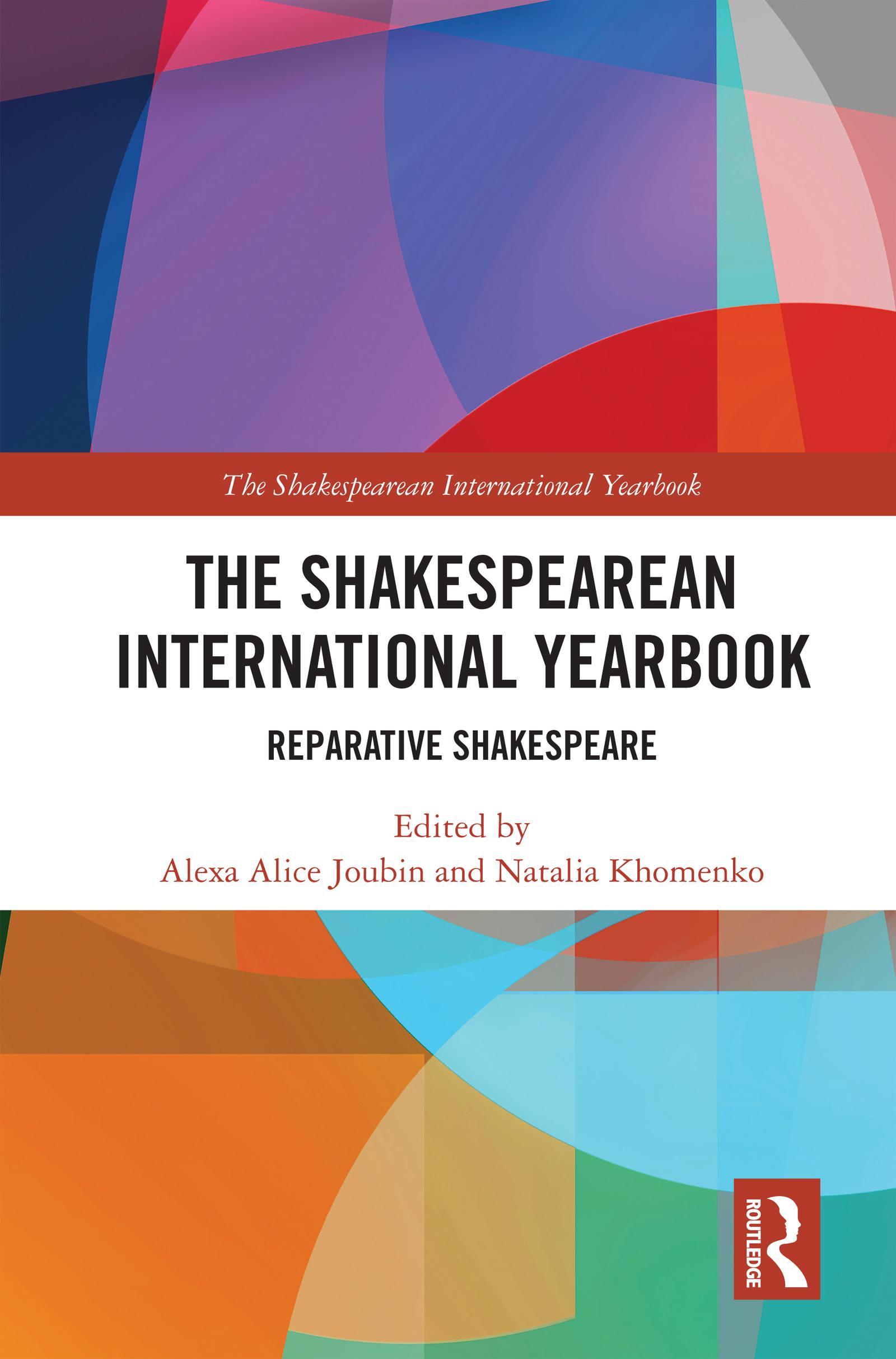
In the modern world, references to Shakespeare frequently mark moments of catastrophe and of the accompanying longing for restoring social order, remedying injuries, and building strong communities. Shakespeare’s moral authority has often been invoked to support artistic projects that claimed social justice as their goal on the assumption that drama has the power to manipulate perceptual reality. Drawing on cases from around the world, this book interrogates the idea that performing or reading Shakespeare has socially reparative value. It also acknowledges Shakespeare as a potential source of social well-being practices in the arts. The global framework shows that it is problematic to view Shakespeare as an impartial moral center.
This book proposes that reparative creativity, or remedial uses of the canon, can give artists and audiences more agency. Having a map of canonical texts’ hidden ideologies can help readers, artists, and playgoers navigate its landscape, which is in itself a reparative act.
Betal nemt med kort, Klarna, Apple Pay eller Google Pay. Ikke tilfreds? Du har altid 14 dages fortrydelsesret. Læs mere i vores vilkår. Har du spørgsmål, så send os en mail på hello@memmo.org.
Memmo gør det nemmere at studere – uanset hvor du er i verden. Hos os samler du dine kursusbøger og smarte studieværktøjer ét sted: resuméer, quizzer, podcasts og flashcards. Og så er der Ted, din studieven, der svarer på alt, du undrer dig over. Over 50 000 studerende studerer allerede her – bygget til at hjælpe dig med at lære hurtigere og stresse mindre.