
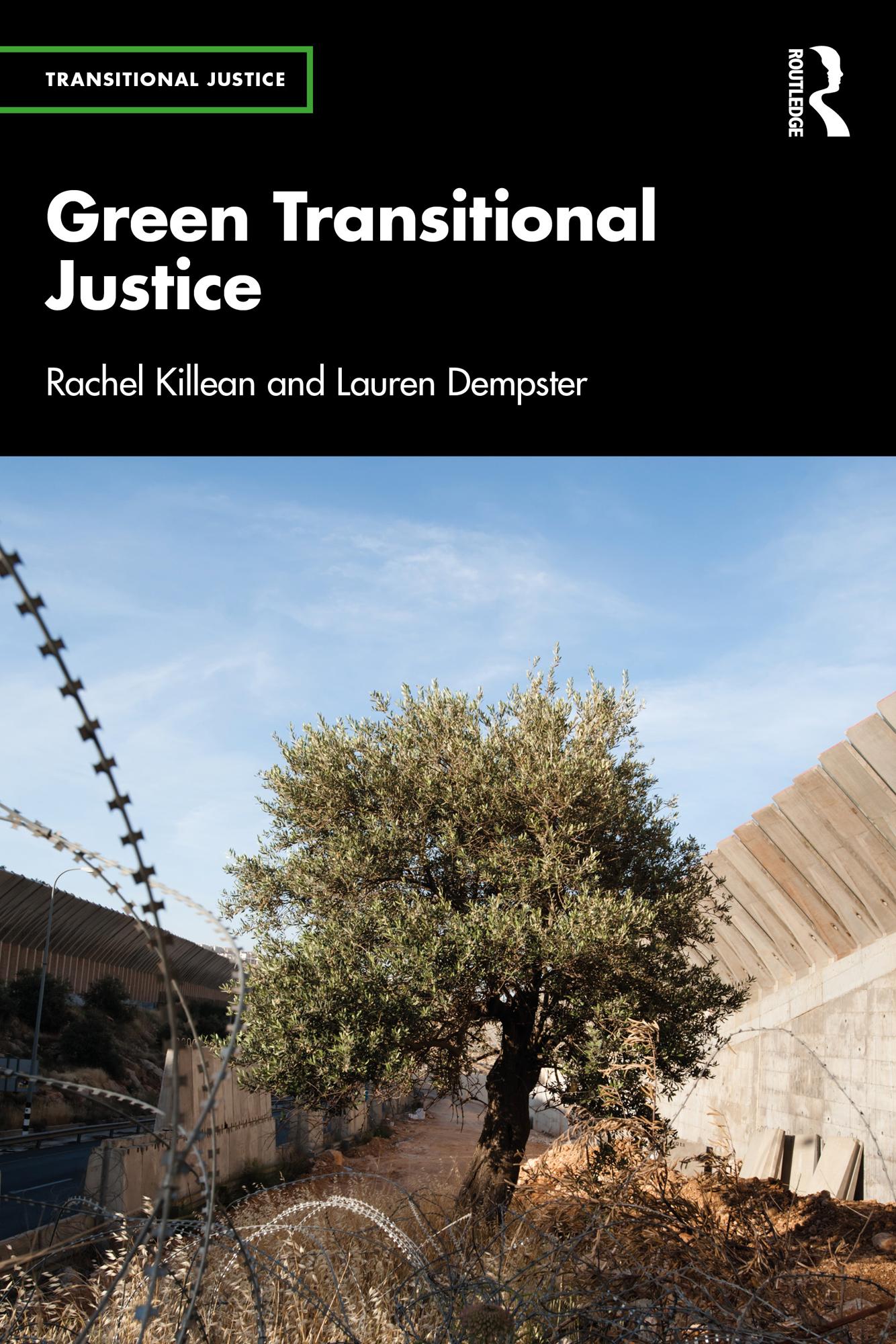
This book rethinks the boundaries of transitional justice, urging scholars and practitioners to confront the often-overlooked nexus between mass violence and ecological harm.
Through an in-depth analysis of the field’s limitations – such as its anthropocentric legalism, neocolonial practices, and alignment with neoliberalism – the book critiques the historical marginalisation of Nature in transitional justice discourse and practice. It argues that ignoring environmental harm not only undermines the possibility of holistic justice but also perpetuates structural violence and inequality. In response, the book sketches a ‘greener’ transitional justice, integrating principles from environmental justice, Indigenous knowledge systems, and ecocentric perspectives. It explores the possibilities of recognising Nature as a victim of mass violence, adapting existing mechanisms to incorporate environmental harm, and fostering transformative approaches premised on the interdependence of human and ecological well-being.
This book is written for students, researchers, and practitioners of transitional justice and fields related to conflict transformation, peacebuilding, environmental protection, and development.
Betal nemt med kort, Klarna, Apple Pay eller Google Pay. Ikke tilfreds? Du har altid 14 dages fortrydelsesret. Læs mere i vores vilkår. Har du spørgsmål, så send os en mail på hello@memmo.org.
Memmo gør det nemmere at studere – uanset hvor du er i verden. Hos os samler du dine kursusbøger og smarte studieværktøjer ét sted: resuméer, quizzer, podcasts og flashcards. Og så er der Ted, din studieven, der svarer på alt, du undrer dig over. Over 50 000 studerende studerer allerede her – bygget til at hjælpe dig med at lære hurtigere og stresse mindre.