
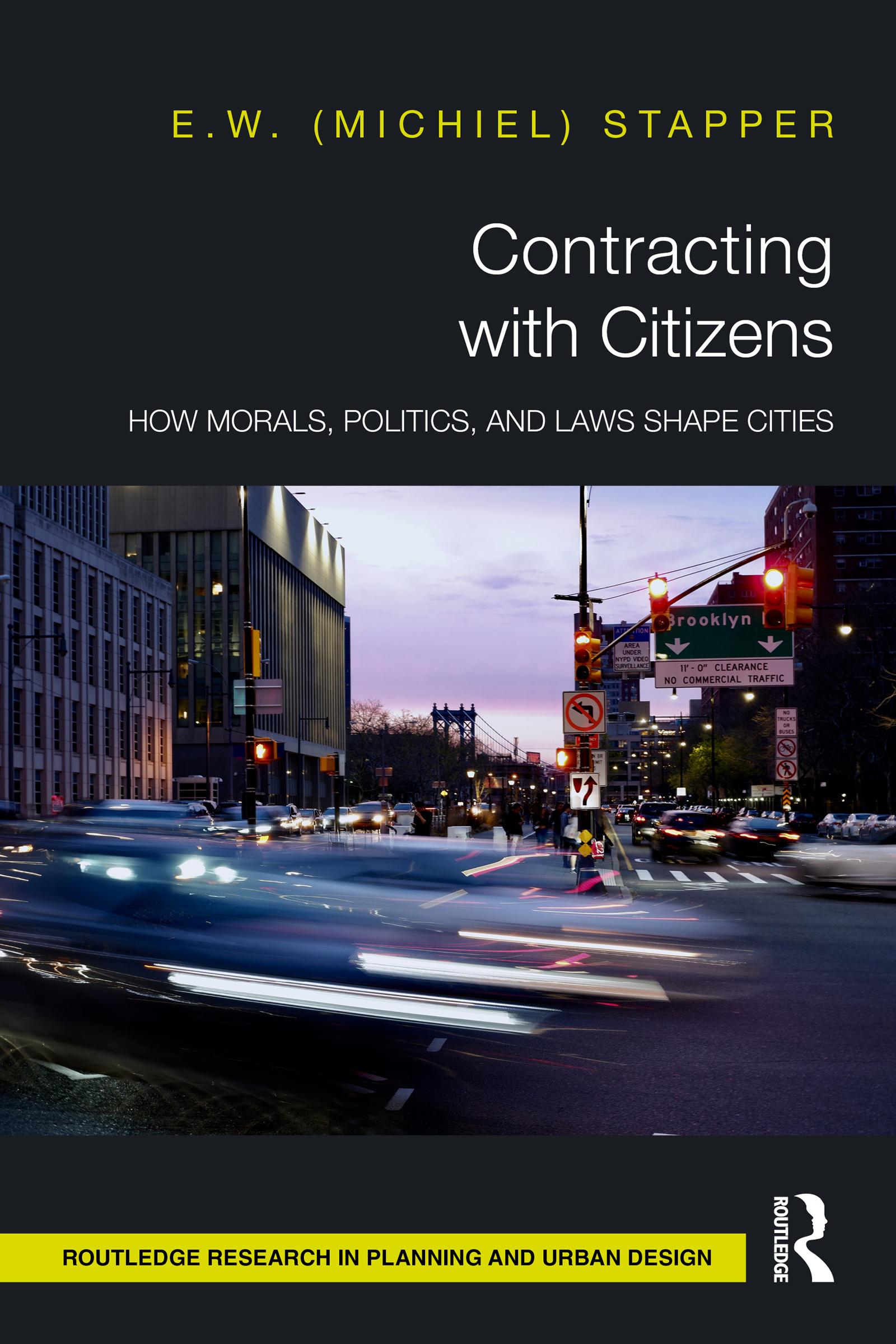
This book demonstrates that contracts, community intermediaries, and participatory processes are closely interlinked, and they can change urban politics.
In participatory processes, residents negotiate with policymakers about the future of their neighborhood. In the last few decades, this happened increasingly in co-creation sessions where citizens are deemed to have an equal position vis-a-vis developers and civil servants. The goal of this book is to understand and theorize how these negotiations affect collective action. The book will scrutinize the role of contracts, community intermediaries, and participatory processes in development projects and planning policies. Using a comparative case study of Amsterdam, Hamburg, and New York, this book reveals how seemingly fresh and novel planning practices are used to justify processes of capital accumulation and reveals how morals, politics, and law can create institutional change.
The book presents a novel theoretical approach to studying urban politics, putting emphasis on (private) law and the material arrangements of participatory processes. It will be of interest to researchers and students of planning, geography, sociology, public administration, and law and will provide valuable lessons for practitioners interested in understanding the effects of contractual governance on neighborhoods.
Betal nemt med kort, Klarna, Apple Pay eller Google Pay. Ikke tilfreds? Du har altid 14 dages fortrydelsesret. Læs mere i vores vilkår. Har du spørgsmål, så send os en mail på hello@memmo.org.
Memmo gør det nemmere at studere – uanset hvor du er i verden. Hos os samler du dine kursusbøger og smarte studieværktøjer ét sted: resuméer, quizzer, podcasts og flashcards. Og så er der Ted, din studieven, der svarer på alt, du undrer dig over. Over 50 000 studerende studerer allerede her – bygget til at hjælpe dig med at lære hurtigere og stresse mindre.