
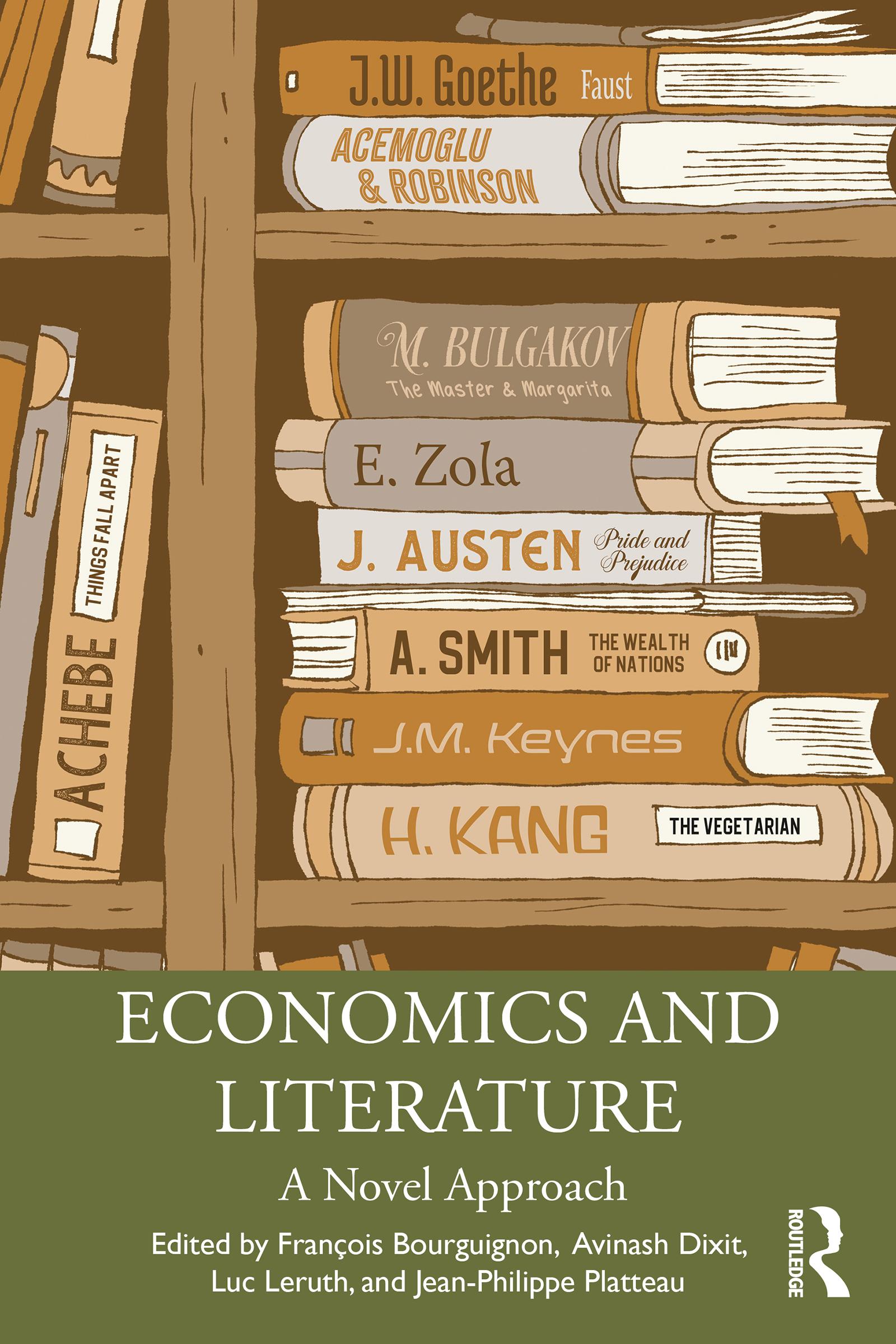
Economics and fiction often pursue parallel objectives. Economists analyze human decisions and interactions in markets and other institutions. Fiction writers also provide keen insights into individual minds and motives, examining how their characters respond to conflict and tensions in varied situations. This book explores the insights to be gained from developing this parallel.
In each chapter, economists discuss classic or contemporary literary creations, exploring economic incentives that motivate the characters, the economic mechanisms that tie them together, and/or the economic context in which they live and develop. Exploring the synergy across economics and literature offers new understandings of themes, including capitalism and colonialism, marriage and markets, gender norms, inheritance and estates, and the political economy of poverty. The broad and deep range of literary works includes writers from Shakespeare and Goethe, through Chekov and Steinbeck, to recent Nobelists Abdulrazak Gurnah and Han Kang. By offering new understandings of both economics and literature, readers will gain deeper insights into people’s thought processes, choices, and consequences.
This book will captivate readers in economics, social sciences, and the humanities and open their minds to the viewing of economic ideas and concepts through the prism of great works of literature.
Betal nemt med kort, Klarna, Apple Pay eller Google Pay. Ikke tilfreds? Du har altid 14 dages fortrydelsesret. Læs mere i vores vilkår. Har du spørgsmål, så send os en mail på hello@memmo.org.
Memmo gør det nemmere at studere – uanset hvor du er i verden. Hos os samler du dine kursusbøger og smarte studieværktøjer ét sted: resuméer, quizzer, podcasts og flashcards. Og så er der Ted, din studieven, der svarer på alt, du undrer dig over. Over 50 000 studerende studerer allerede her – bygget til at hjælpe dig med at lære hurtigere og stresse mindre.