
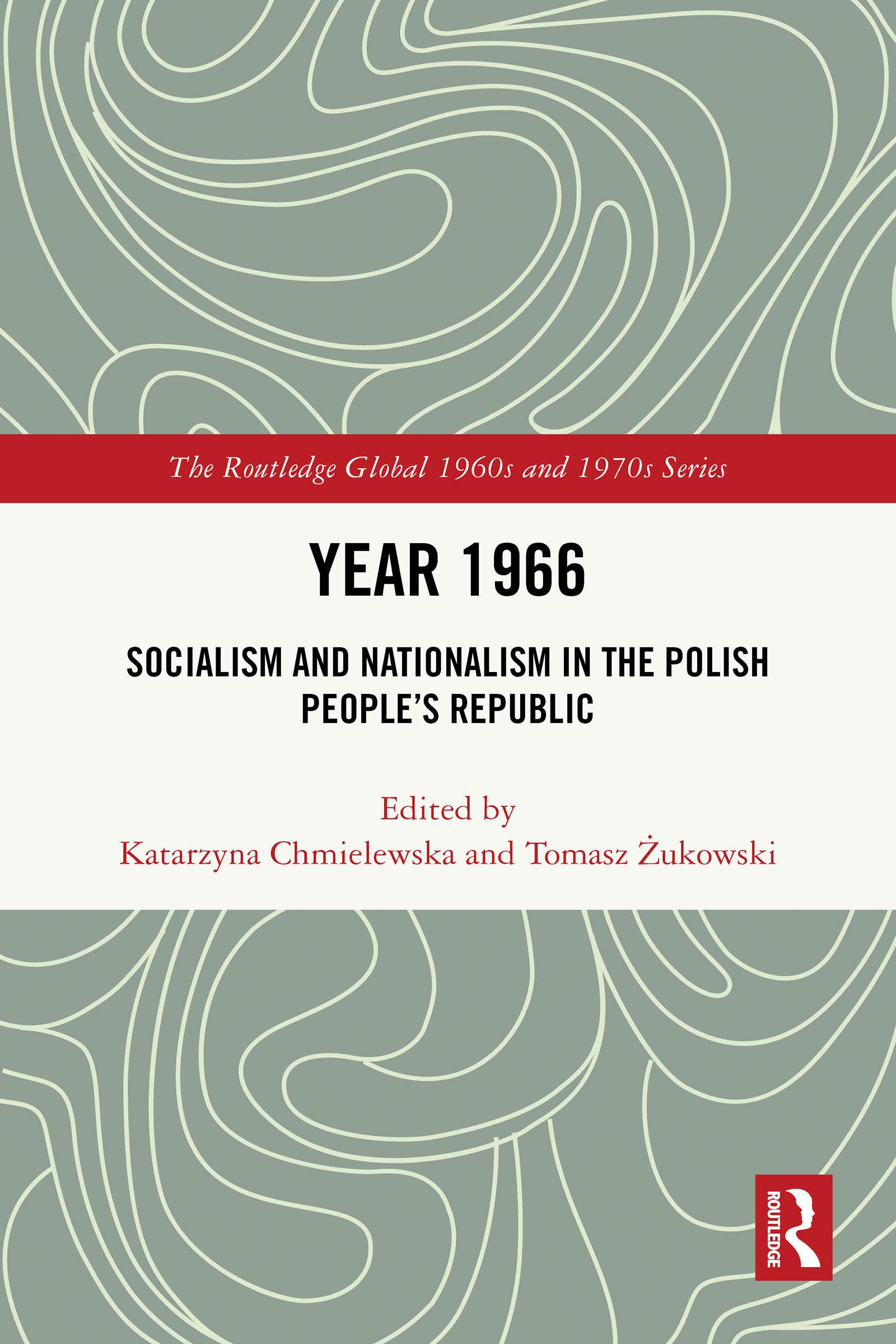
Year 1966 analyzes the breakthrough moment in the culture of the Polish People’s Republic when revolutionary social and cultural changes slowed down in the mid-1960s, leading to a turn toward the idea of a nation as a field of ideological dispute between different social actors.
The book explores the question of what happened in Polish culture at that time: how social ties were defined, where sources of legitimization of power for the new order were sought beyond the slogans of the revolution (equality, advancement, or prosperity), how historical politics participated in this process, the fate of the great emancipation projects of the 1950s such as emancipation of women or equality for ethnic minorities, and how the meanings of the related narratives changed. It also shows how all important actors (the diverse power camp, the emerging opposition, the Church) participated in this process, adapted their own narratives, and built a new understanding of society, social ties, history, and collective identity, with effects that would weigh heavily on the democratic transformations of the 1990s.
This volume is intended for researchers interested in the history and culture of Poland, communist Central and Eastern Europe, memory studies, cultural and literary history, social history, and sociology.
Betal nemt med kort, Klarna, Apple Pay eller Google Pay. Ikke tilfreds? Du har altid 14 dages fortrydelsesret. Læs mere i vores vilkår. Har du spørgsmål, så send os en mail på hello@memmo.org.
Memmo gør det nemmere at studere – uanset hvor du er i verden. Hos os samler du dine kursusbøger og smarte studieværktøjer ét sted: resuméer, quizzer, podcasts og flashcards. Og så er der Ted, din studieven, der svarer på alt, du undrer dig over. Over 50 000 studerende studerer allerede her – bygget til at hjælpe dig med at lære hurtigere og stresse mindre.