
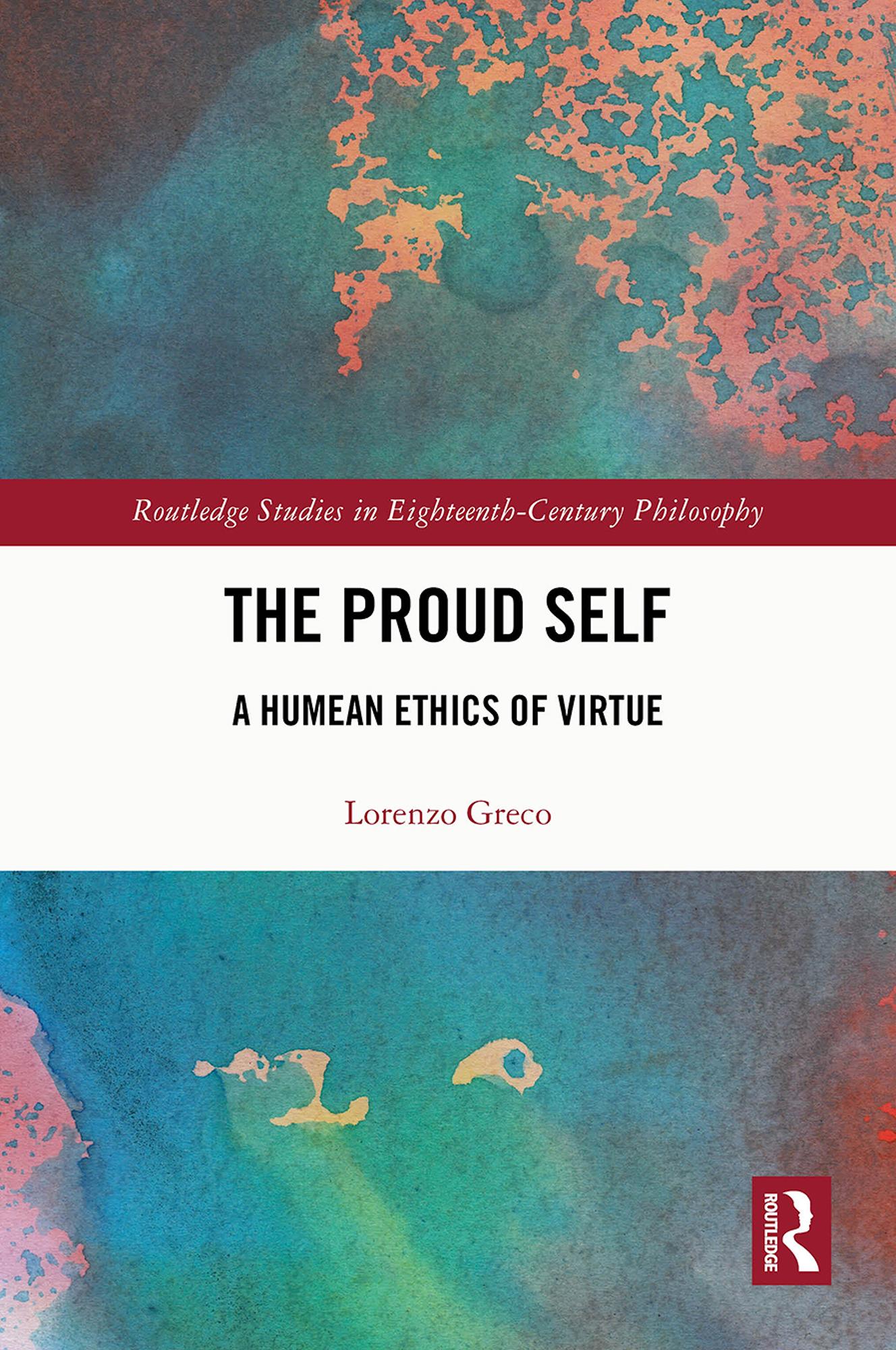
This book presents a novel interpretation of Hume as a proponent of sentimental virtue ethics. This interpretation sheds light on the nature of Hume’s ethics, as well as its relevance for contemporary debates in moral philosophy.
The book starts by developing an understanding of the self in Hume based on the passion of pride. Contrary to the common view that Hume denies the unity of the self by diluting it into a bundle or collection of different perceptions, the author argues that, by focusing on pride, it is possible to identify in Hume a firm notion of the self as having a sentimental nature that can be explained in narrative terms. Pivoting on this narrative self, he shows how it accounts for the Humean notion of the virtuous person by holding together in a harmonious whole several central issues in Hume’s moral philosophy, including sympathy, the point of view from which we make moral judgements, the practical nature of ethics and the role that reflection plays in it, and the definition of perfect character. Finally, the author maintains that Humean virtue ethics, so understood, has the individual at its core, representing a secular and pluralist alternative to neo-Aristotelian versions discussed today. The Proud Self will appeal to scholars and graduate students working on Hume, 18th-century philosophy, virtue ethics, and moral psychology.
Betal nemt med kort, Klarna, Apple Pay eller Google Pay. Ikke tilfreds? Du har altid 14 dages fortrydelsesret. Læs mere i vores vilkår. Har du spørgsmål, så send os en mail på hello@memmo.org.
Memmo gør det nemmere at studere – uanset hvor du er i verden. Hos os samler du dine kursusbøger og smarte studieværktøjer ét sted: resuméer, quizzer, podcasts og flashcards. Og så er der Ted, din studieven, der svarer på alt, du undrer dig over. Over 50 000 studerende studerer allerede her – bygget til at hjælpe dig med at lære hurtigere og stresse mindre.