
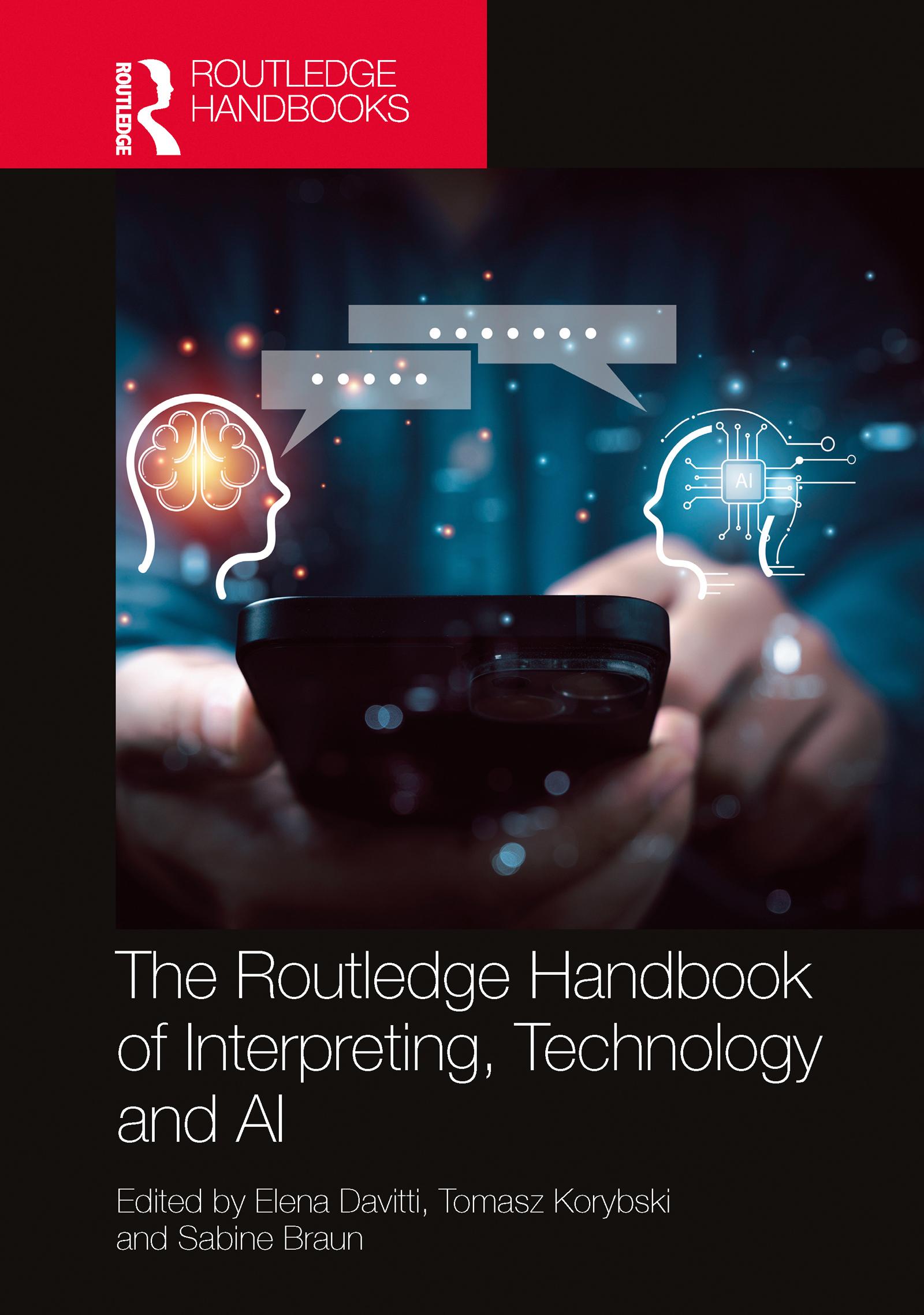
This handbook provides a comprehensive overview of the history, development, use, and study of the evolving relationship between interpreting and technology, addressing the challenges and opportunities brought by advances in AI and digital tools.
Encompassing a variety of methods, systems, and devices applied to interpreting as a field of practice as well as a study discipline, this volume presents a synthesis of current thinking on the topic and an understanding of how technology alters, shapes, and enables the interpreting task. The handbook examines how interpreting has evolved through the integration of both purpose-built and adapted technologies that support, automate, or even replace (human) interpreting tasks and offers insights into their ethical, practical, and socio-economic implications. Addressing both signed and spoken language interpreting technologies, as well as technologies for language access and media accessibility, the book draws together expertise from varied areas of study and illustrates overlapping aspects of research.
Authored by a range of practicing interpreters and academics from across five continents, this is the essential guide to interpreting and technology for both advanced students and researchers of interpreting and professional interpreters.
Betal nemt med kort, Klarna, Apple Pay eller Google Pay. Ikke tilfreds? Du har altid 14 dages fortrydelsesret. Læs mere i vores vilkår. Har du spørgsmål, så send os en mail på hello@memmo.org.
Memmo gør det nemmere at studere – uanset hvor du er i verden. Hos os samler du dine kursusbøger og smarte studieværktøjer ét sted: resuméer, quizzer, podcasts og flashcards. Og så er der Ted, din studieven, der svarer på alt, du undrer dig over. Over 50 000 studerende studerer allerede her – bygget til at hjælpe dig med at lære hurtigere og stresse mindre.