
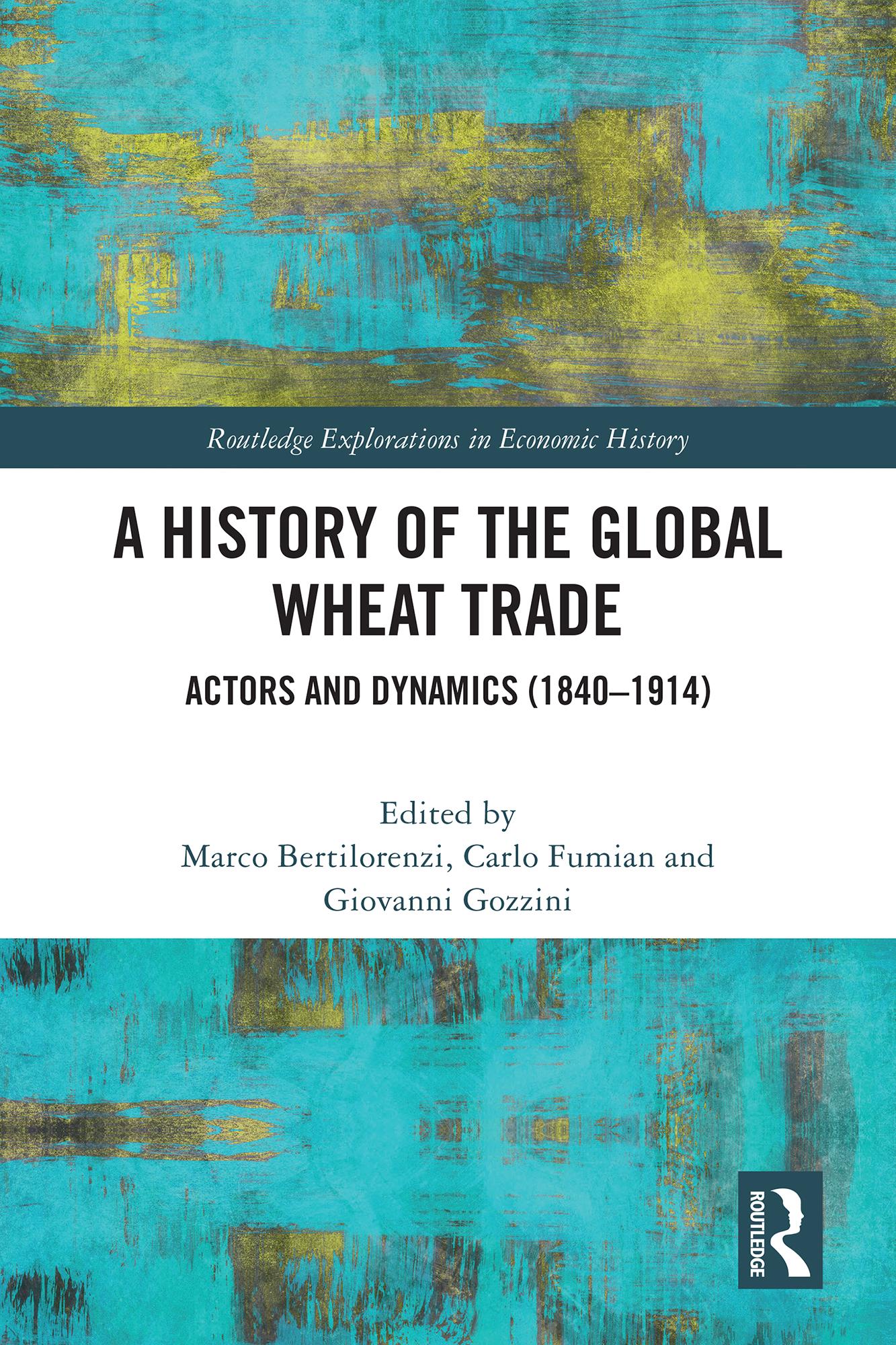
During the second half of the 19th century, a new global market for wheat came to the fore. Ever since, scarce and perishable food has been transformed into a modern global commodity, millions of tons of which is sold, bought, and transported across the oceans, providing the “daily bread” for a fast-growing world population.
This book explores the historical origin of the global wheat market, offering an actor-centred view of the history of this new global commodity. The contributions to this volume demonstrate that the development of the global wheat trade through the late 19th and early 20th centuries has not only impacted the world food regime, it also led to the dissemination of new economic institutions. Countless technological innovations, such as elevators or telegraphic lines, have paved the way to the creation of new financial tools for trade, such as futures and grain exchanges, which transformed the market. The book also examines new global actors, such as Cargill, Louis-Dreyfus, or Bunge y Born, who took advantage of the new opportunities provided by the interlinked and globalized world grain trade. For the first time in history, the price of a single commodity which was crucial for human life ended up being decided in the areas of production by the producers and started to be fixed further afield, in specific and anonymous trading places.
The book will be of great interest to historians of economics, business, trade, agriculture, globalization, and commodities.
Betal nemt med kort, Klarna, Apple Pay eller Google Pay. Ikke tilfreds? Du har altid 14 dages fortrydelsesret. Læs mere i vores vilkår. Har du spørgsmål, så send os en mail på hello@memmo.org.
Memmo gør det nemmere at studere – uanset hvor du er i verden. Hos os samler du dine kursusbøger og smarte studieværktøjer ét sted: resuméer, quizzer, podcasts og flashcards. Og så er der Ted, din studieven, der svarer på alt, du undrer dig over. Over 50 000 studerende studerer allerede her – bygget til at hjælpe dig med at lære hurtigere og stresse mindre.