
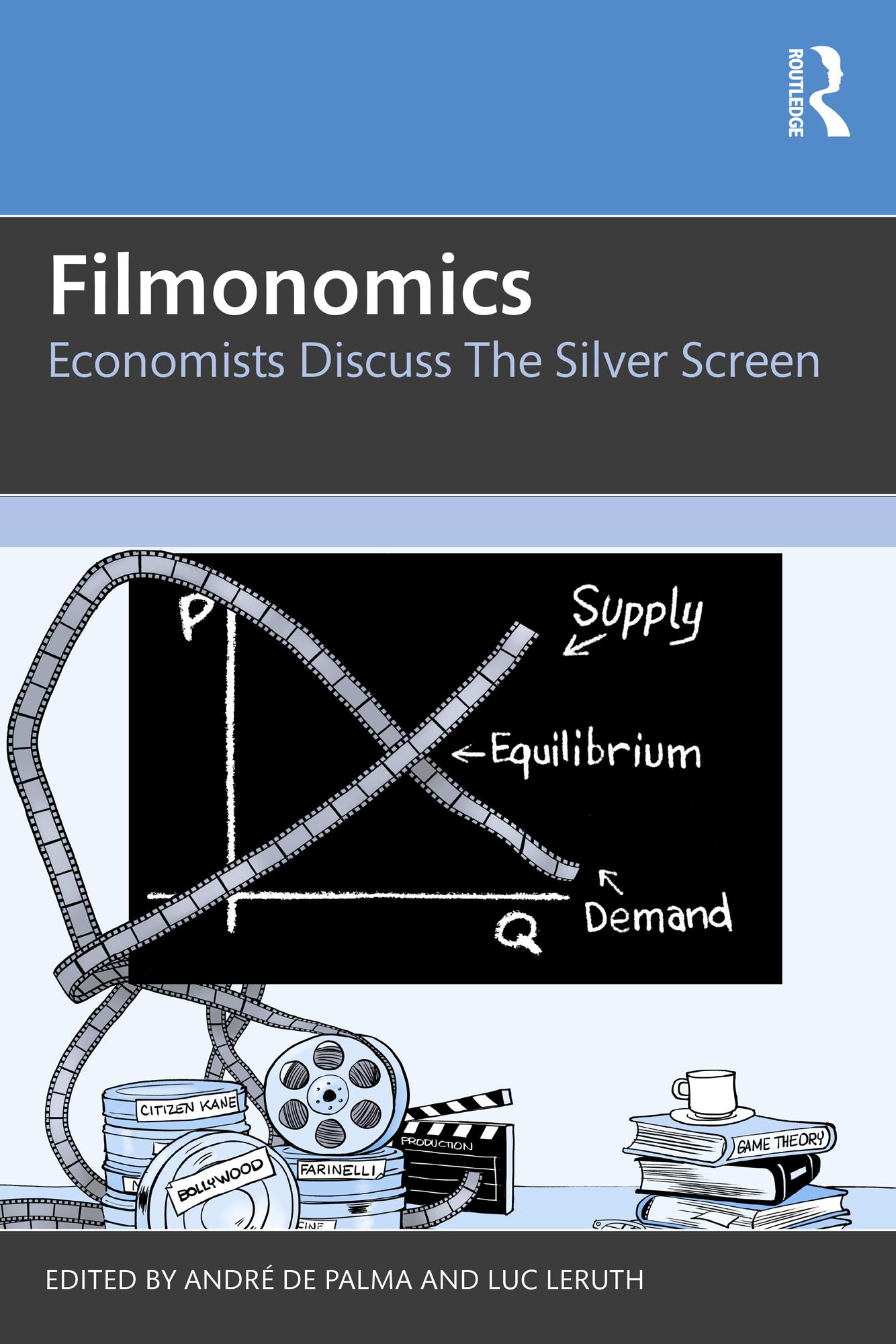
What could movies as diverse as The Last Samurai, Cléo from 5 to 7, or Dr. Strangelove have in common? Filmonomics has a simple yet intriguing answer: economics as the main driving force of the plot or as the main motivation of the characters’ actions.
This book analyses how movie makers use economic and financial motives in their plots or to build their characters. Have they done it in line with economic theory? Or are they proposing a new angle, a new perspective, that economists should take note of? The authors here do not discuss wages in the film industry or the economics of movies. What interests them is the economic motivations underpinning the behaviour of fictional characters in their favourite films. They argue that credible movie characters can behave in irrational ways, and movie makers occasionally introduce new ideas that economists should take note of.
A unique contribution, this book will be of interest to readers eager to discover what economists have to say about films and film directors. It will be indispensable for students and researchers of economics, media studies, film studies, and cultural studies.
Betal nemt med kort, Klarna, Apple Pay eller Google Pay. Ikke tilfreds? Du har altid 14 dages fortrydelsesret. Læs mere i vores vilkår. Har du spørgsmål, så send os en mail på hello@memmo.org.
Memmo gør det nemmere at studere – uanset hvor du er i verden. Hos os samler du dine kursusbøger og smarte studieværktøjer ét sted: resuméer, quizzer, podcasts og flashcards. Og så er der Ted, din studieven, der svarer på alt, du undrer dig over. Over 50 000 studerende studerer allerede her – bygget til at hjælpe dig med at lære hurtigere og stresse mindre.