
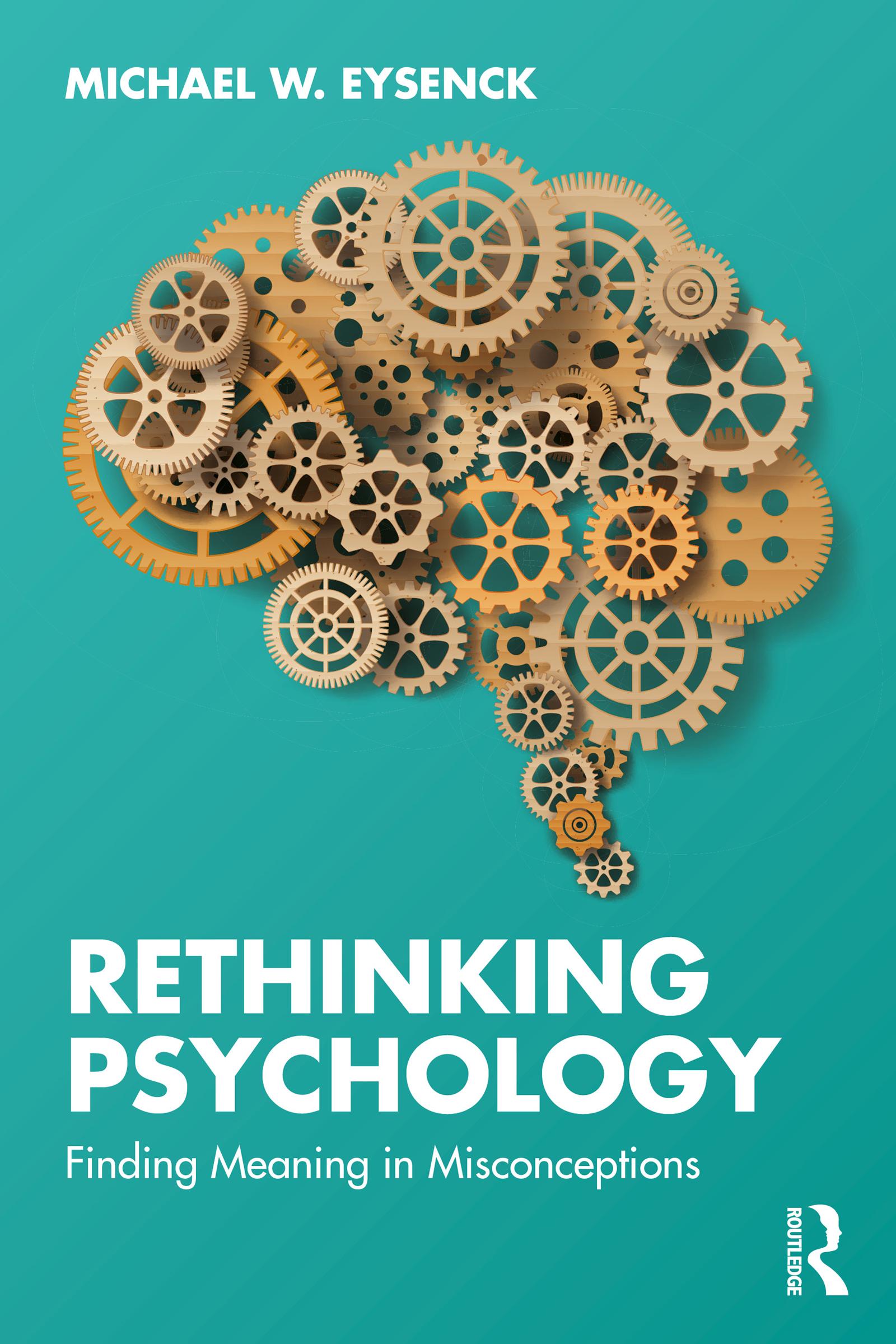
Can subliminal messages motivate behaviour? Can you train your brain to increase your intelligence? Does parenting style affect personality?
Psychologists and non-psychologists looking to understand human behaviour and cognition are forced to contend with a number of complexities unique to the field. Not least amongst these is the fact that psychology lacks the superficially attractive precision of theories in the hard sciences. It is inevitable, then, that non-psychologists are susceptible to numerous psychological myths.
In this thought-provoking exploration of 43 of the most common psychological myths, Michael W. Eysenck examines the complexity of psychological science as well as the distortion of data, not only through the media, but also by researchers, textbook writers, and individuals themselves. He challenges the notion that the substantial progress made by psychology has provided enough convincing experimental evidence to successfully demolish these inaccuracies and explores the ways in which psychological research should be systematically improved so that psychology can take its place as a robust scientific discipline. Highly engaging, this is an informative read for psychologists at all levels, as well as members of the general public interested in challenging their own psychological understanding.
Betal nemt med kort, Klarna, Apple Pay eller Google Pay. Ikke tilfreds? Du har altid 14 dages fortrydelsesret. Læs mere i vores vilkår. Har du spørgsmål, så send os en mail på hello@memmo.org.
Memmo gør det nemmere at studere – uanset hvor du er i verden. Hos os samler du dine kursusbøger og smarte studieværktøjer ét sted: resuméer, quizzer, podcasts og flashcards. Og så er der Ted, din studieven, der svarer på alt, du undrer dig over. Over 50 000 studerende studerer allerede her – bygget til at hjælpe dig med at lære hurtigere og stresse mindre.