
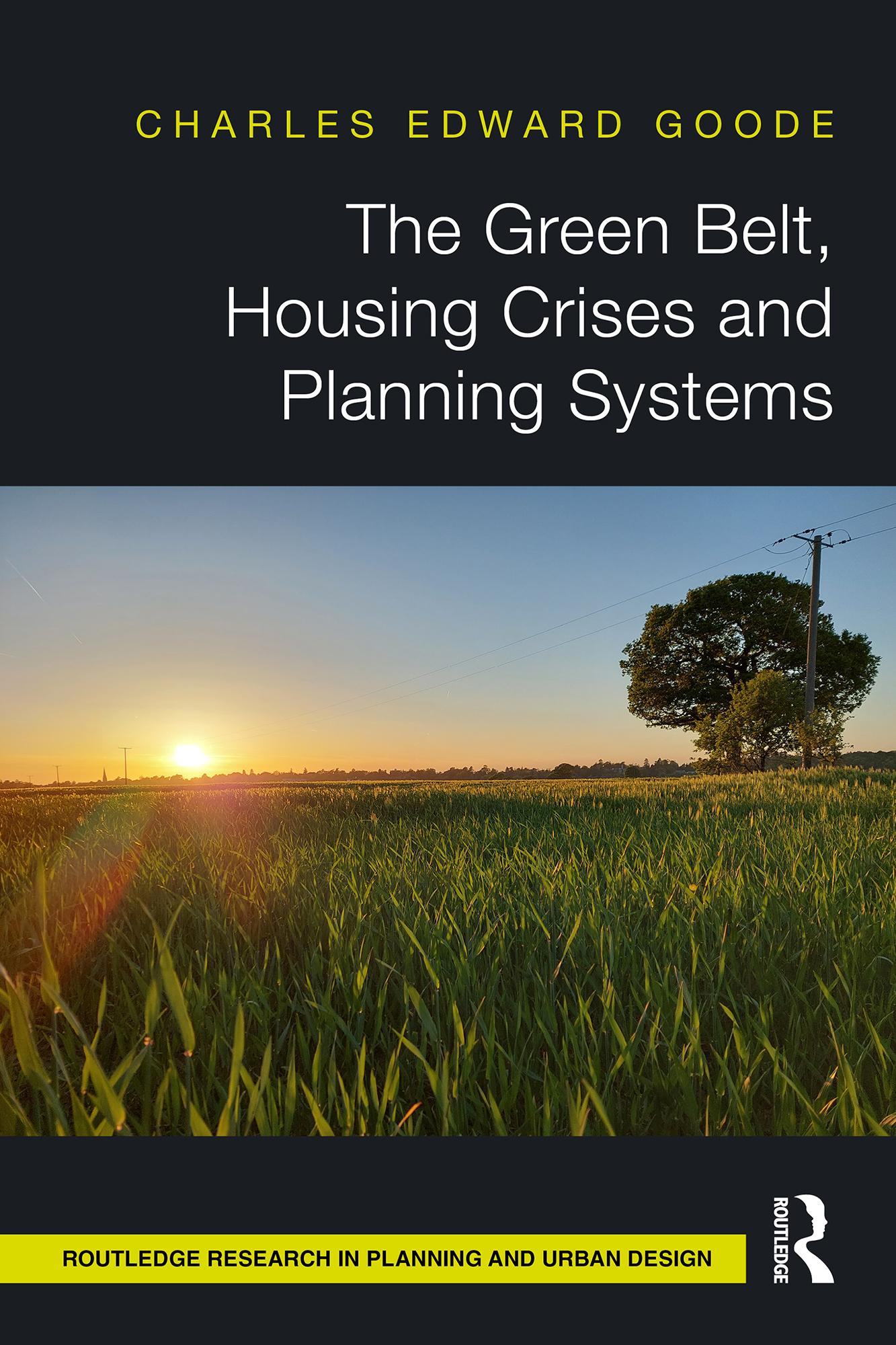
This book evaluates the effectiveness of the Green Belt planning policy in England. It is one of the most well-known strategies internationally, with similar growth restraint policies having been adopted in a diverse range of cities around the world, such as Portland, Medellin and Bangkok. Despite this, it is often argued that Green Belts contribute to wider inequitable outcomes in society.
Focusing on the Green Belt in England, the book critically analyses the extent to which these policies and planning systems contribute to housing crises and examines how far they need to be reformed. With the central role of community engagement in many of the debates about housing crises, the book investigates the characteristics of popular and campaigner opposition to housebuilding alongside investigating the power relations and politics of planning systems. This timely research taps into important current policy debates in the UK surrounding urban nature, green infrastructure, and building on the ‘grey belt’.
The book is therefore of relevance and benefit to policymakers and politicians, to academics and students internationally from a range of fields interested in housing, community engagement, green infrastructure, strategic planning, power and politics, and conservation.
Betal nemt med kort, Klarna, Apple Pay eller Google Pay. Ikke tilfreds? Du har altid 14 dages fortrydelsesret. Læs mere i vores vilkår. Har du spørgsmål, så send os en mail på hello@memmo.org.
Memmo gør det nemmere at studere – uanset hvor du er i verden. Hos os samler du dine kursusbøger og smarte studieværktøjer ét sted: resuméer, quizzer, podcasts og flashcards. Og så er der Ted, din studieven, der svarer på alt, du undrer dig over. Over 50 000 studerende studerer allerede her – bygget til at hjælpe dig med at lære hurtigere og stresse mindre.