
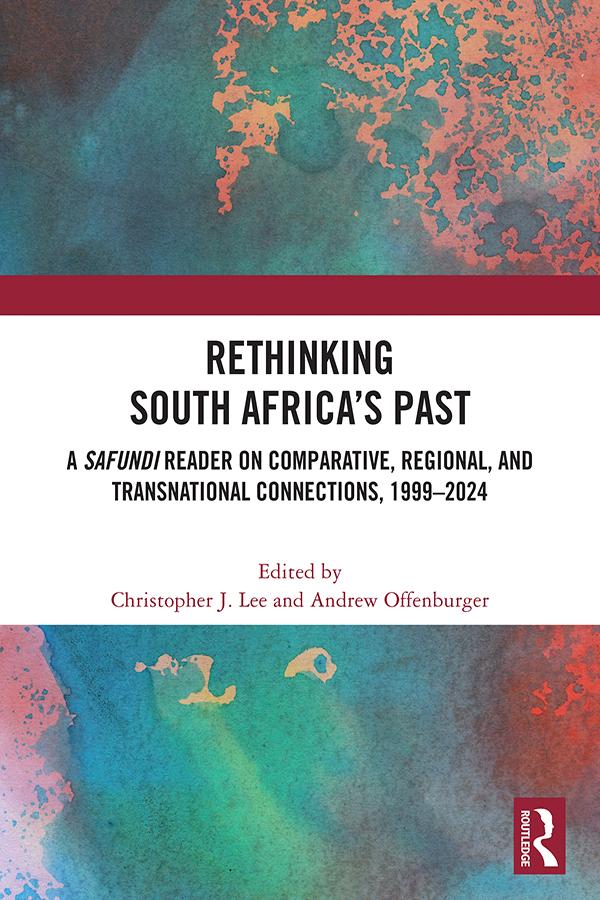
This book presents key historical scholarship published in Safundi from 1999 to 2024, tracing South Africa’s past through approaches of comparative history, transnational history, and visual history, in addition to addressing the importance of topics like gender, labor and class dynamics, as well as regional historiographies.
The first section of the book focuses on comparative history as a founding method for Safundi, given the journal’s origins in American and South African studies, while also recalibrating this approach through a variety of topics—cities, biographies and practices of violence—rather than nation-states writ large. Drawing upon innovative sources of evidence, the second section moves beyond the comparative method to address transnational histories as a new narrative technique for storytelling and analysis. Whether issues of education, immigration or visiting musicians to South Africa, these chapters demonstrate the importance of a post-national approach for understanding the past. The sections that follow fan out into other subject areas, including the uses of visual history, gender roles, class cultures and environmental history, all of which illuminate connections between South African history and other parts of the world.
This book will be an indispensable resource for scholars, students, activists and policymakers, as well as those readers who are generally interested in understanding South Africa’s complex history over the past several centuries.
Betal nemt med kort, Klarna, Apple Pay eller Google Pay. Ikke tilfreds? Du har altid 14 dages fortrydelsesret. Læs mere i vores vilkår. Har du spørgsmål, så send os en mail på hello@memmo.org.
Memmo gør det nemmere at studere – uanset hvor du er i verden. Hos os samler du dine kursusbøger og smarte studieværktøjer ét sted: resuméer, quizzer, podcasts og flashcards. Og så er der Ted, din studieven, der svarer på alt, du undrer dig over. Over 50 000 studerende studerer allerede her – bygget til at hjælpe dig med at lære hurtigere og stresse mindre.