
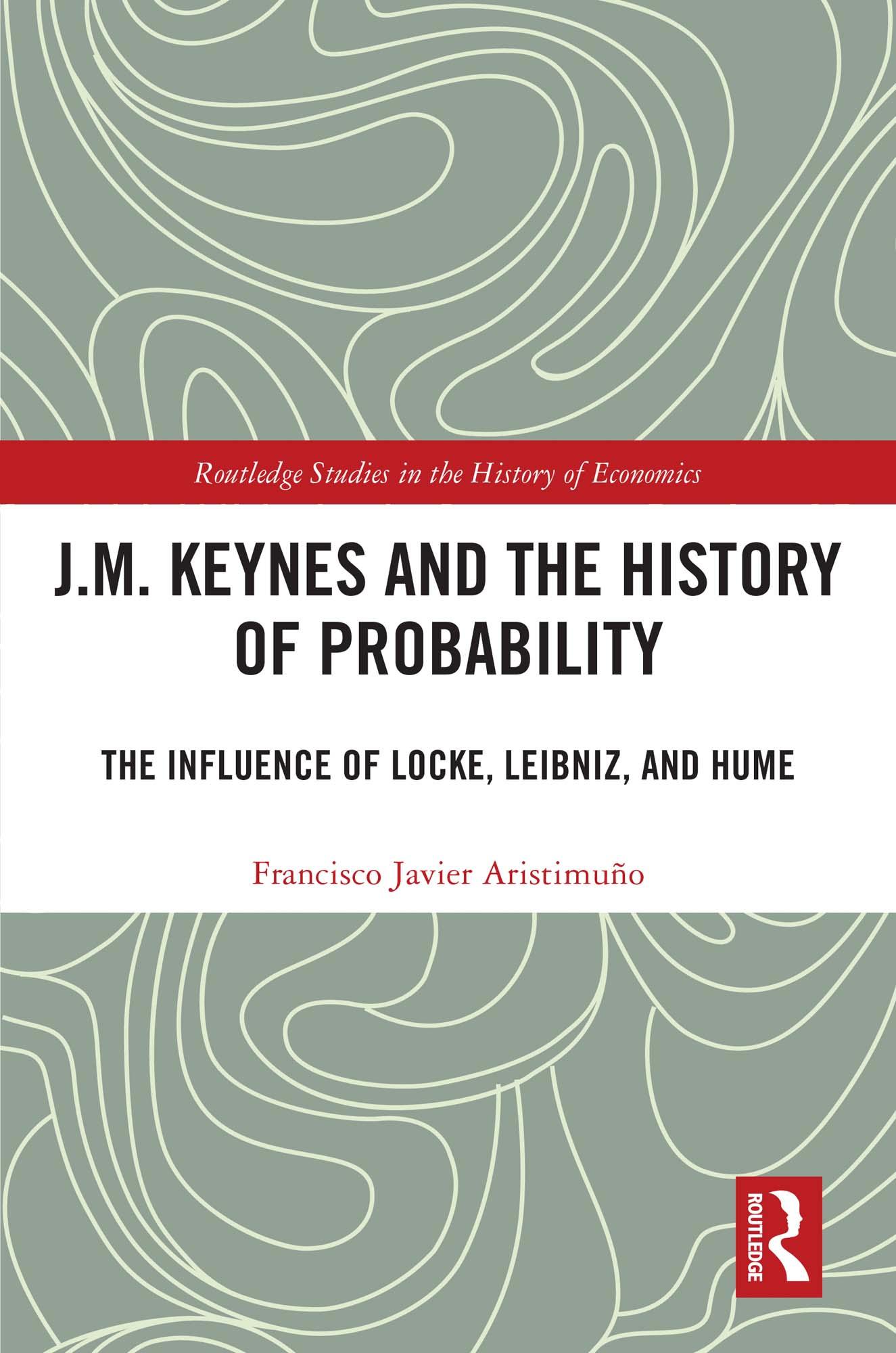
John Maynard Keynes is best known for his contributions to economics, yet he spent nearly two decades exploring the concept of probability. His extensive work culminated in A Treatise on Probability (1921), in which he developed a unique notion of probability that continues to divide scholars regarding its relevance to economic theory.
This book delves into the connections between Keynes’s ideas on probability and those of early Enlightenment philosophers, such as Locke, Leibniz, and Hume, who worked on probability before mathematicians claimed ownership over the subject. These authors framed probability as a substitute for knowledge when it is not available. Keynes extended these ideas and engaged directly with Hume on inductive reasoning, placing his concept of probability within a broader philosophical tradition. By tracing these Enlightenment roots, this book provides deeper insight into Keynes’s understanding of probability, clarifying some of the key differences with the subjective approach due to Ramsey and De Finetti. It also summarises the aspects on which probability theory and its corresponding notion of uncertainty are crucial for Keynes’s economic thought, particularly in his General Theory of Employment, Interest and Money.
This book is addressed to readers interested in the philosophy of probability and offers economists a fuller understanding of Keynes’s intellectual framework.
Betal nemt med kort, Klarna, Apple Pay eller Google Pay. Ikke tilfreds? Du har altid 14 dages fortrydelsesret. Læs mere i vores vilkår. Har du spørgsmål, så send os en mail på hello@memmo.org.
Memmo gør det nemmere at studere – uanset hvor du er i verden. Hos os samler du dine kursusbøger og smarte studieværktøjer ét sted: resuméer, quizzer, podcasts og flashcards. Og så er der Ted, din studieven, der svarer på alt, du undrer dig over. Over 50 000 studerende studerer allerede her – bygget til at hjælpe dig med at lære hurtigere og stresse mindre.