
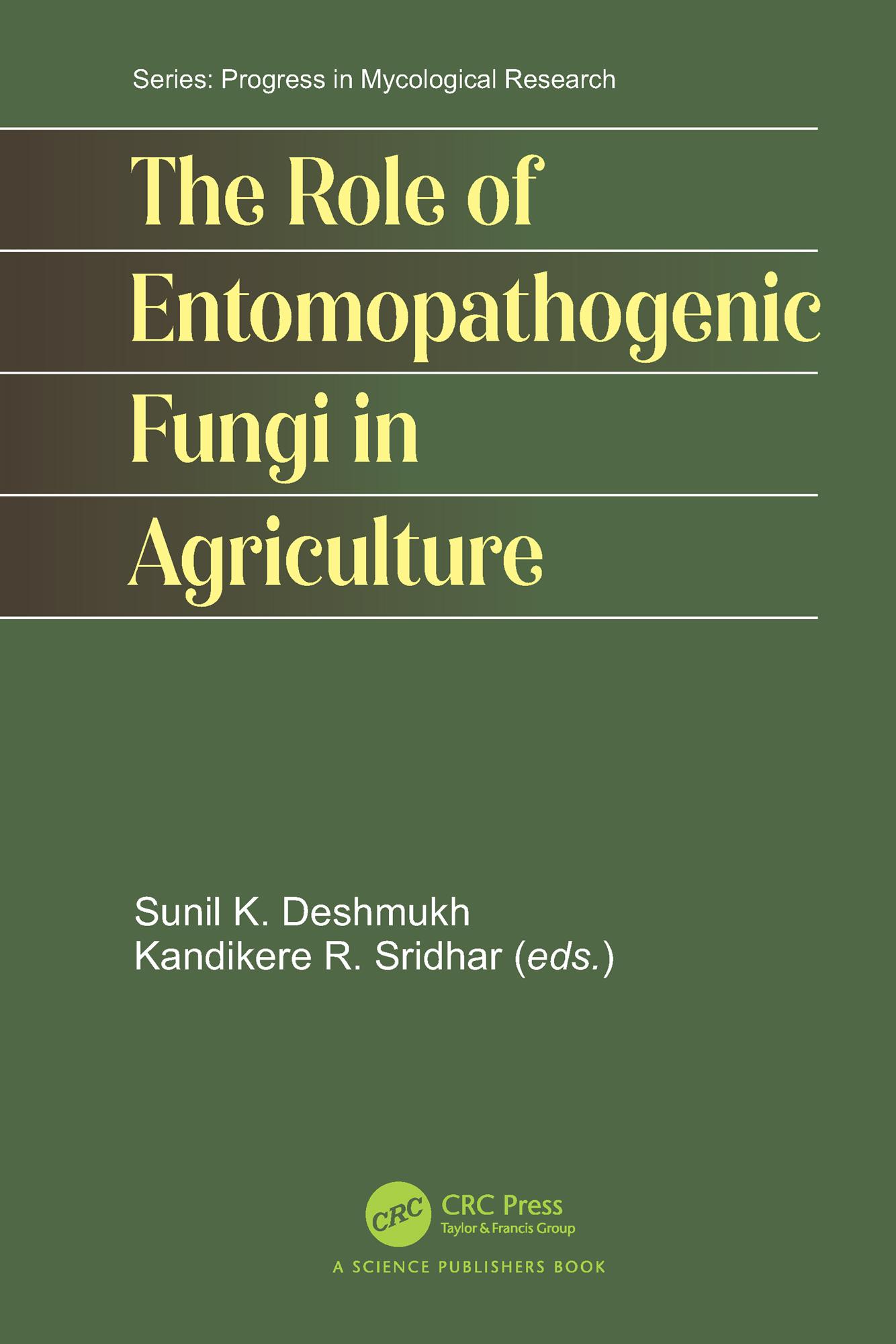
Entomopathogenic fungi are economically important fungi from environmental, agricultural, and human health perspectives. They are an alternative to chemical pesticides. They can also be used as biostimulants and biological control agents for mosquitoes and other insects. These fungi are also known to produce a variety of metabolites of industrial significance. They face challenges in the cultivation, fermentation, and purification of products. Their habitats and ecological niches are of special significance for ex situ conservation and the large scale of production of spores.
This book reviews molecular aspects of the pathogenesis of entomopathogenic fungi, the development of mycoinsecticides, and its regulatory aspects. It addresses different aspects of entomopathogenic fungi, including host-pathogen interactions (susceptibility and resistance), fungus-insect and fungus-fungus dual interactions, phylogeny and taxonomy, biochemistry, and molecular basis of enteropathogenesis, market potential of entomopathogens, regulatory aspects, bioprospecting of fungi, fungi as crop bodyguards and in disease suppression, and consortia for the control of insect pests and pathogens in single crop systems.
Betal nemt med kort, Klarna, Apple Pay eller Google Pay. Ikke tilfreds? Du har altid 14 dages fortrydelsesret. Læs mere i vores vilkår. Har du spørgsmål, så send os en mail på hello@memmo.org.
Memmo gør det nemmere at studere – uanset hvor du er i verden. Hos os samler du dine kursusbøger og smarte studieværktøjer ét sted: resuméer, quizzer, podcasts og flashcards. Og så er der Ted, din studieven, der svarer på alt, du undrer dig over. Over 50 000 studerende studerer allerede her – bygget til at hjælpe dig med at lære hurtigere og stresse mindre.