
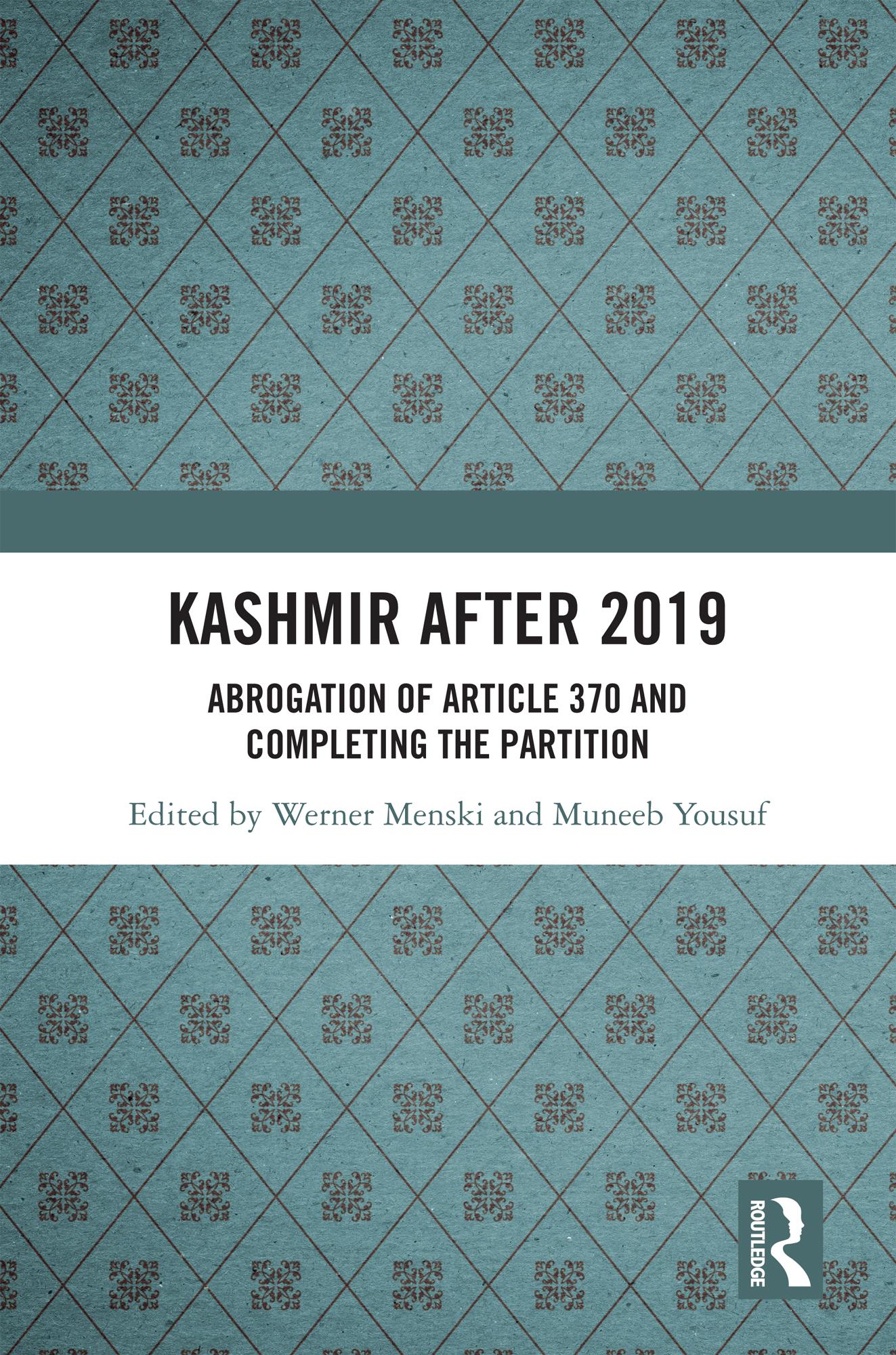
This interdisciplinary volume portrays India’s removal of Article 370 and of Jammu and Kashmir's special status in August 2019 as an effort to stop the suffering of its highly diverse people. While the state had been divided between the only two successor nations allowed in 1947, local people were subjected to prolonged violence by several competing external and internal stakeholders. Though the bold step of August 2019 signified acceptance by both India and Pakistan of the completion of the partition of 1947, evidence of continuing discontent and latent adherence to continuing dreams of freedom (Azadi) indicates that the current arrangement needs to be better and more widely understood as a viable peace-making effort.
The book re-traces the history of the suffering of Kashmir's people and provides an intriguing new analysis of the conflict through the plurality-conscious kite model of law and life, suggesting important policy implications. It also challenges the negative implications of international and foreign meddling in the ‘Kashmir problem’.
This book will be useful to scholars, students and teachers of political science, sociology, governance, economics and development studies. It will also be an indispensable companion to scholars and general readers interested in India, especially Jammu and Kashmir, as well as those engaging with South Asian Studies.
Betal nemt med kort, Klarna, Apple Pay eller Google Pay. Ikke tilfreds? Du har altid 14 dages fortrydelsesret. Læs mere i vores vilkår. Har du spørgsmål, så send os en mail på hello@memmo.org.
Memmo gør det nemmere at studere – uanset hvor du er i verden. Hos os samler du dine kursusbøger og smarte studieværktøjer ét sted: resuméer, quizzer, podcasts og flashcards. Og så er der Ted, din studieven, der svarer på alt, du undrer dig over. Over 50 000 studerende studerer allerede her – bygget til at hjælpe dig med at lære hurtigere og stresse mindre.