
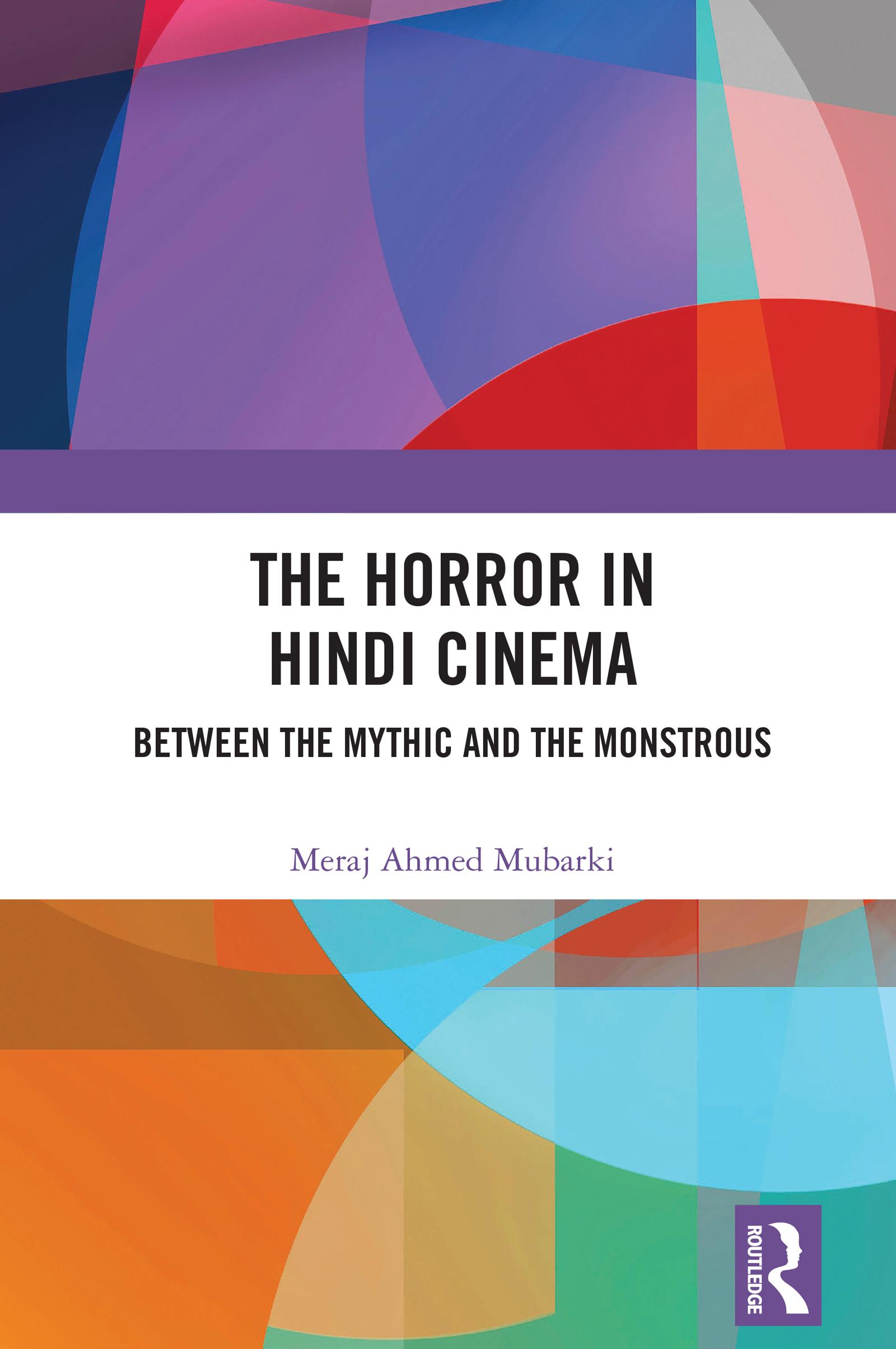
The book offers a lively and detailed analysis of the ideological subtext of Hindi Horror cinema. It unearths its codes and conventions, its relationship to spectatorship, the genre’s conjunctions and departures from Hollywood, and the unique features of Hindi horror. It posits the Hindi horror genre as a project of / for the ‘nation’ in the making.
Analysing films from Mahal (1948) to Bhediya (2022), this book uncovers narrative strategies, frames unique approaches of investigation, and reviews the transformation taking place within the genre. It argues that Hindi horror cinema lies at the intersection of myths, competing ideologies, dominant socio-religious thoughts revealing three major strands of narrative constructs, each corresponding to the way the nation has been imagined at different times in post-colonial India. It establishes a theoretical framework of Hindi horror cinema, and demonstrates for the first time how this genre, with its subsets, provides a means to contemplate the nation.
This volume will be useful to students, researchers and faculty members working in mass communication, journalism, political science, film studies, political sociology, gender / women studies, Culture studies and post-colonial Indian politics. It will also be an invaluable and interesting reading for those interested in South Asian popular culture studies.
Betal nemt med kort, Klarna, Apple Pay eller Google Pay. Ikke tilfreds? Du har altid 14 dages fortrydelsesret. Læs mere i vores vilkår. Har du spørgsmål, så send os en mail på hello@memmo.org.
Memmo gør det nemmere at studere – uanset hvor du er i verden. Hos os samler du dine kursusbøger og smarte studieværktøjer ét sted: resuméer, quizzer, podcasts og flashcards. Og så er der Ted, din studieven, der svarer på alt, du undrer dig over. Over 50 000 studerende studerer allerede her – bygget til at hjælpe dig med at lære hurtigere og stresse mindre.