
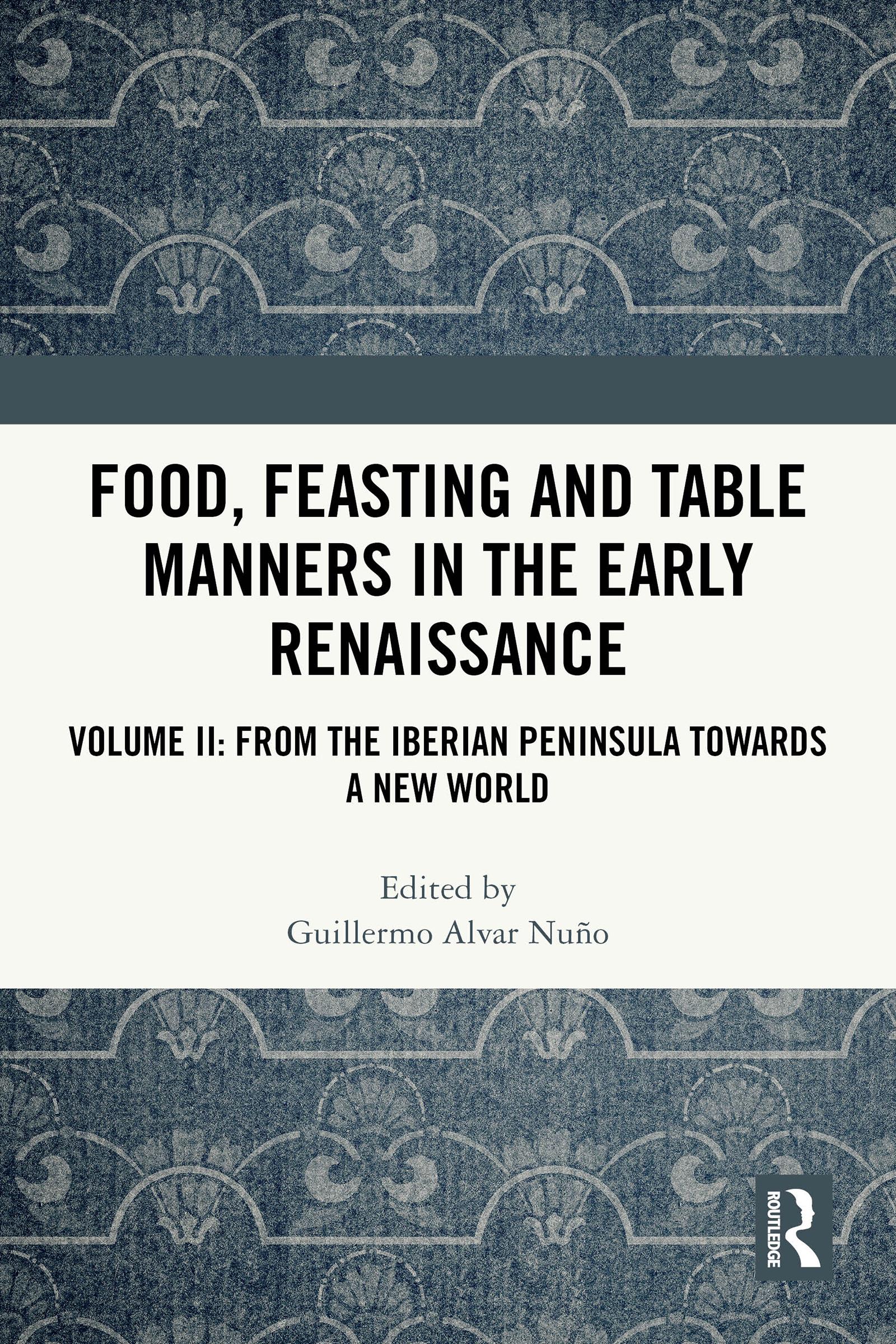
The acquisition of table manners and rhetorical skills, the interaction between medicine and eating, and the presence of food in literature and religion shaped Peninsular societies and connected them to a Western European background during the Middle Ages. The Renaissance, however, marked a turning point in world history, and the reader will learn how eating evolved in the kingdoms of Spain and Portugal during the early Renaissance in fields such as morals, politics, medicine, literature and religion. The book also explains how the cultural conception of food was exported by Iberian explorers to the Americas and Japan.
The present volume focuses on a two-fold issue: food as a cultural element that united Mediterranean European society, and food as a cultural encounter between European explorers and new worlds during the early Renaissance. Therefore, this volume continues the themes introduced in the previous monograph, Food, Feasting and Table Manners in the Late Middle Ages: Volume I: The Iberian Peninsula in the European Context, but takes into account the new, global scale of the era.
Readers will find here a panorama of what, and how, people ate in Mediterranean Europe during the fifteenth and sixteenth centuries and learn how cultural aspects of food were exported to the new lands that were explored during the Age of Discovery.
Betal nemt med kort, Klarna, Apple Pay eller Google Pay. Ikke tilfreds? Du har altid 14 dages fortrydelsesret. Læs mere i vores vilkår. Har du spørgsmål, så send os en mail på hello@memmo.org.
Memmo gør det nemmere at studere – uanset hvor du er i verden. Hos os samler du dine kursusbøger og smarte studieværktøjer ét sted: resuméer, quizzer, podcasts og flashcards. Og så er der Ted, din studieven, der svarer på alt, du undrer dig over. Over 50 000 studerende studerer allerede her – bygget til at hjælpe dig med at lære hurtigere og stresse mindre.