
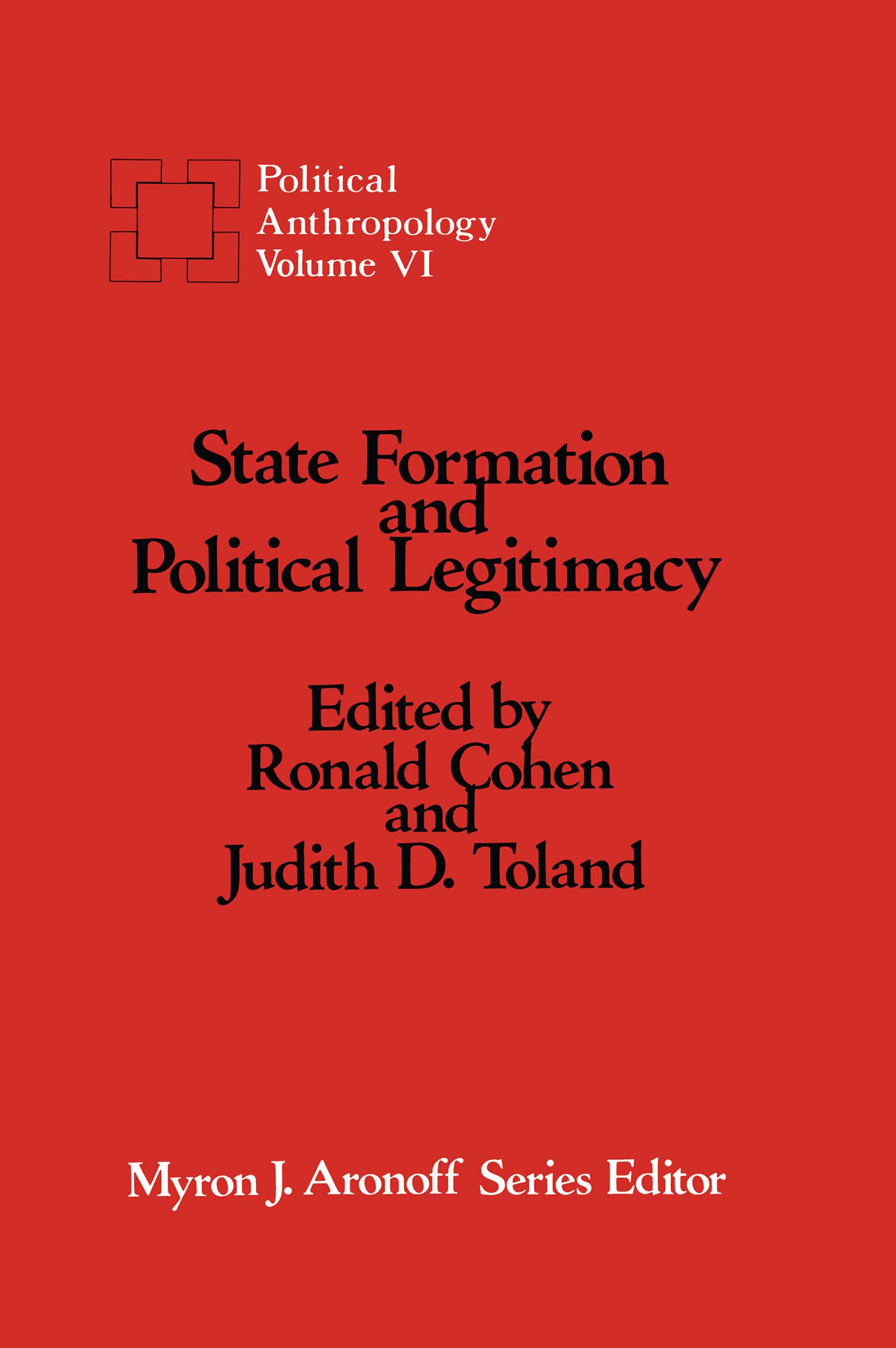
The evolution of the state from earlier forms of political organization is associated with revolutionary changes in the structure of inequality. These magnify distinctions in rank and power that outweigh anything previously known in so-called primitive societies. This volume explains how and why people came to accept and even identify themselves with this new form of authority.
The introduction provides a new theory of legitimacy by synthesizing and uniting earlier theories from psychological, cultural-materialist, rational choice, and Marxist approaches. The case studies which follow present a wide range of materials on cultures in both Western and non-Western settings, and across a number of different historical periods. Included are examples from Africa, Asia, Europe, and the New World. Older states such as Ur, Inca, and medieval France are examined along with more contemporary states including Indonesia, Tanzania, and the revolutionary beginnings of the United States.
Using a variety of approaches the contributors show in each instance how the state obtained and used its power, then attempted to have its power accepted as the natural order under the protection of supra-naturally ordained authority. No matter how tyrannical or benign, the cases show that state power must be justified by faith and experience that demonstrates its value to the participants. Through such analysis, the book demonstrates that states must be capable of enforcing their rule, but that they cannot deceive populations into accepting state domination. Indeed, the book suggests that social evolution moves toward less coercive rule and increased democratization.
Ronald Cohen is a political anthropologist who has taught at the Universities of Toronto, McGill, Northwestern, and Ahmadu Bello, and is on the faculty of the University of Florida. He has carried out field research in Africa, the Arctic and Washington. His major works include The Kanuri of Borno, Dominance and Defiance, Origins of the State, and a book in preparation on food policy and agricultural transformation in Africa.
Judith D. Toland is a lecturer at University College, Northwestern University, and the College of Arts and Sciences, Loyola University of Chicago. She is the director of her own corporate and non-profit consulting firm. She has done fieldwork in Ayacucho, Peru and has written widely on the Inca State.
Betal nemt med kort, Klarna, Apple Pay eller Google Pay. Ikke tilfreds? Du har altid 14 dages fortrydelsesret. Læs mere i vores vilkår. Har du spørgsmål, så send os en mail på hello@memmo.org.
Memmo gør det nemmere at studere – uanset hvor du er i verden. Hos os samler du dine kursusbøger og smarte studieværktøjer ét sted: resuméer, quizzer, podcasts og flashcards. Og så er der Ted, din studieven, der svarer på alt, du undrer dig over. Over 50 000 studerende studerer allerede her – bygget til at hjælpe dig med at lære hurtigere og stresse mindre.