
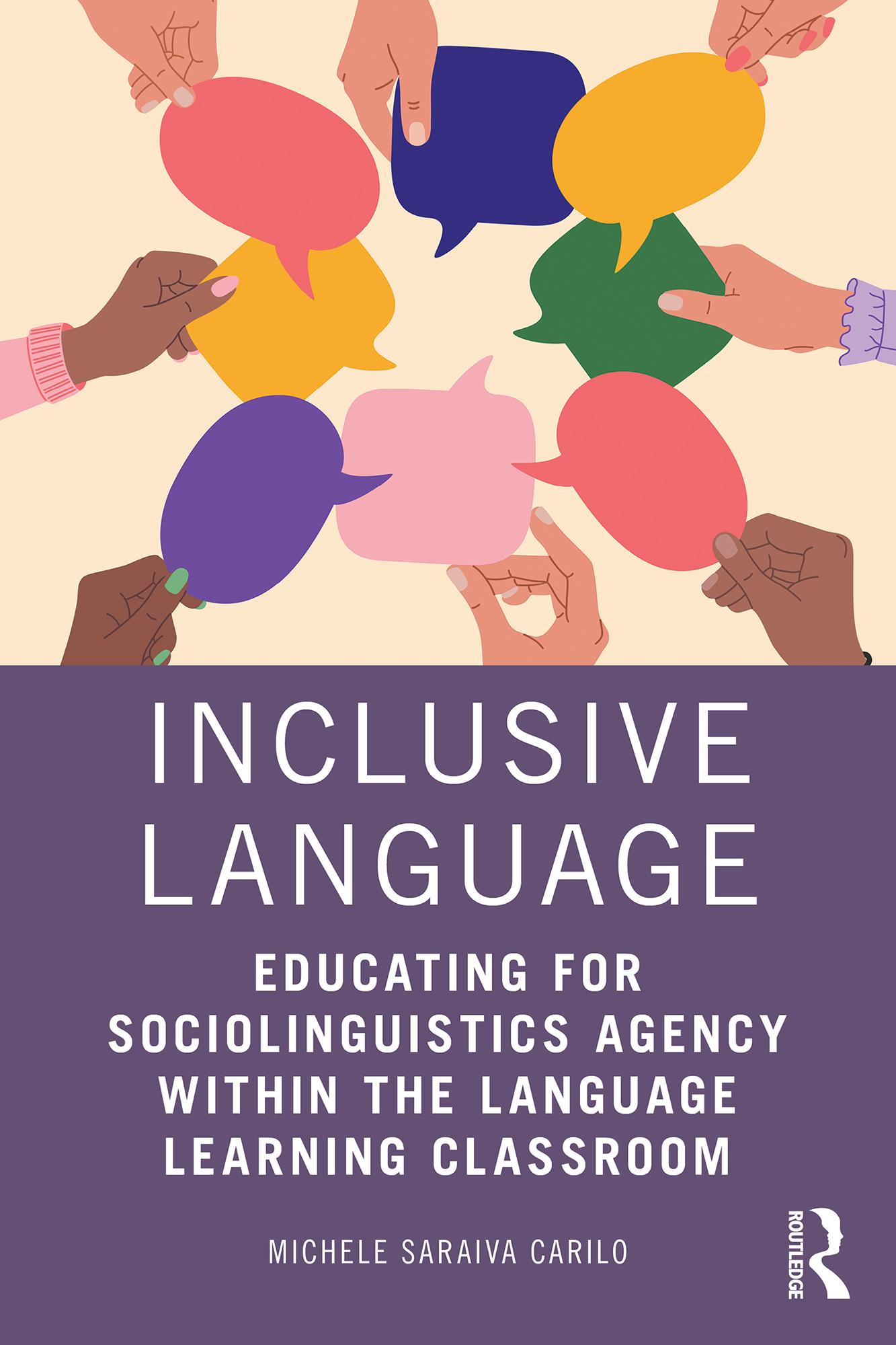
Inclusive Language: Educating for Sociolinguistics Agency within the Language Learning Classroom analyses standardised and non-standardised uses of language that can be considered acts of sociolinguistic revolution from across a range of social media platforms.
Using examples from French, Italian, Portuguese and Spanish, the book explores how linguistic inclusiveness related to race, ethnicity, religion, gender, the LGBTQIA+ community, and people with disabilities is a bottom-up phenomenon led mainly by members of marginalised socio-cultural groups, disseminated widely throughout social media, and integrated (or disregarded) consciously in language classrooms. Inclusive Language challenges the extreme prescriptivism of the languages analysed and contributes to the advancement of inclusive language within the language learning classroom by proposing frameworks such as critical digital ethnography for curriculum development and enactment, guidelines for syllabus and material design, as well as teaching strategies based on critical and intercultural pedagogies.
The book is a valuable resource for language educators and students at undergraduate and graduate level education courses with a particular interest in language teaching.
Betal nemt med kort, Klarna, Apple Pay eller Google Pay. Ikke tilfreds? Du har altid 14 dages fortrydelsesret. Læs mere i vores vilkår. Har du spørgsmål, så send os en mail på hello@memmo.org.
Memmo gør det nemmere at studere – uanset hvor du er i verden. Hos os samler du dine kursusbøger og smarte studieværktøjer ét sted: resuméer, quizzer, podcasts og flashcards. Og så er der Ted, din studieven, der svarer på alt, du undrer dig over. Over 50 000 studerende studerer allerede her – bygget til at hjælpe dig med at lære hurtigere og stresse mindre.