
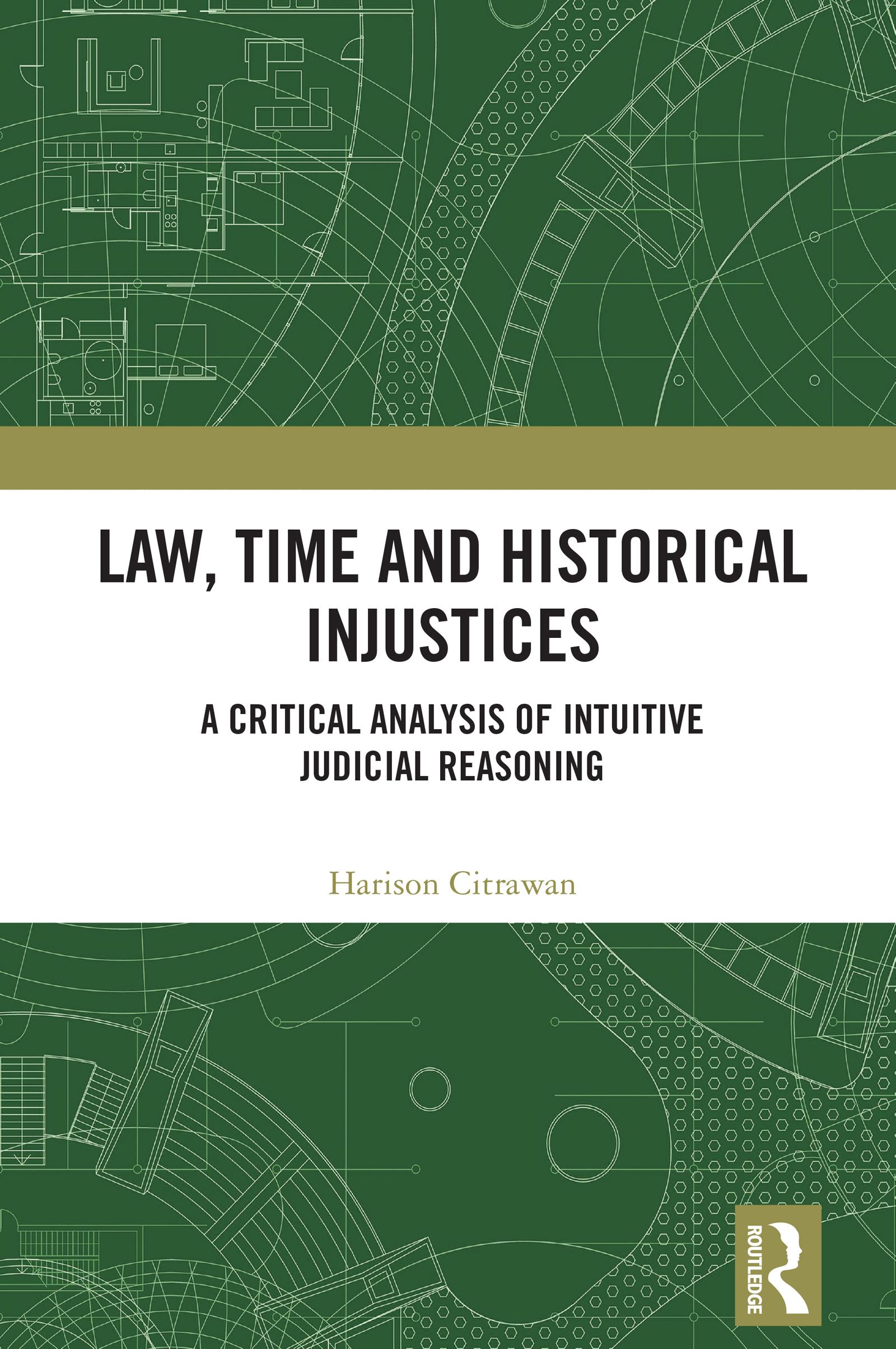
This book provides a critical assessment of how judges reason in the adjudication of historical injustices.
The practice of adjudication in historical cases of injustice require that, in determining collective responsibility, judges impart meaning to past injuries. This book analyses the narrative mechanisms through which this meaning is produced. Focusing on three areas of adjudication–racial discrimination, post-colonial extractivism and the climate crisis–the book’s analysis focuses on the issue of time. It considers the interplay of how historical injustice adjudication is shaped by temporal presuppositions and how it enacts a particular idea of temporality. As experiences of injustice are narrated, the book demonstrates how some of those experiences are included and others are excluded within the process of adjudication. Drawing on legal theory, legal epistemology and the philosophy of time, the book thus offers an instructive, and provocative, account of how collective responsibility is determined in cases of historical injustice.
This book will appeal to scholars working in the fields of legal theory, legal reasoning, socio-legal studies, comparative jurisprudence and transitional justice.
Betal nemt med kort, Klarna, Apple Pay eller Google Pay. Ikke tilfreds? Du har altid 14 dages fortrydelsesret. Læs mere i vores vilkår. Har du spørgsmål, så send os en mail på hello@memmo.org.
Memmo gør det nemmere at studere – uanset hvor du er i verden. Hos os samler du dine kursusbøger og smarte studieværktøjer ét sted: resuméer, quizzer, podcasts og flashcards. Og så er der Ted, din studieven, der svarer på alt, du undrer dig over. Over 50 000 studerende studerer allerede her – bygget til at hjælpe dig med at lære hurtigere og stresse mindre.