
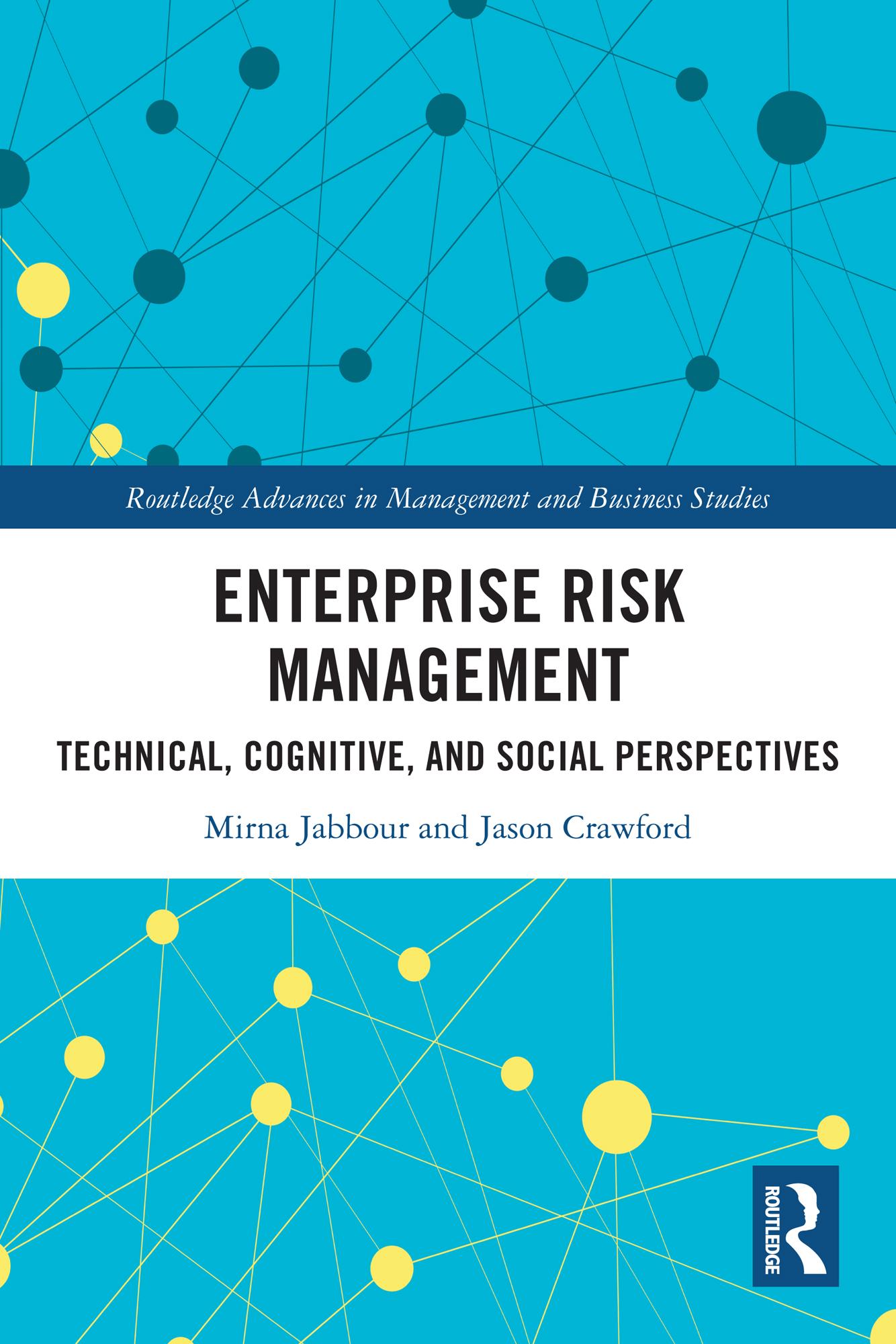
ERM is considered a dynamic capability that is critical to companies’ success from strategic and performance perspectives and is increasingly implemented in response to growing pressure from external stakeholders to enact and add legitimacy to existing management control systems. However, implementing ERM is a challenging process where success is dependent on balancing technical and social factors. This book explores the challenges of implementing ERM from technical, cognitive, and social perspectives to enhance the organisation’s capacity to generate and integrate information and knowledge about risk and uncertainty.
In existing publications, ERM implementation is mainly viewed from technical or educational perspectives and treated as formal, technical, linear processes. This book takes a different stance by recognising that implementation depends on formal and informal mechanisms that require a balanced combination of technical and social approaches. It changes the paradigm to demonstrate that the implementation of ERM is not a linear process that is similar across industries and organisations, but relies on multiple dependencies such as leadership, corporate governance, and the culture of the organisation.
This book will be a valuable resource for scholars, as well as upper-level students, across disciplines related to risk management, including accounting and finance, business and management, leadership, and organisational studies.
Betal nemt med kort, Klarna, Apple Pay eller Google Pay. Ikke tilfreds? Du har altid 14 dages fortrydelsesret. Læs mere i vores vilkår. Har du spørgsmål, så send os en mail på hello@memmo.org.
Memmo gør det nemmere at studere – uanset hvor du er i verden. Hos os samler du dine kursusbøger og smarte studieværktøjer ét sted: resuméer, quizzer, podcasts og flashcards. Og så er der Ted, din studieven, der svarer på alt, du undrer dig over. Over 50 000 studerende studerer allerede her – bygget til at hjælpe dig med at lære hurtigere og stresse mindre.