
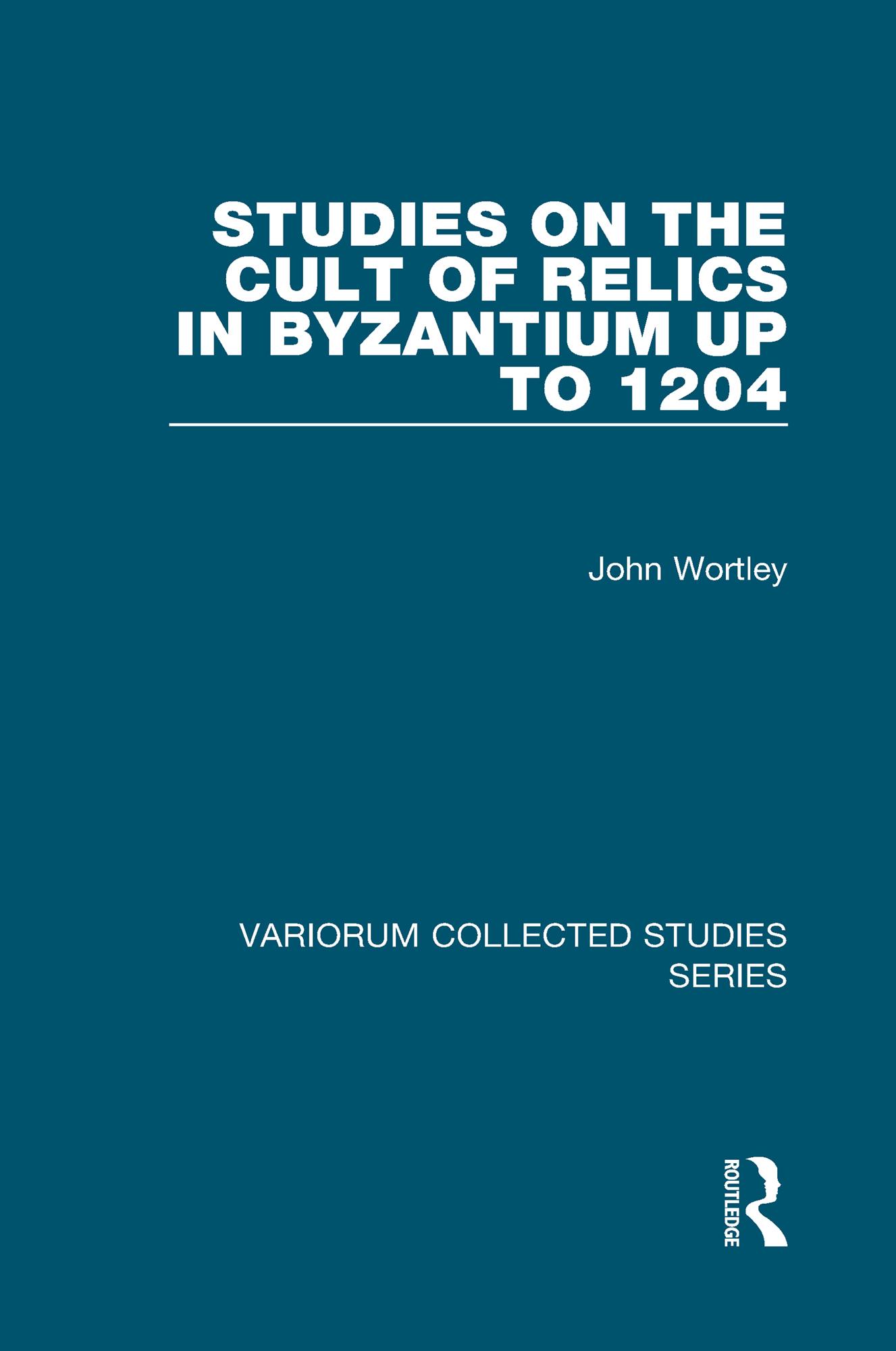
Constantinople was well known in its heyday for the enormous collection of relics housed in its churches: bones, even whole bodies and intimate possessions of holy men and women. Almost all these objects had been imported from various parts of the Roman Empire between the late 4th to the 10th centuries. They had been acquired because they were believed to have miraculous powers to ward off enemies, to heal sicknesses and to ensure that the capital was indeed the "God-guarded" (Theophylaktos) city it believed itself to be. These studies examine the means by which relics were acquired, the ways in which they were used and some of the reasons why for so long they were believed to be effective. The role of relics in the development of the cult of the Mother of God (Theotokos) is discussed as well as the curious relationship between relics and icons. The so-called 'deviation' of the Fourth Crusade and the subsequent sacking of Constantinople in 1204 may also in part be explained by an unbridled yearning to possess her relics; they were certainly pillaged and disseminated to the west, thus concluding an era of relic-history at Byzantium and initiating a different one in the west.
Sider: 300
Kategori: Religion & Teologi
e-ISBN: 9781040241752
Forsendelsesvægt: 1.2 kg
Sendes inden for: 1-2 dage
Betal nemt med kort, Klarna, Apple Pay eller Google Pay. Ikke tilfreds? Du har altid 14 dages fortrydelsesret. Læs mere i vores vilkår. Har du spørgsmål, så send os en mail på hello@memmo.org.
Memmo gør det nemmere at studere – uanset hvor du er i verden. Hos os samler du dine kursusbøger og smarte studieværktøjer ét sted: resuméer, quizzer, podcasts og flashcards. Og så er der Ted, din studieven, der svarer på alt, du undrer dig over. Over 50 000 studerende studerer allerede her – bygget til at hjælpe dig med at lære hurtigere og stresse mindre.
Du kan måske også lide
Køb bogen0