
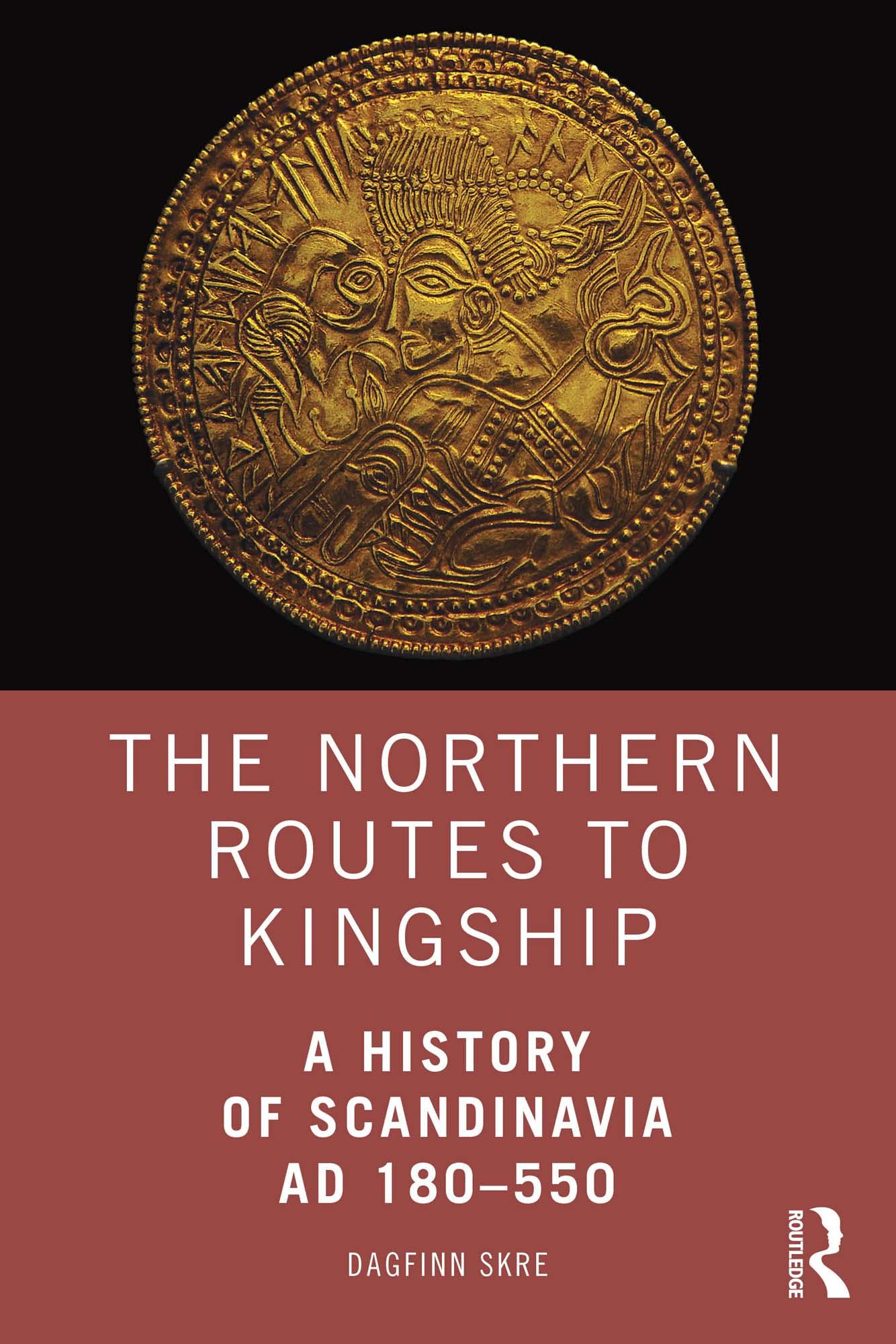
This book argues that tribal Scandinavia was set on the route to kingship by the arrival in the AD 180s–90s of warrior groups that were dismissed from the Roman army after defeating the Marcomanni by the Danube.
Using a range of evidence, this book details how well-equipped and battle-seasoned warriors, familiar with Roman institutions and practices, seized land and established lordly centres. It shows how these new lords acquired wealth by stimulating the production of commodities for trade with peers and Continental associates, Romans included, to reward retainers and bestow on partners. In these transcultural circumstances, lords and their retainers nurtured artisanal production of exquisite quality and developed a heroic ethos and refined hall etiquette. The topic of warfare, created by the volatile politics of lordly cooperation and competition, is also explored. Venturing substantially beyond the usual scope of syntheses of this period, this book looks at how the break-up of the Western Roman Empire and the rise of 'Great tribes' such as the Franks and Goths influenced lords and tribal leaders across Scandinavia to form kingdoms, emulating what they for centuries had considered the superior polity, the Roman Empire.
This book’s fresh take on disputed research topics will inspire scholars, students, and interested readers to delve further into this pivotal period of European history.
Betal nemt med kort, Klarna, Apple Pay eller Google Pay. Ikke tilfreds? Du har altid 14 dages fortrydelsesret. Læs mere i vores vilkår. Har du spørgsmål, så send os en mail på hello@memmo.org.
Memmo gør det nemmere at studere – uanset hvor du er i verden. Hos os samler du dine kursusbøger og smarte studieværktøjer ét sted: resuméer, quizzer, podcasts og flashcards. Og så er der Ted, din studieven, der svarer på alt, du undrer dig over. Over 50 000 studerende studerer allerede her – bygget til at hjælpe dig med at lære hurtigere og stresse mindre.