
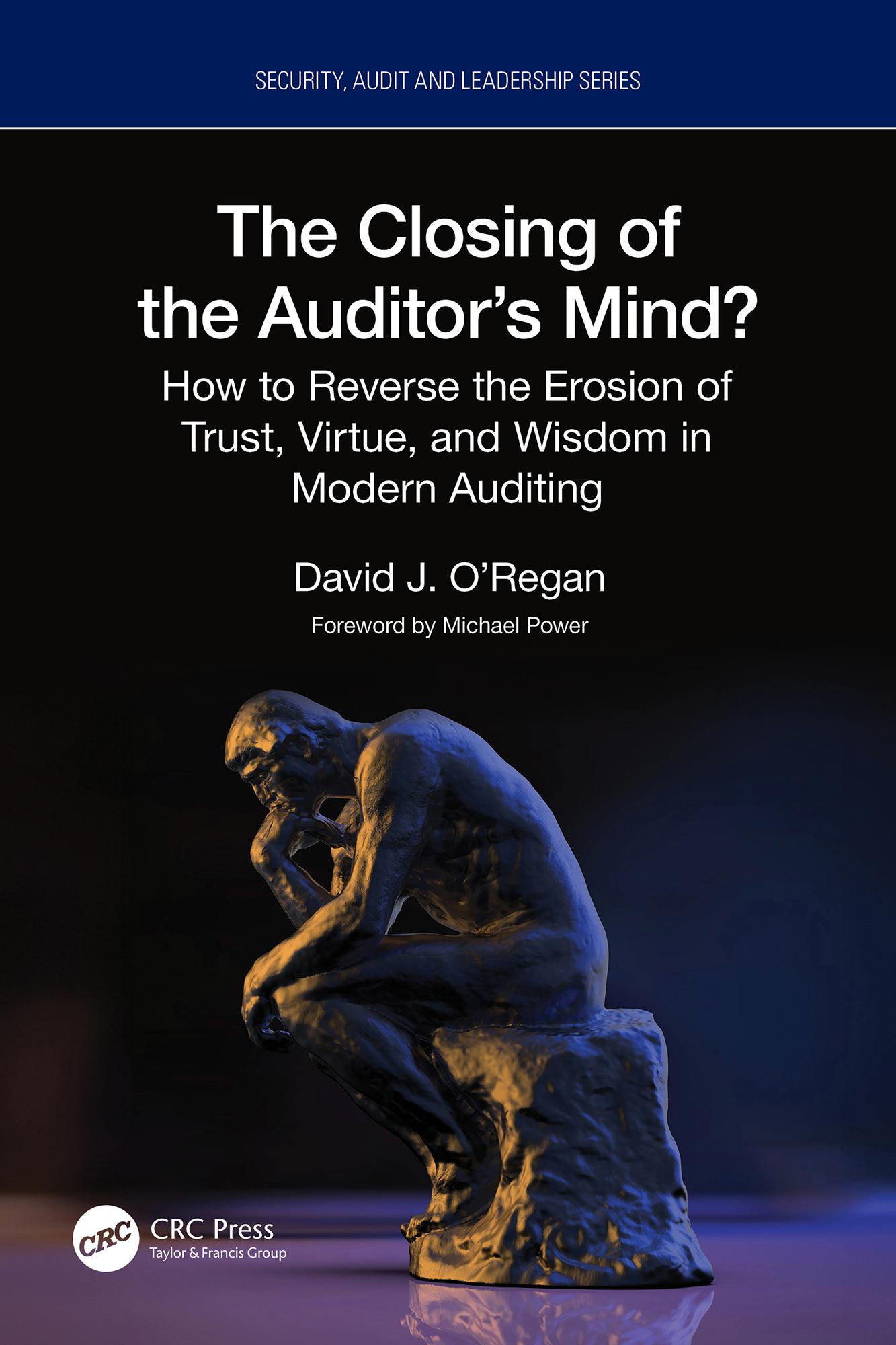
In The Closing of the Auditor’s Mind?, author David J. O’Regan describes internal auditing as an important "binding agent" of social cohesion, for the accountability of individuals and organizations and also at aggregated levels of social trust. However, O’Regan also reveals that internal auditing faces two severe challenges – an external challenge of adaptation and an internal challenge of fundamental reform.
The adaptation challenge arises from ongoing, paradigmatic shifts in accountability and social trust. The command-and-control, vertical hierarchies of traditional bureaucracies are being replaced in importance by networked, flattened patterns of accountability. The most challenging assurance demands of the modern era are increasingly located in three institutional domains – in the inner workings of organizations; in intermediary spaces at organizational boundaries; and in extra-mural locations. Internal auditing continues to cling, barnacle-like, to the inner workings of traditional, bureaucratic structures, and it has little to offer the emerging assurance demands on or beyond institutional boundaries. The reform challenge arises from internal auditing’s prevailing tendency toward a rigid, algorithmic, checklist mindset that suppresses practitioners’ creativity and critical thinking. This trend is increasingly narrowing internal auditing’s intellectual and moral horizons. Under the pressures of these challenges, internal auditing is struggling to fulfil its primary purpose of serving the public interest.
O’Regan’s powerful book focuses on:
- The redistribution of social trust from traditional, hierarchical institutions to diffuse, horizontally distributed networks
- The perennial validity of the classical virtues as the humane foundation of professional activity
- The role of creative expertise in promoting professional wisdom
The Closing of the Auditor’s Mind? is a philosophical audit of a profession on the threshold of crisis. The book presupposes no prior knowledge of philosophy, nor indeed of auditing. Philosophical technicalities are contained in an Appendix, leaving the main text jargon-free. O’Regan provides original and striking perspectives on the malaise of modern internal auditing, and he proposes radical remedies. This captivating and well-informed book is a must-read for all who are concerned with our collective socio-economic and political well-being.
Betal nemt med kort, Klarna, Apple Pay eller Google Pay. Ikke tilfreds? Du har altid 14 dages fortrydelsesret. Læs mere i vores vilkår. Har du spørgsmål, så send os en mail på hello@memmo.org.
Memmo gør det nemmere at studere – uanset hvor du er i verden. Hos os samler du dine kursusbøger og smarte studieværktøjer ét sted: resuméer, quizzer, podcasts og flashcards. Og så er der Ted, din studieven, der svarer på alt, du undrer dig over. Over 50 000 studerende studerer allerede her – bygget til at hjælpe dig med at lære hurtigere og stresse mindre.