
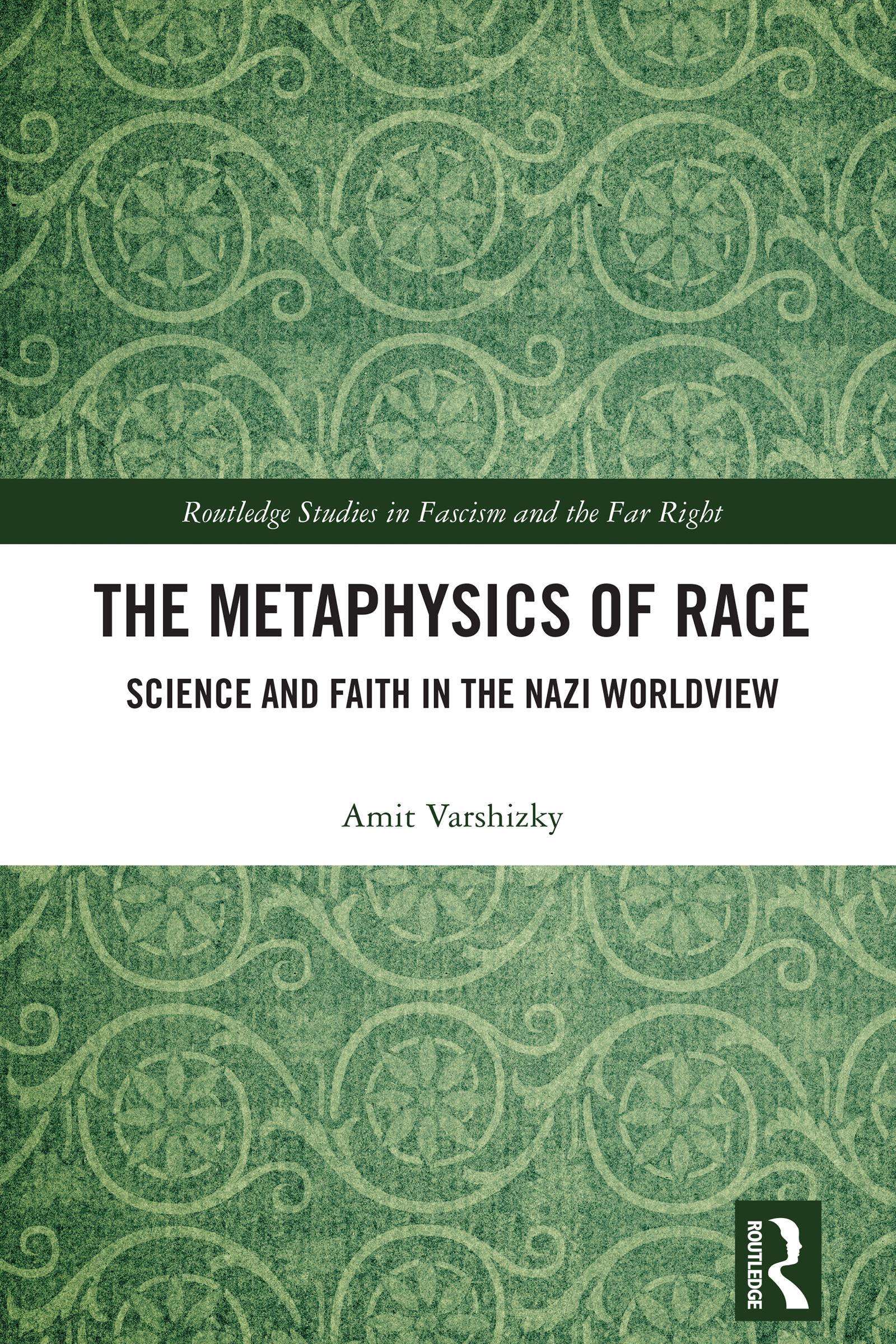
This book seeks to reframe debates on the conflicting scientific and spiritual traditions that underpinned the Nazi worldview, showing how despite the multitude of tensions and rivals among its adherents, it provided a coherent conceptual grid and possessed its own philosophical consistency.
Drawing on a large variety of works, the volume offers insights into the intellectual climate that allowed the radical ideology of National Socialism to take hold. It examines the emergence of nuanced conceptions of race in interwar Germany and the pursuit of a new ethical and existential fulcrum in biology. Accordingly, the volume calls for a re-examination of the place of genetics in Nazi racial thought, drawing attention to the multi-register voices within the framework of interwar racial theory. Varshizky explores the ways in which these ideas provided new justifications for the Nazi revolutionary enterprise and blurred the distinction between fact and value, knowledge and faith, the secular and the sacred, and how they allowed Nazi thinkers to bounce across these epistemological divisions.
This volume will be of interest to scholars of Nazi Germany and World War II, intellectual and cultural history, the history of science, and the philosophy of religion.
Betal nemt med kort, Klarna, Apple Pay eller Google Pay. Ikke tilfreds? Du har altid 14 dages fortrydelsesret. Læs mere i vores vilkår. Har du spørgsmål, så send os en mail på hello@memmo.org.
Memmo gør det nemmere at studere – uanset hvor du er i verden. Hos os samler du dine kursusbøger og smarte studieværktøjer ét sted: resuméer, quizzer, podcasts og flashcards. Og så er der Ted, din studieven, der svarer på alt, du undrer dig over. Over 50 000 studerende studerer allerede her – bygget til at hjælpe dig med at lære hurtigere og stresse mindre.