
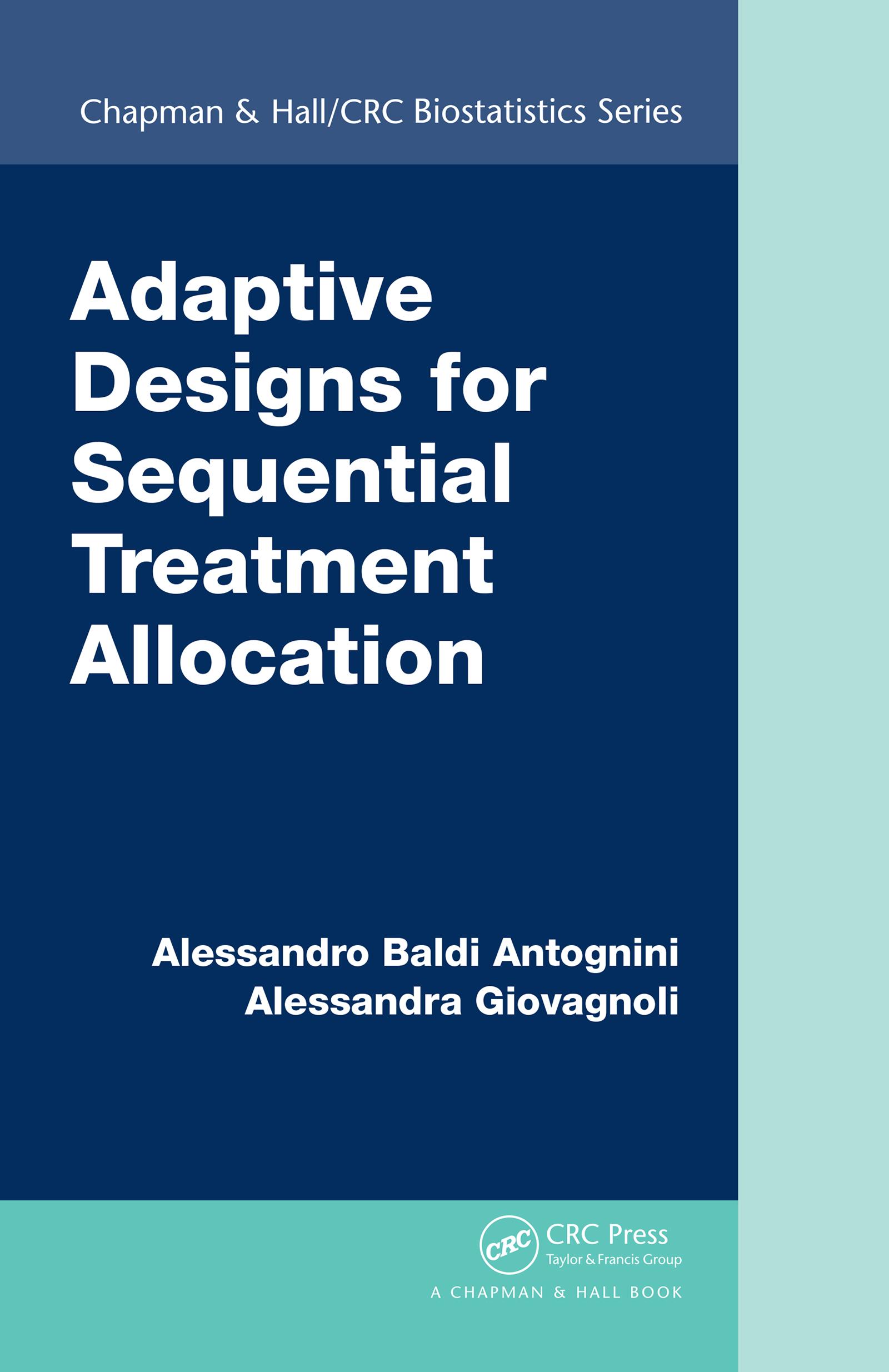
Adaptive Designs for Sequential Treatment Allocation presents a rigorous theoretical treatment of the results and mathematical foundation of adaptive design theory. The book focuses on designing sequential randomized experiments to compare two or more treatments incorporating information accrued along the way.
The authors first introduce the terminology and statistical models most commonly used in comparative experiments. They then illustrate biased coin and urn designs that only take into account past treatment allocations as well as designs that use past data, such as sequential maximum likelihood and various types of doubly adaptive designs. The book also covers multipurpose adaptive experiments involving utilitarian choices and ethical issues. It ends with adaptive methods that include covariates in the design. The appendices present basic tools of optimal design theory and address Bayesian adaptive designs.
This book helps readers fully understand the theoretical properties behind various adaptive designs. Readers are then equipped to choose the best design for their experiment.
Betal nemt med kort, Klarna, Apple Pay eller Google Pay. Ikke tilfreds? Du har altid 14 dages fortrydelsesret. Læs mere i vores vilkår. Har du spørgsmål, så send os en mail på hello@memmo.org.
Memmo gør det nemmere at studere – uanset hvor du er i verden. Hos os samler du dine kursusbøger og smarte studieværktøjer ét sted: resuméer, quizzer, podcasts og flashcards. Og så er der Ted, din studieven, der svarer på alt, du undrer dig over. Over 50 000 studerende studerer allerede her – bygget til at hjælpe dig med at lære hurtigere og stresse mindre.