
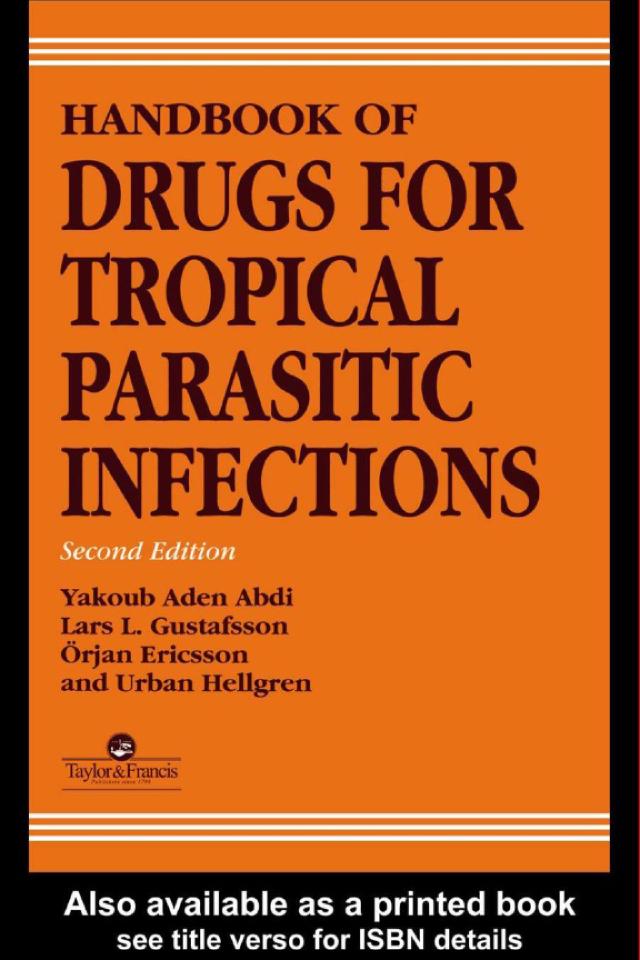
Parasitic infections such as malaria, schistosomiasis, trypanosomiasis and onchoceriasis are the scourge of the tropical countries. Many of the drugs used for the treatment of tropical parasitic infections were introduced more than 30 years ago. Most of these drugs are toxic and have complicated dosage regimens, but, because of the low economic incentive, pharmaceutical companies have shown little interest in developing new drugs to control diseases prevalent in developing countries.; However, there has been notable progress in research into parasitic diseases and a number of important drugs have been introduced for some diseases since the 1970s. Moreover, recent data on the pharmacokinetics and field evaluations of these drugs have revealed that their effectiveness can be improved and their safety increased.; This handbook is designed to provide information about the pharmacological properties and therapeutic uses of the major drugs currently employed to combat the human parasitic infections encountered in the tropics. Each of the 38 drugs covered in the book are presented under the following headings: chemical structure, physical properties, pharmacology and mechanism of action, pharmacokinetics, clinical trials, pregnancy and lactation, side effects, contraindications and precautions, dosage, preparations, and references.
Betal nemt med kort, Klarna, Apple Pay eller Google Pay. Ikke tilfreds? Du har altid 14 dages fortrydelsesret. Læs mere i vores vilkår. Har du spørgsmål, så send os en mail på hello@memmo.org.
Memmo gør det nemmere at studere – uanset hvor du er i verden. Hos os samler du dine kursusbøger og smarte studieværktøjer ét sted: resuméer, quizzer, podcasts og flashcards. Og så er der Ted, din studieven, der svarer på alt, du undrer dig over. Over 50 000 studerende studerer allerede her – bygget til at hjælpe dig med at lære hurtigere og stresse mindre.
Du kan måske også lide
Køb bogen0