
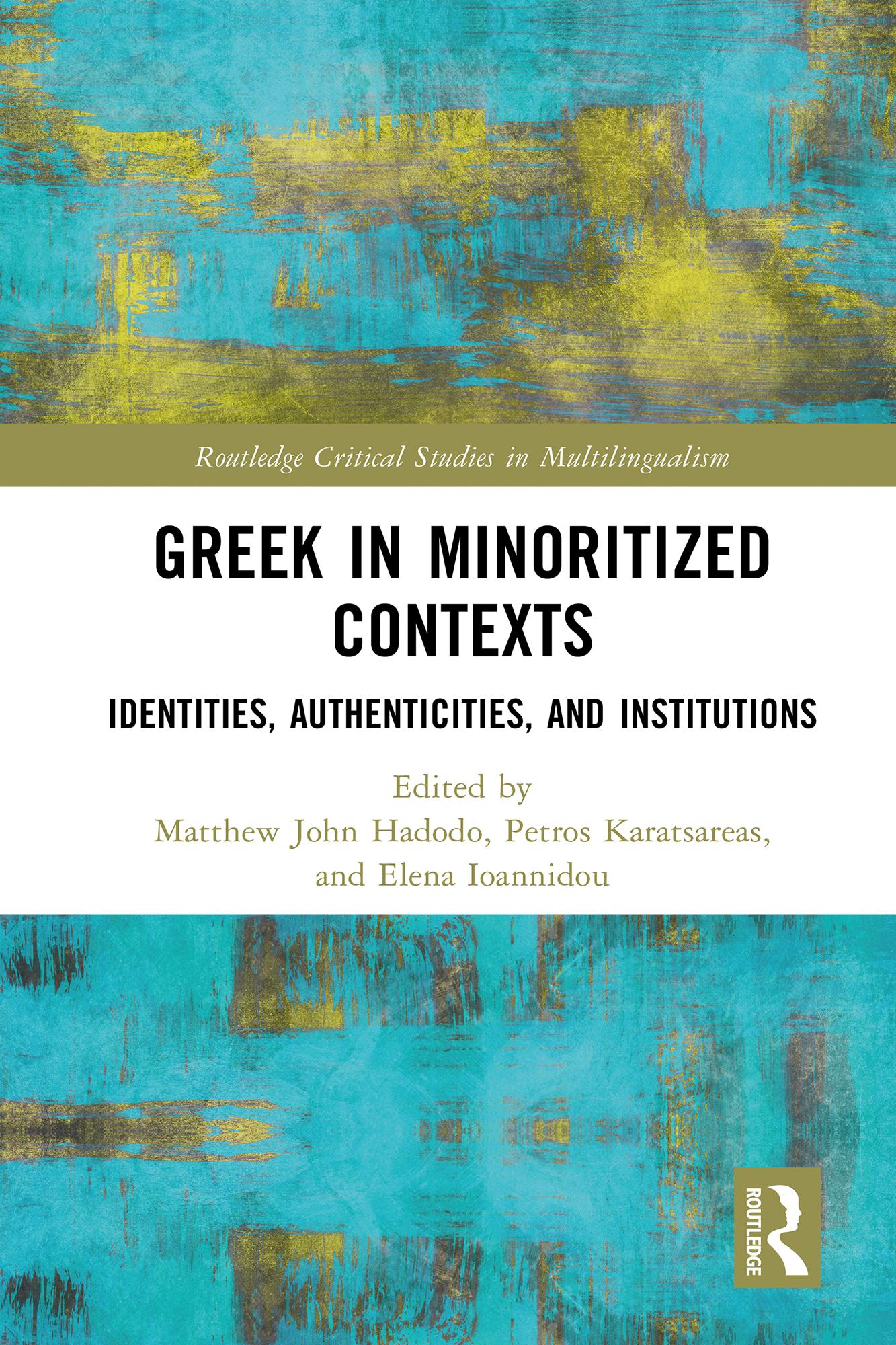
This volume examines constructions of Greekness and Greek-speakerhood in geographical and sociohistorical contexts where Greek speakers are minoritised, and Greek is not hegemonic.
Authors explore the sociolinguistic outcomes that arise from minoritisation, distant and more recent history, migration, and the proliferation of digital technologies for communication in the 21st century. Set against the backdrops of Albania, Australia, Canada, Cyprus, Sweden, Turkey, and the UK, the volume chapters consider the manifestations, conceptualisations, and negotiations of linguistic authenticity; the construction of identities; and the impact of institutions such as Greek language schools as well as families on local sociolinguistic landscapes and dynamics. Particular attention is given to the confrontations between competing language forms, practices, and repertoires resulting from the contact between standardised and non-standardised varieties of Greek as well as to communities that are distant from the influence of institutions where Standard Greek or other local Greek norms prevail.
The book is of interest to academic specialists and graduate students in sociolinguistics, applied linguistics, bi-/multilingualism, diaspora studies, linguistic anthropology, linguistic ethnography, social interaction, language contact, and language and culture – with a special focus on Greek.
Betal nemt med kort, Klarna, Apple Pay eller Google Pay. Ikke tilfreds? Du har altid 14 dages fortrydelsesret. Læs mere i vores vilkår. Har du spørgsmål, så send os en mail på hello@memmo.org.
Memmo gør det nemmere at studere – uanset hvor du er i verden. Hos os samler du dine kursusbøger og smarte studieværktøjer ét sted: resuméer, quizzer, podcasts og flashcards. Og så er der Ted, din studieven, der svarer på alt, du undrer dig over. Over 50 000 studerende studerer allerede her – bygget til at hjælpe dig med at lære hurtigere og stresse mindre.