
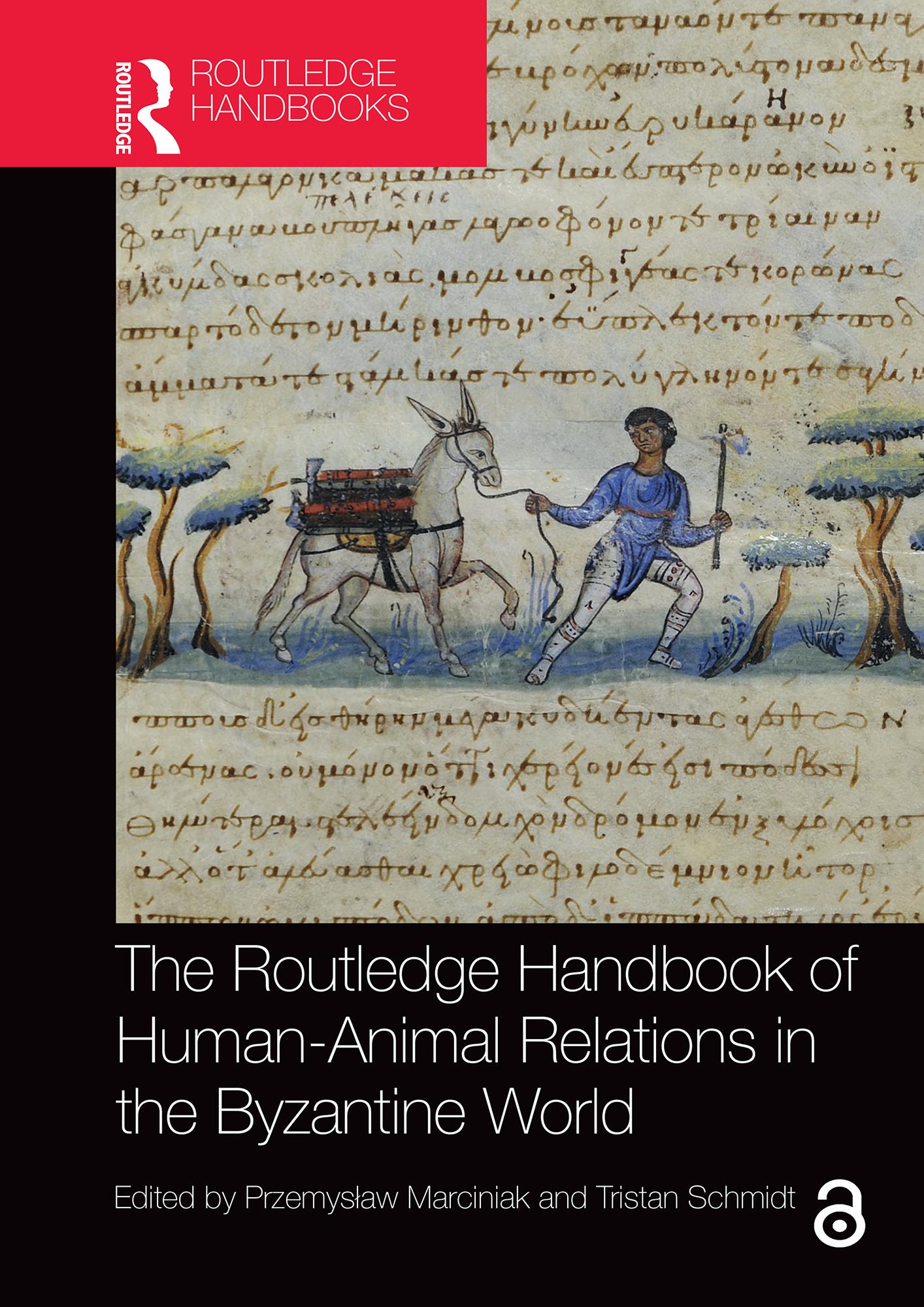
Animals have recently become recognized as significant agents of history as part of the ‘animal turn’ in historical studies. Animals in Byzantium were human companions, a source of entertainment and food – it is small wonder that they made their way into literature and the visual arts. Moreover, humans defined themselves and their activities by referring to non-human animals, either by anthropomorphizing animals (as in the case of the Cat-Mice War) or by animalizing humans and their (un)wanted behaviours.
The Routledge Handbook of Human-Animal Relations in the Byzantine World offers an in-depth survey of the relationships between humans and non-human animals in the Byzantine Empire. The contributions included in the volume address both material (zooarchaeology, animals as food, visual representations of animals) and immaterial (semiotics, philosophy) aspects of human-animal coexistence in chapters written by leading experts in their field.
This book will appeal to students and scholars alike researching Byzantine social and cultural history, as well as those interested in the history of animals. This book marks an important step in the development of animal studies in Byzantium, filling a gap in the wider research on the history of human-animal relations in the Middle Ages.
Betal nemt med kort, Klarna, Apple Pay eller Google Pay. Ikke tilfreds? Du har altid 14 dages fortrydelsesret. Læs mere i vores vilkår. Har du spørgsmål, så send os en mail på hello@memmo.org.
Memmo gør det nemmere at studere – uanset hvor du er i verden. Hos os samler du dine kursusbøger og smarte studieværktøjer ét sted: resuméer, quizzer, podcasts og flashcards. Og så er der Ted, din studieven, der svarer på alt, du undrer dig over. Over 50 000 studerende studerer allerede her – bygget til at hjælpe dig med at lære hurtigere og stresse mindre.