
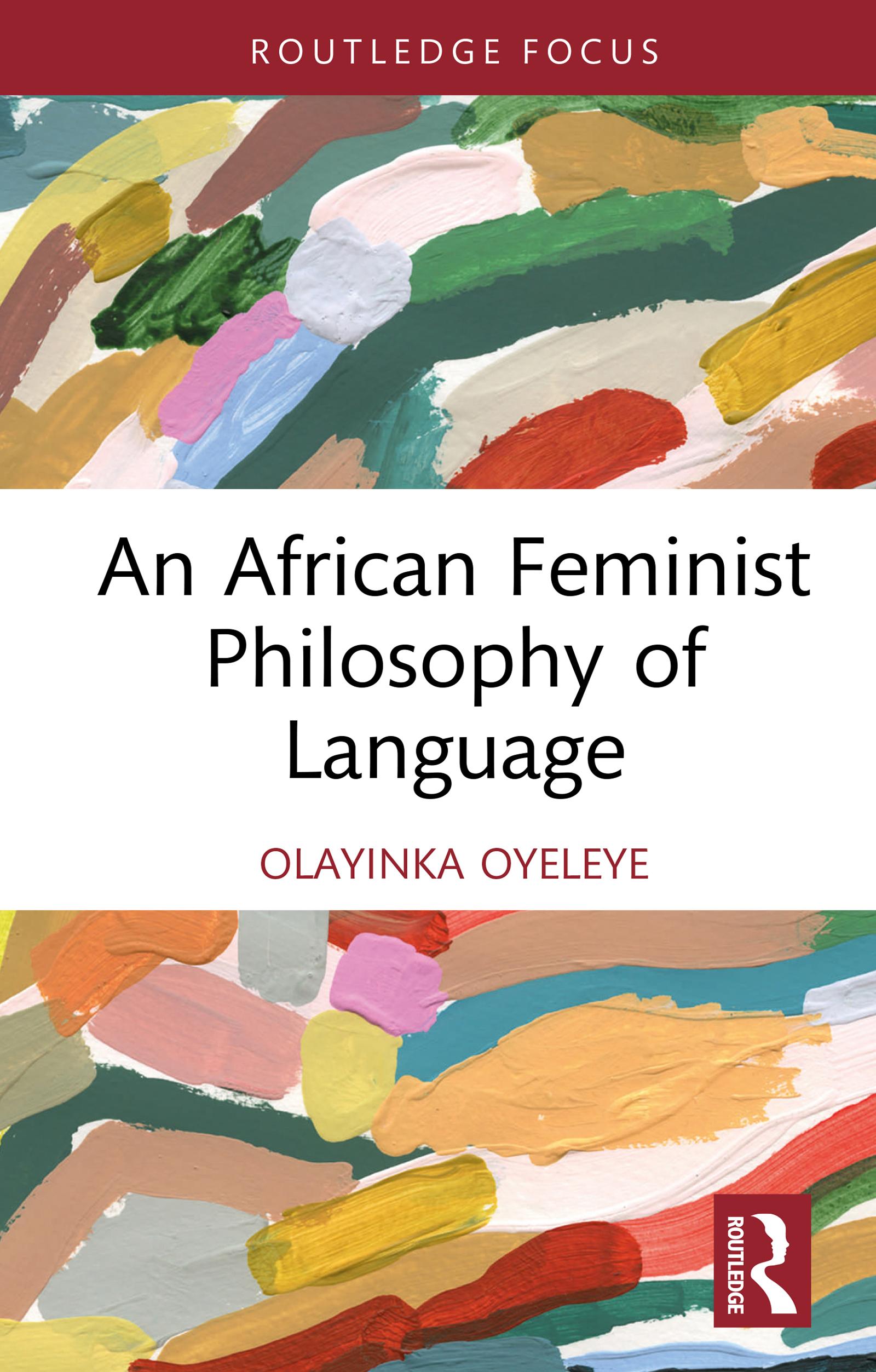
This book calls for the institution of an African feminist philosophy of language, challenging existing debates and encouraging a move away from the Western gaze.
The book begins with an analysis of the philosophical context of African feminism, and a call for the decolonization of epistemological discourse. Oyeleye then goes on to consider how indigenous patriarchies play out in the cultural reality of the Yorùbá in particular, ontologically unpacking the nature of woman as expressed in language, especially in myths and proverbs. Challenging the derogatory language found in proverbs which entrench patriarchal oppression, the author advocates for feminist postproverbials: new proverbs which draw on old traditions but reconstruct the space of woman in a new, egalitarian rhetorical tradition. The author concludes by outlining the conditions necessary for African feminist philosophers to consider language as a decolonizing space which can help to push through the agenda of social change.
This book will be an important resource for researchers from across the fields of gender and women studies, feminist philosophy, philosophy of language, cultural studies, and African studies.
Betal nemt med kort, Klarna, Apple Pay eller Google Pay. Ikke tilfreds? Du har altid 14 dages fortrydelsesret. Læs mere i vores vilkår. Har du spørgsmål, så send os en mail på hello@memmo.org.
Memmo gør det nemmere at studere – uanset hvor du er i verden. Hos os samler du dine kursusbøger og smarte studieværktøjer ét sted: resuméer, quizzer, podcasts og flashcards. Og så er der Ted, din studieven, der svarer på alt, du undrer dig over. Over 50 000 studerende studerer allerede her – bygget til at hjælpe dig med at lære hurtigere og stresse mindre.