
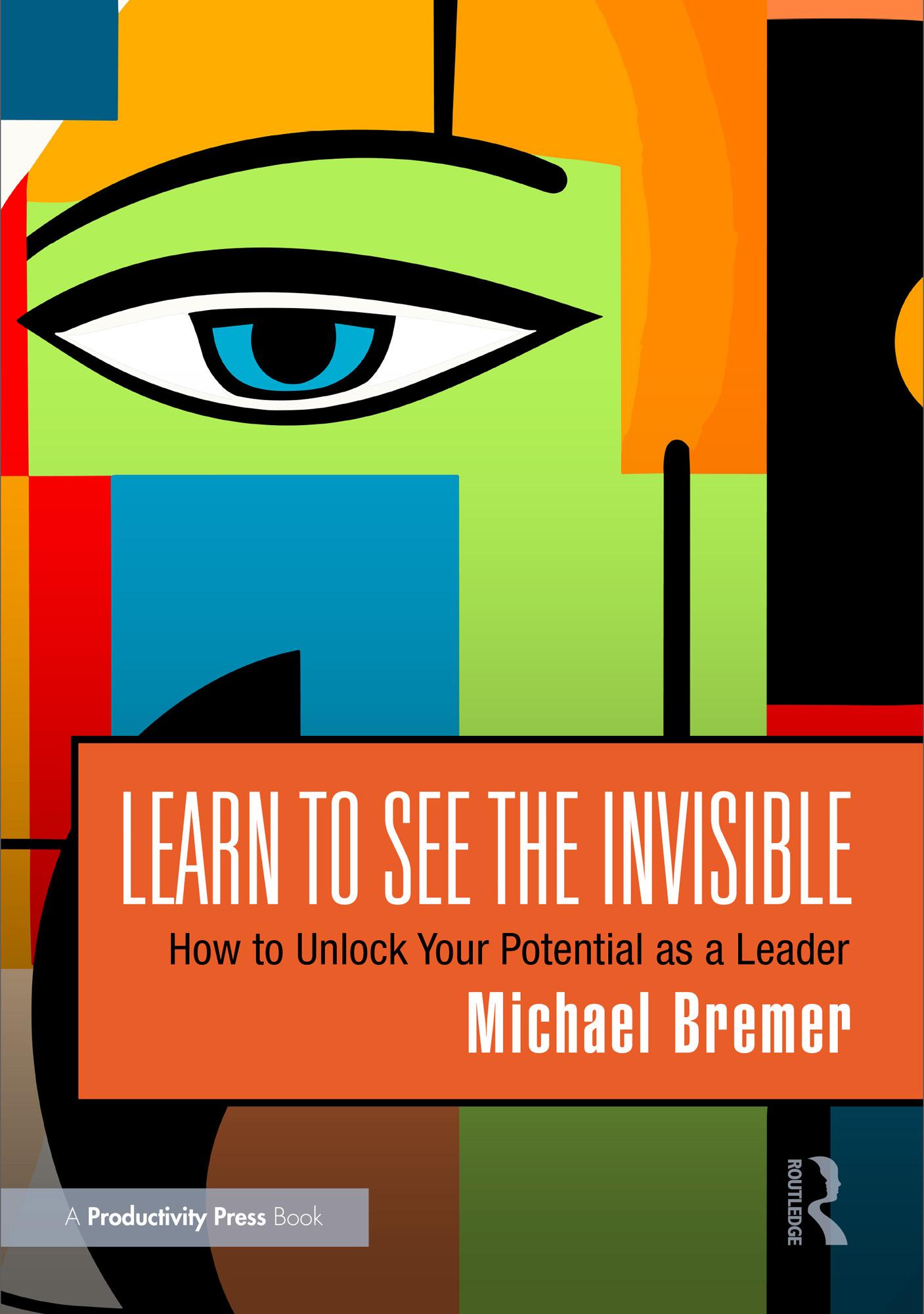
Most improvement consultants say improvement efforts must be led by the CEO, and that is certainly ideal. But the actual reality is most CEOs do not actively drive/guide improvement. They want it to happen, but they focus most of their energy on other issues. According to surveys from Gallup and others, the number one reason people say, “I am not engaged” is due to the behaviors of their direct boss! Those leaders (in the middle of an organization) have a tremendous amount of leverage; first- and second-line leaders directly touch 80% of the people in their organization. They have a tremendous amount of influence and more power than they might realize. This book focuses on that demographic.
This book describes four key foundations and 25 different actions leaders can practice to become more effective in training their eyes to see things tomorrow that are currently invisible. It helps leaders and managers to become better observers of their current reality by practicing getting better at getting better. The goal is to get better in the way we lead, the way our team performs, and the results we accomplish. If done in the right way, visually posting your improvement targets is the key to driving more personal growth, as well as more cross-functional collaboration and cooperation in your work activities. The most unique aspect of this book is that it suggests leaders use visual tools.
Visual Leadership is the fourth foundational element the author encourages people to practice. The primary purpose of visual performance metrics isn’t to make sure things are working well in your department. It’s to create a thinking environment that makes it easier for multiple departments, teams, and groups to work together. It is relatively easy to come up with performance metrics for your team, but what about metrics that help “us” to work more effectively together? Good visual reporting practices create “information democracy.” They eliminate filters that obscure knowledge between layers of management and between departments. They help to create an environment that is much more robust and open, making it easier to be in touch with the “actual reality.” And perhaps the most exciting of all, visual tools can help an individual learn to lead more effectively. The power of using visuals in this way is underutilized in most organizations.
Whatever new behaviors a leader is trying to accomplish, visual reporting can facilitate progress and ensure accountability in developing those new habits.
Betal nemt med kort, Klarna, Apple Pay eller Google Pay. Ikke tilfreds? Du har altid 14 dages fortrydelsesret. Læs mere i vores vilkår. Har du spørgsmål, så send os en mail på hello@memmo.org.
Memmo gør det nemmere at studere – uanset hvor du er i verden. Hos os samler du dine kursusbøger og smarte studieværktøjer ét sted: resuméer, quizzer, podcasts og flashcards. Og så er der Ted, din studieven, der svarer på alt, du undrer dig over. Over 50 000 studerende studerer allerede her – bygget til at hjælpe dig med at lære hurtigere og stresse mindre.