
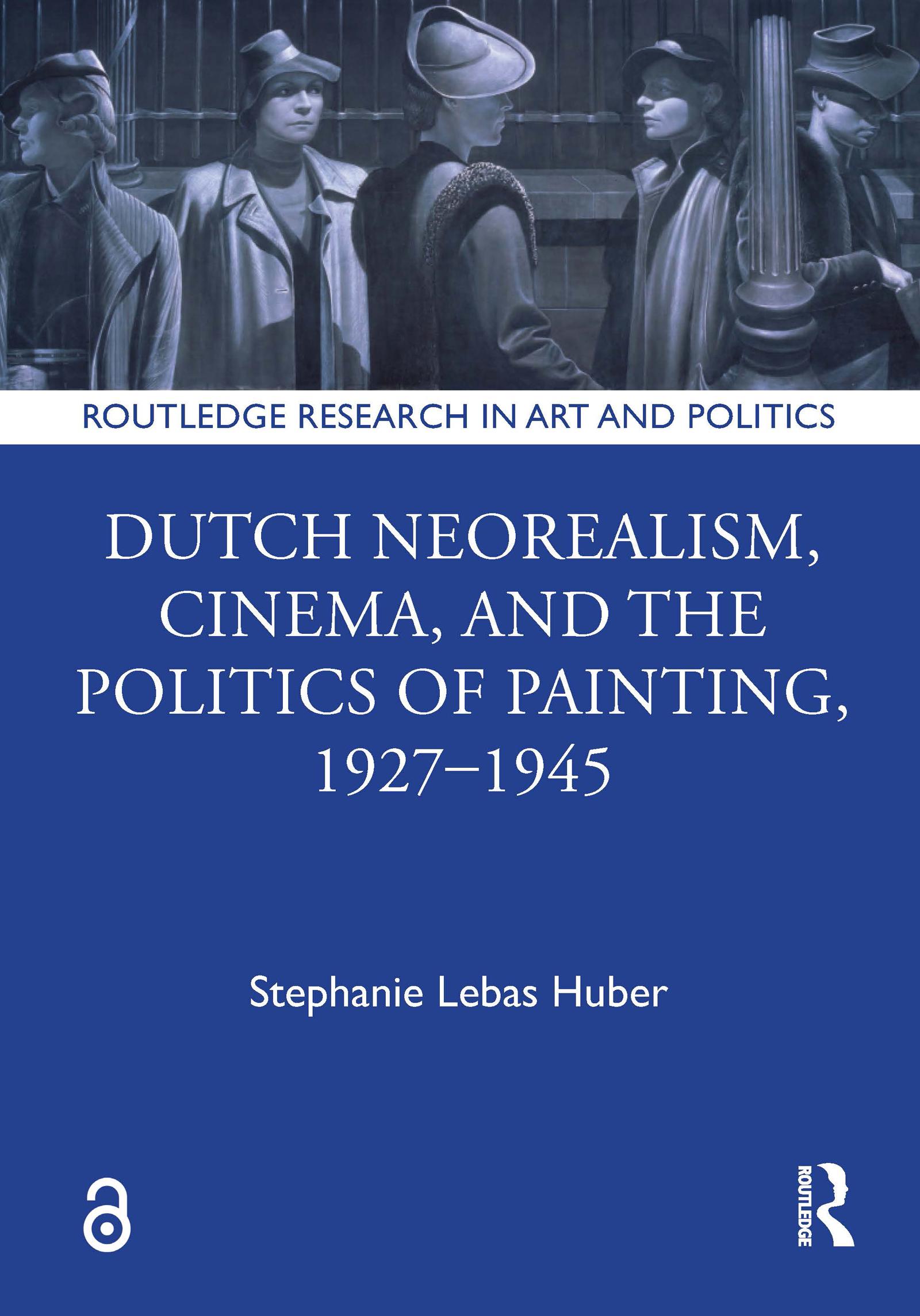
This study offers a radically new perspective on Dutch Neorealism, one that emphasizes the role of film as an apparatus, the effects of which, when emulated in painting, can reproduce the affective experience of film-watching.
More of a tendency than a tightly defined style or "ism," Neorealism is the Dutch variant of Magic Realism, an uncanny mode of figurative painting identified with Neue Sachlichkeit in Germany and Novecento in Italy. Best represented by the Dutch artists Pyke Koch, Carel Willink, Charley Toorop, Raoul Hynckes, Dick Ket, and Wim Schuhmacher, Neorealism—as demonstrated in this book—depicted societal disintegration and allegories of looming disaster in reaction to the rise of totalitarian regimes and, eventually, the Nazi Occupation of The Netherlands. The degree to which these artists exhibited either revolutionary or reactionary sentiments—usually corresponding with their political affiliation—is one of the central problematics explored in this text.
The book will be of interest to scholars working in art history, World War II history, and film studies.
The Open Access version of this book, available at www.taylorfrancis.com, has been made available under a Creative Commons [Attribution-Non Commercial-No Derivatives (CC-BY-NC-ND)] 4.0 license.
Betal nemt med kort, Klarna, Apple Pay eller Google Pay. Ikke tilfreds? Du har altid 14 dages fortrydelsesret. Læs mere i vores vilkår. Har du spørgsmål, så send os en mail på hello@memmo.org.
Memmo gør det nemmere at studere – uanset hvor du er i verden. Hos os samler du dine kursusbøger og smarte studieværktøjer ét sted: resuméer, quizzer, podcasts og flashcards. Og så er der Ted, din studieven, der svarer på alt, du undrer dig over. Over 50 000 studerende studerer allerede her – bygget til at hjælpe dig med at lære hurtigere og stresse mindre.