
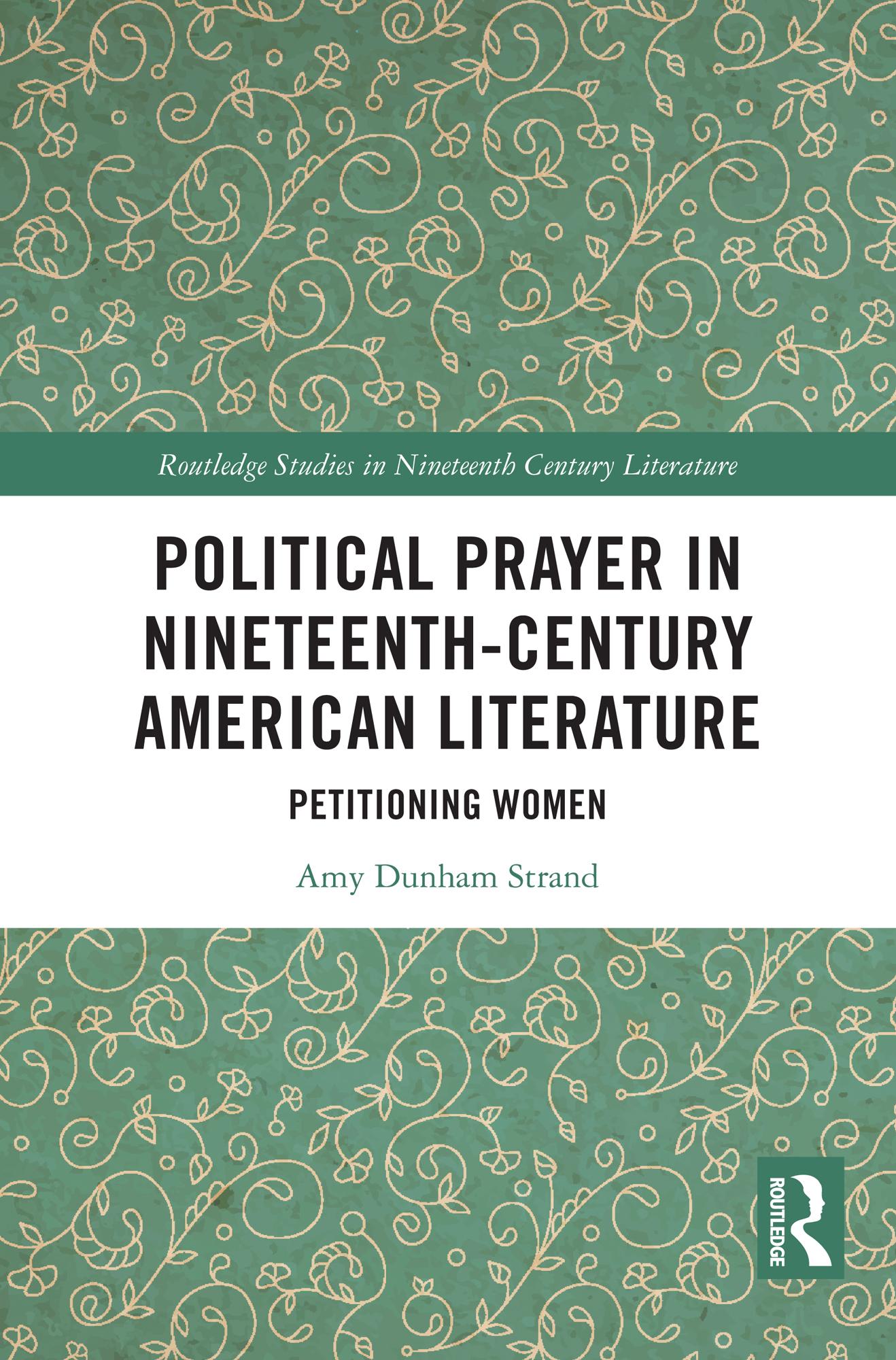
Political Prayer in Nineteenth-Century American Literature explores how American women writers such as Catharine Maria Sedgwick, Harriet Beecher Stowe, Rebecca Harding Davis, and Emily Dickinson translated petitioning – a political form for redress of grievances with religious resonance, or what Strand calls “political prayer” – in their literary works. At a time when petitioning was historically transforming governments, mobilizing masses, and democratizing North America, these White women writers wrote “literary petitions” to advocate for others in social justice causes such as antiremoval, antislavery, and labor reform, to transform American literature and culture, and to articulate an ambivalent political agency. Political Prayer in Nineteenth-Century American Literature introduces historic petitioning into literary study as an overlooked but important new lens for reading nineteenth-century fiction and poetry. Understanding petitions in these literary works – and these literary works as petitions – also helps us to understand women’s political agency before their enfranchisement, to explain why scholars have long debated and inconsistently interpreted the works of well-anthologized women writers, and to see more clearly the multidimensional, coexisting, and often competing religious and political aspects of their writings.
Betal nemt med kort, Klarna, Apple Pay eller Google Pay. Ikke tilfreds? Du har altid 14 dages fortrydelsesret. Læs mere i vores vilkår. Har du spørgsmål, så send os en mail på hello@memmo.org.
Memmo gør det nemmere at studere – uanset hvor du er i verden. Hos os samler du dine kursusbøger og smarte studieværktøjer ét sted: resuméer, quizzer, podcasts og flashcards. Og så er der Ted, din studieven, der svarer på alt, du undrer dig over. Over 50 000 studerende studerer allerede her – bygget til at hjælpe dig med at lære hurtigere og stresse mindre.