
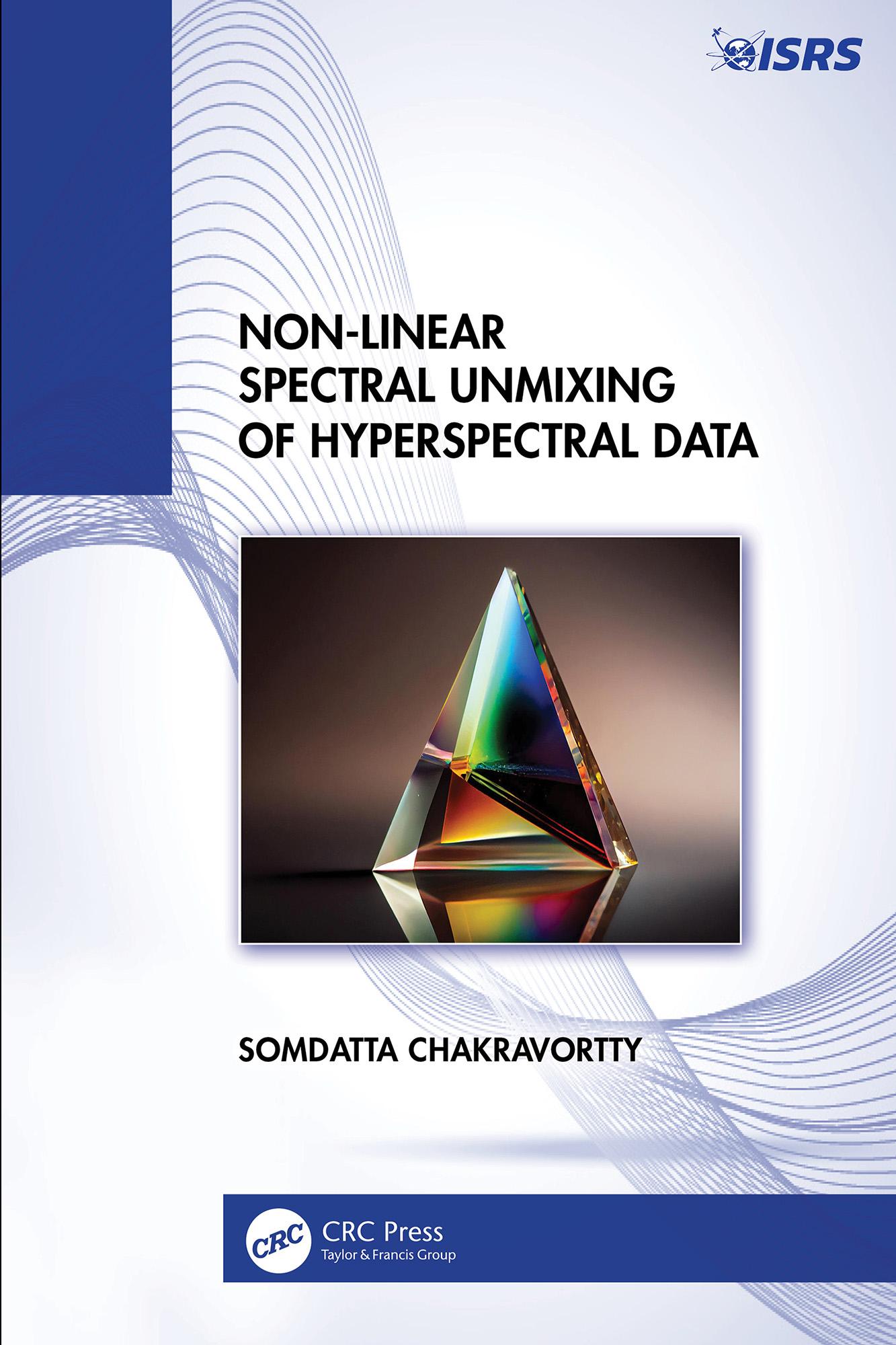
This book is based on satellite image processing, focusing on the potential of hyperspectral image processing (HIP) research with a case study-based approach. It covers the background, objectives, and practical issues related to HIP and substantiates the needs and potentials of said technology for discrimination of pure and mixed endmembers in pixels, including unsupervised target detection algorithms for extraction of unknown spectra of pure pixels. It includes application of machine learning and deep learning models on hyperspectral data and its role in spatial big data analytics.
Features include the following:
- Focuses on capability of hyperspectral data in characterization of linear and non-linear interactions of a natural forest biome.
- Illustrates modeling the ecodynamics of mangrove habitats in the coastal ecosystem.
- Discusses adoption of appropriate technique for handling spatial data (with coarse resolution).
- Covers machine learning and deep learning models for classification.
- Implements non-linear spectral unmixing for identifying fractional abundance of diverse mangrove species of coastal Sundarbans.
This book is aimed at researchers and graduate students in digital image processing, big data, and spatial informatics.
Betal nemt med kort, Klarna, Apple Pay eller Google Pay. Ikke tilfreds? Du har altid 14 dages fortrydelsesret. Læs mere i vores vilkår. Har du spørgsmål, så send os en mail på hello@memmo.org.
Memmo gør det nemmere at studere – uanset hvor du er i verden. Hos os samler du dine kursusbøger og smarte studieværktøjer ét sted: resuméer, quizzer, podcasts og flashcards. Og så er der Ted, din studieven, der svarer på alt, du undrer dig over. Over 50 000 studerende studerer allerede her – bygget til at hjælpe dig med at lære hurtigere og stresse mindre.