
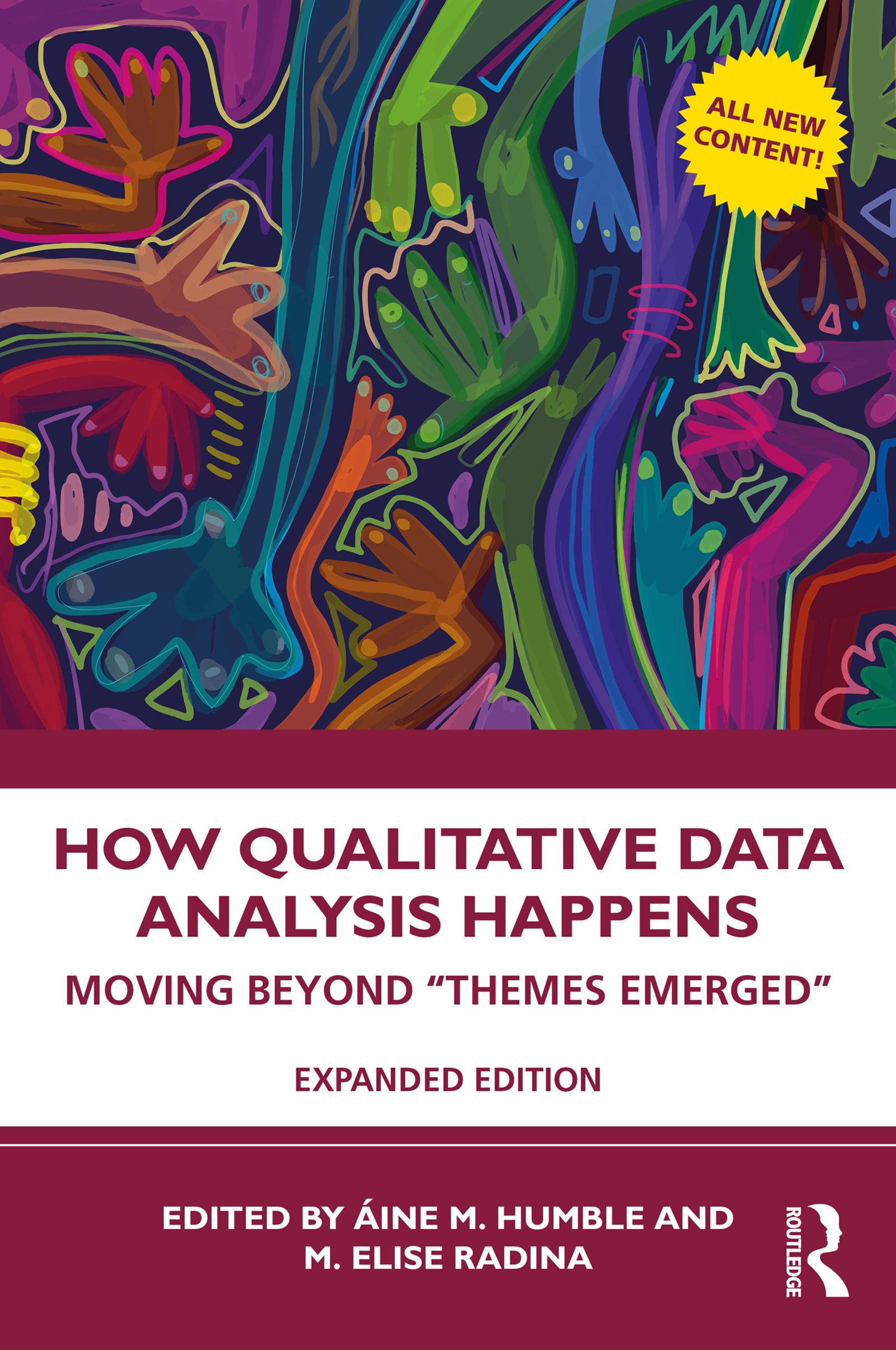
How Qualitative Data Analysis Happens: Moving Beyond “Themes Emerged” (Volume 2), offers an in-depth look into how qualitative social science researchers studying a wide range of human experiences and dynamics approach their data analyses. This expanded edition consists of 13 new chapters from a broad range of disciplines (and an added conclusion) that document the stories about how qualitative data analysis occurred.
Chapters for this expanded edition represent a diversity of disciplines (e.g., criminology, family science, education, health, nutrition, sociology, sport psychology) that focus on the human experience and describe a diversity of methodological approaches. These chapters may be used to introduce readers to newer or innovative ways of analysing data. It moves beyond the usual vague statement of “themes emerged from the data” to show readers how researchers actively and consciously arrive at their themes and conclusions, revealing the complexity and time involved in making sense of thousands of pages of interview data, multiple data sources, and diverse types of data. The various authors provide detailed narratives into how they analysed their data from previous publications. The methodologies range from arts-based research, autoethnography, community-based participatory research, ethnography, grounded theory, to narrative analysis. The volume allows readers to be seemingly “in the room” with these international scholars (representing Canada, the US, Austria, Germany, the UK, and the Philippines) and getting their own hands vicariously dirty with the data.
This expanded edition also includes a conclusion chapter, in which the authors reflect on commonalities across the chapters. Supplemental figures, images, and screenshots, which are referred to in the chapters, are included in an accompanying eResource (that can be accessed at www.routledge.com/9781032183213), as well as links to the previously published work on which the chapters are based. This book is an invaluable resource for experienced and novice qualitative researchers throughout the social sciences, as well as undergraduate and postgraduate students in the field.
Betal nemt med kort, Klarna, Apple Pay eller Google Pay. Ikke tilfreds? Du har altid 14 dages fortrydelsesret. Læs mere i vores vilkår. Har du spørgsmål, så send os en mail på hello@memmo.org.
Memmo gør det nemmere at studere – uanset hvor du er i verden. Hos os samler du dine kursusbøger og smarte studieværktøjer ét sted: resuméer, quizzer, podcasts og flashcards. Og så er der Ted, din studieven, der svarer på alt, du undrer dig over. Over 50 000 studerende studerer allerede her – bygget til at hjælpe dig med at lære hurtigere og stresse mindre.